


Most dropshippers treat suppliers like vending machines, place order, get product, repeat.
Then they wonder why they can’t negotiate better prices or why they’re the last to know about stock issues!
Here’s what I’ve learned after working with dozens of suppliers over the years: the difference between a struggling dropshipper and a thriving one often comes down to relationships.
Not just any relationships, but strategic, mutually beneficial partnerships that transform your suppliers from mere vendors into genuine business allies.
When you invest time in building these connections, everything changes.
You get better prices.
Faster shipping.
Priority treatment during high-demand seasons.
Early access to new products.
The list goes on.
In this guide, you’ll discover the exact strategies to cultivate supplier relationships that give you a competitive edge, from your first contact to long-term collaboration that benefits both parties.
Why Supplier Relationships Matter More Than Ever in Dropshipping
You’ve probably heard a thousand times that dropshipping is just finding products and listing them online.
That worked back in 2019, maybe.
But in 2026, when the dropshipping market is projected to hit $476.1 billion, treating your supplier like a vending machine is business suicide.
Here’s the brutal reality.
There are millions of stores competing for the same products from the same suppliers.
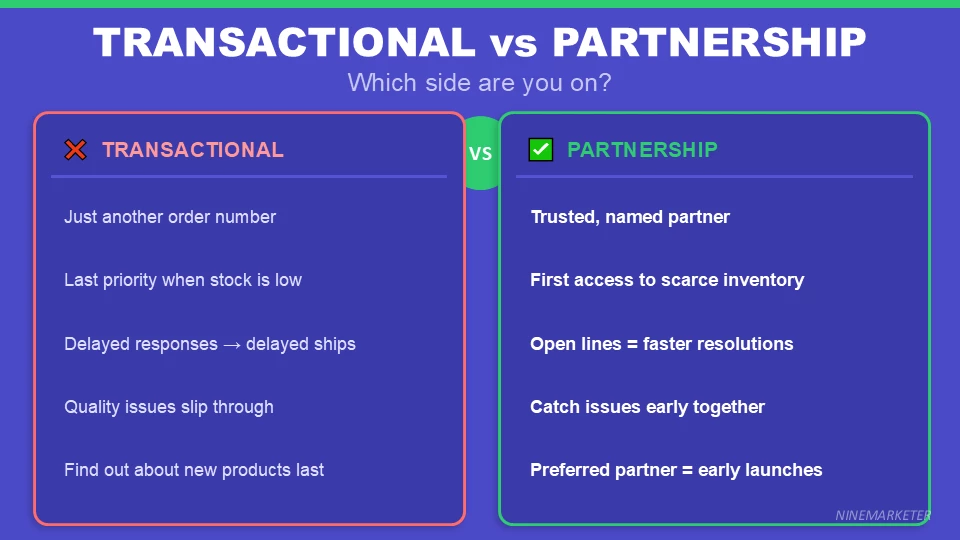
When you’re just another faceless order number, guess whose shipments get prioritized when inventory runs low?
Not yours.
And when 84% of retailers cite finding reliable suppliers as their biggest challenge, building actual relationships suddenly becomes your competitive edge.
The profit margin boost alone is wild.
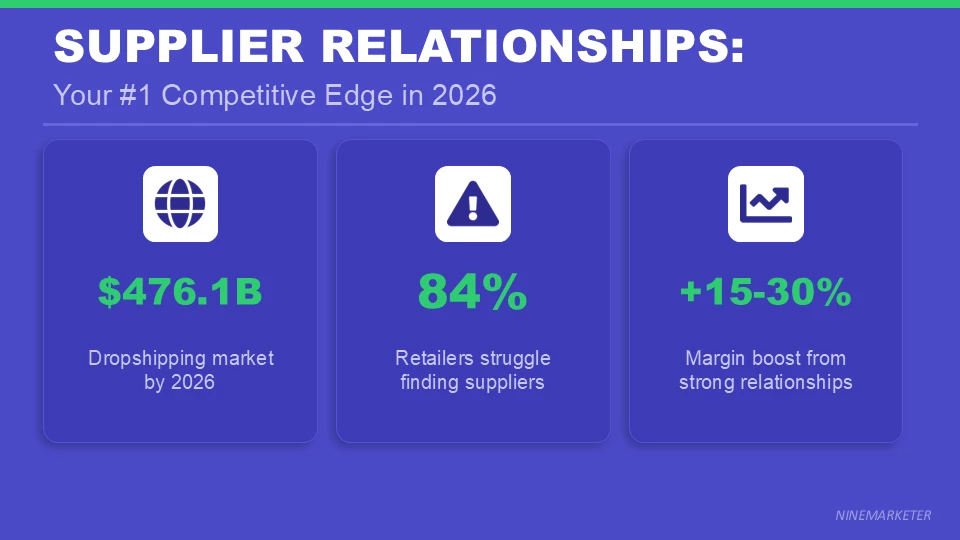
Strong supplier relationships can bump your margins by 15-30% without changing a single thing on your storefront.
How?
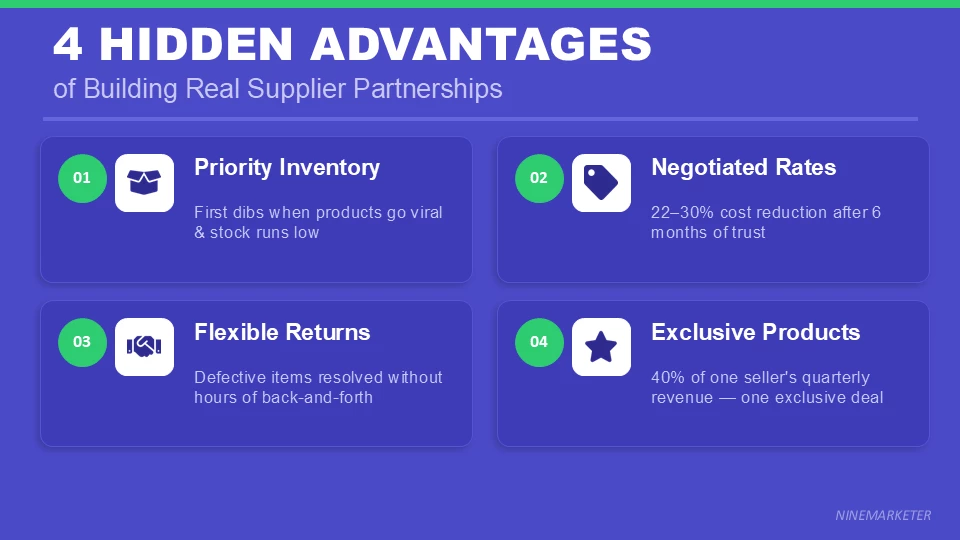
Negotiated rates after you’ve proven yourself reliable over time.
One seller I know built rapport with their main supplier over six months and scored a 22-30% reduction in per-unit costs on top sellers.
That’s not pocket change, that’s the difference between scraping by and actually scaling.
But honestly, pricing is just scratching the surface.
The hidden gold is in stuff nobody talks about at those dropshipping webinars.
Priority inventory access means when that product goes viral on TikTok and everyone’s scrambling, you’re not stuck with “out of stock” nightmares killing your conversion rates.
You get first dibs.
Flexible return policies become way more realistic when you’ve built rapport, suppliers are gonna work with you on defective items without the usual headache that eats up hours.
And exclusive products?
That’s the holy grail.
Your supplier isn’t handing you exclusive rights if they barely remember your store name.
They offer those opportunities to partners they trust and communicate with regularly.
One dropshipper landed an exclusive on a home organization product that wasn’t available elsewhere yet, it accounted for 40% of revenue for an entire quarter.
The flip side is absolutely brutal though.
Poor supplier relationships cost you in ways that don’t show up immediately on spreadsheets.
Delayed responses mean delayed shipments, which tanks customer satisfaction.
Quality issues affect 48% of dropshippers, and most of those could’ve been caught early with open communication.
Lost opportunities because your supplier launched a new product line and told preferred partners first while you found out three weeks later.
The transactional approach might get you started, but partnerships are what separate dropshippers still grinding from ones actually building wealth.
It’s not sexy, but it’s everything.
Understanding Your Supplier’s Business Perspective
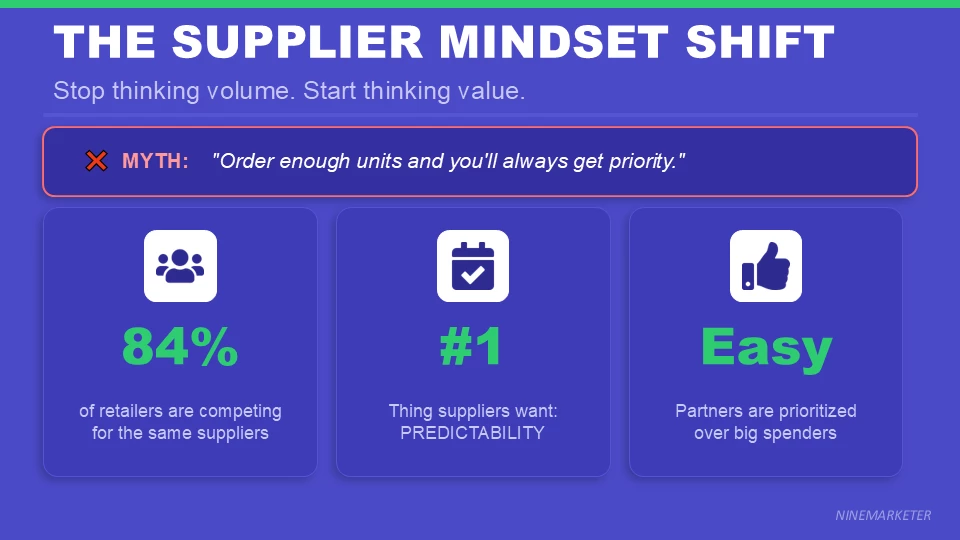
Here’s the thing most dropshippers get completely wrong about supplier relationships, they think it’s all about volume.
Like if you just order enough units, you’ll be golden.
But here’s what they’re missing: suppliers have 84% of retailers chasing them right now, all wanting the same thing.
Your supplier isn’t sitting around waiting for your next big order.
They’re managing dozens of other partners, dealing with inventory headaches, and honestly?
They’re prioritizing the ones who make their lives easier, not necessarily the ones ordering the most.
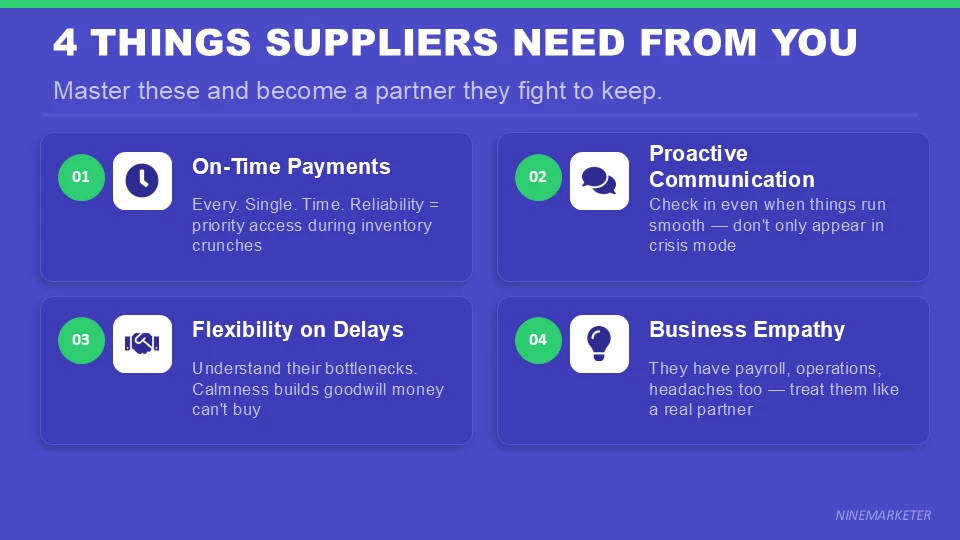
What suppliers actually want is predictability.
They want partners who pay on time, like, every single time.
When you’re consistently reliable with payments, you get priority when demand spikes and inventory gets tight.
Think about it from their angle: they’ve got payroll to cover and operations to run, just like you do.
Communication matters way more than you’d think.
Suppliers deal with radio silence from most dropshippers until something goes wrong, then suddenly it’s panic mode.
The ones who check in regularly, even when everything’s running smooth, become the preferred partners who get early access to new products and better terms.
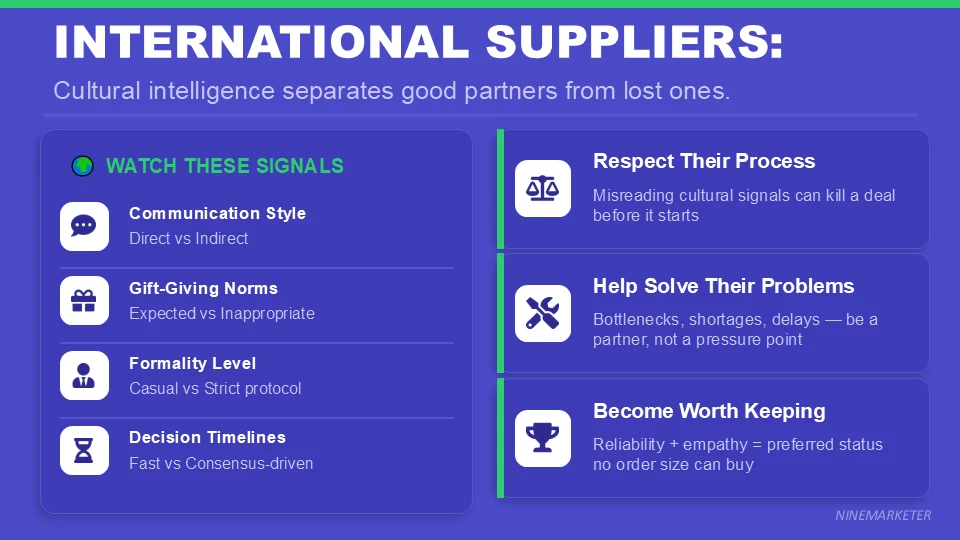
Here’s where it gets tricky though, international suppliers bring cultural considerations into play.
Some cultures value direct communication while others prefer indirect approaches, and misreading these signals can tank a relationship before it even starts.
Gift-giving might be expected in some regions but seen as inappropriate in others.
Meeting protocols, formality levels, decision-making timelines, all this stuff varies wildly depending on where your supplier’s based.
One thing that’s often overlooked: suppliers face their own challenges that you can help solve.
Raw material shortages, production bottlenecks, shipping delays, when you position yourself as someone who understands these issues and works with them (not against them), you become a partner worth keeping.
Being flexible when delays happen, communicating proactively with your customers, and not freaking out over every hiccup builds serious goodwill.
The bottom line?
Suppliers want partners who treat this like an actual business relationship, not a vending machine transaction.
They want clear communication, consistent reliability, respect for their processes, and someone who understands that strong supplier relationships directly determine fulfillment quality and customer satisfaction.
When you nail these basics, you’re not just another order number, you’re someone they’ll actually fight to keep happy.
Making a Strong First Impression with New Suppliers
You know what separates dropshippers who actually land good suppliers from those who get ghosted?
It’s all about the homework you do before hitting that “send” button on your first email.
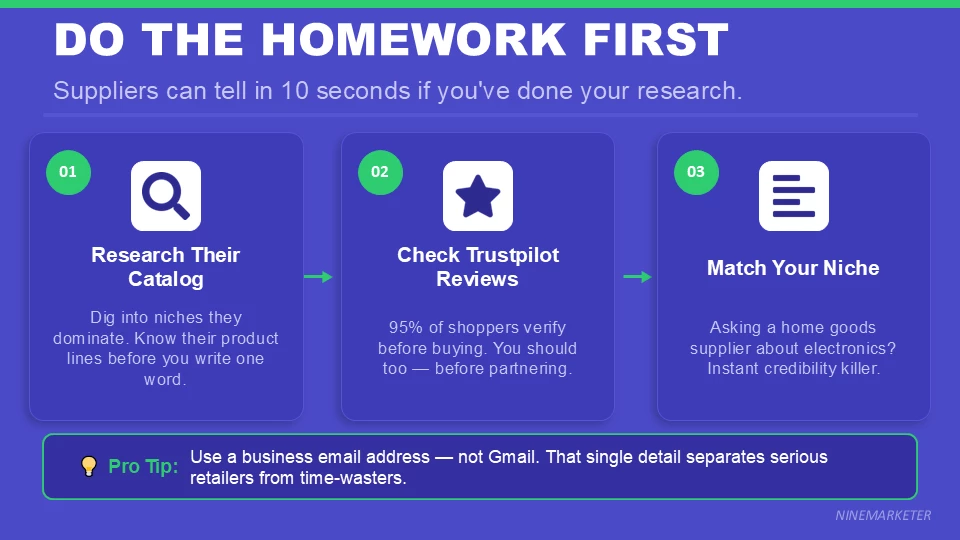
Before you even think about reaching out, you’ve gotta research your supplier’s strengths and specialties.
Dig into their product catalog, check what niches they dominate, and look at reviews on sites like Trustpilot where 95% of shoppers check before buying anything.
If a supplier specializes in home goods but you’re asking about electronics, you’re already showing you didn’t do your research.
The introduction email makes or breaks everything.
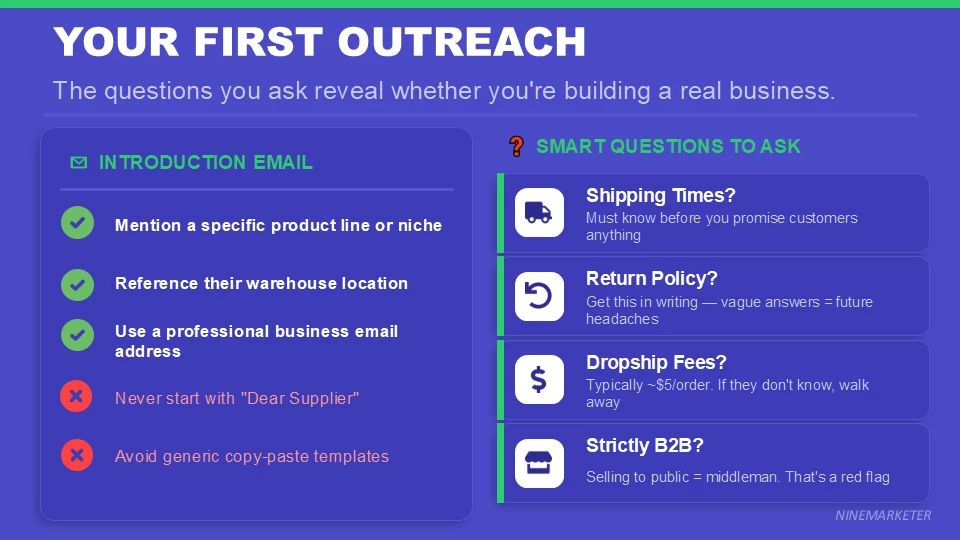
Generic inquiries that start with “Dear Supplier” get deleted faster than spam.
You need to craft a professional introduction that mentions something specific about their company, maybe a product line that caught your attention or their warehouse locations.
Use a business email address, not your personal Gmail.
That alone separates serious retailers from tire-kickers.
Here’s where it gets interesting though.
The questions you ask reveal whether you’re actually building a business or just messing around.
Smart dropshippers ask about shipping times, return policies, and whether they charge dropship fees, which typically run around $5 per order.
They ask if the supplier operates strictly B2B, because if they’re selling to the general public at the same prices, that’s a massive red flag you’re dealing with a middleman, not a real supplier.
But watch for the warning signs in their responses.
Slow responses, vague answers, or refusing to provide business credentials are huge red flags.
If they demand payment through wire transfers instead of secure methods like PayPal, run.
If they won’t send product samples or avoid video calls, that’s sketchy.
And if they promise unrealistic profits with little work, you’re talking to a scammer.
Setting realistic expectations from day one saves headaches later.
Be honest about your order volume, even if you’re starting small.
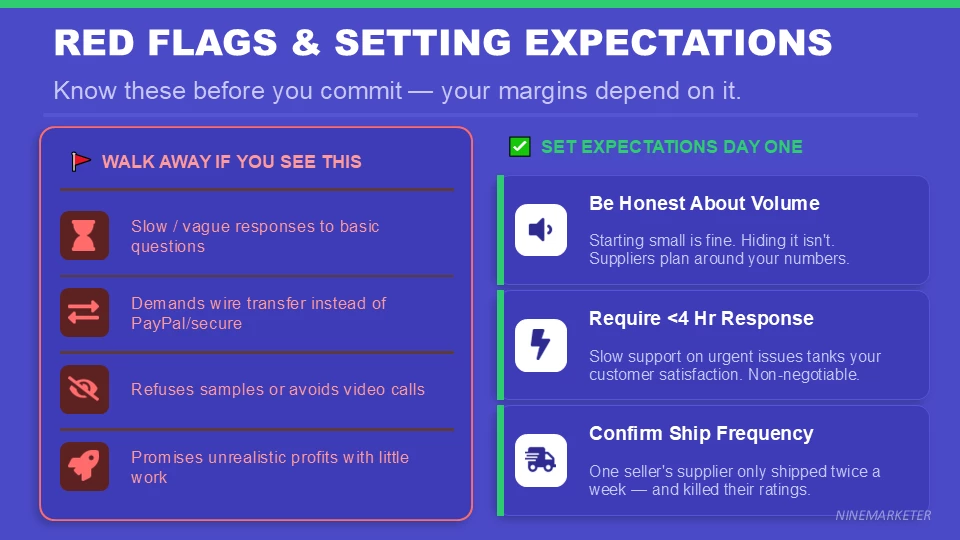
Ask about their average response time and make sure it’s under 4 hours for urgent issues.
One seller learned the hard way that their “reliable” supplier actually only shipped dropship orders twice a week, which tanked their customer satisfaction ratings.
Communication Strategies That Build Trust
You’ve probably figured out by now that texting your supplier once every three months when you need something isn’t gonna cut it.
But here’s the thing nobody warns you about, there’s a sweet spot between being annoying and being invisible, and finding it matters way more than you’d think.
Establishing a standard communication channel early on saves you massive headaches later.
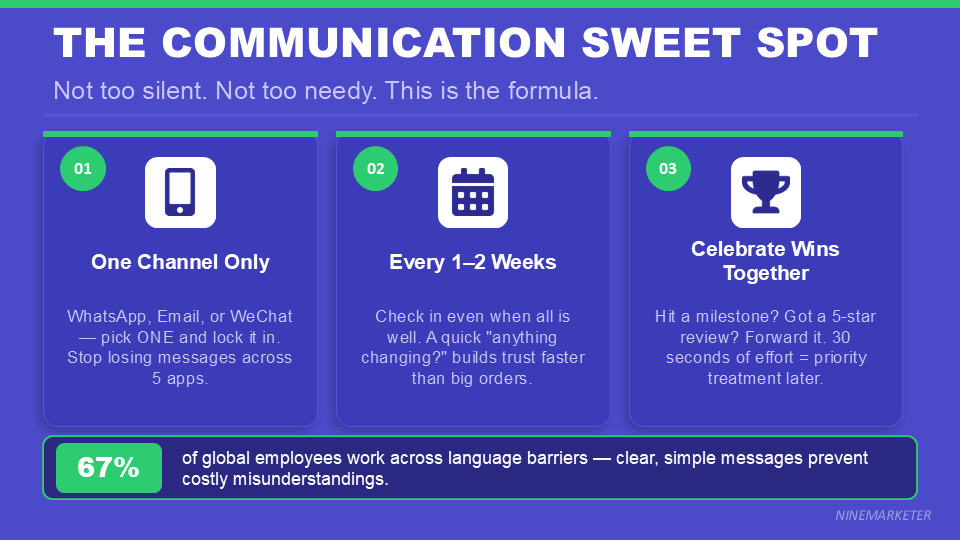
Some suppliers live on WhatsApp, others prefer email, and yeah, some still use WeChat for international partnerships.
Pick one primary channel and stick with it so you’re not digging through five different apps when problems pop up.
The magic number for check-ins?
Most successful dropshippers touch base with their main suppliers every 1-2 weeks, even when everything’s running smooth.
Not with a novel, just a quick “Hey, inventory looks good, any upcoming changes I should know about?”
That consistency builds trust faster than occasional big orders ever will.
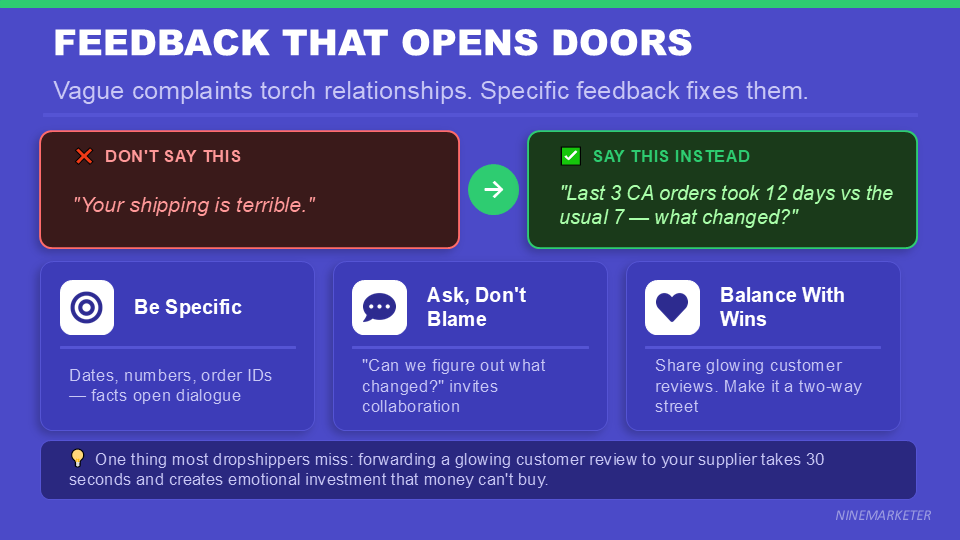
When issues arise (and they absolutely will), how you give feedback determines whether you’re strengthening the relationship or torching it.
Constructive feedback focuses on specific situations, not vague complaints.
Instead of “Your shipping is terrible,” try “The last three orders to California took 12 days instead of the usual 7, can we figure out what changed?”
See the difference?
One opens a dialogue, the other slams the door.
Here’s something most dropshippers completely miss: celebrating wins together.
When you hit a sales milestone or a customer leaves a glowing review about product quality, forward it to your supplier.
Takes thirty seconds but shows them their work directly impacts real people.
That emotional connection pays dividends when you need priority treatment later.
Language barriers get real tricky with international suppliers.
Research shows 67% of global employees work with team members speaking different languages, and misunderstandings cost money.
Speak slowly and clearly, avoid slang and idioms, and when in doubt, confirm understanding by asking them to summarize the key points.
Simple adjustments prevent expensive mistakes.
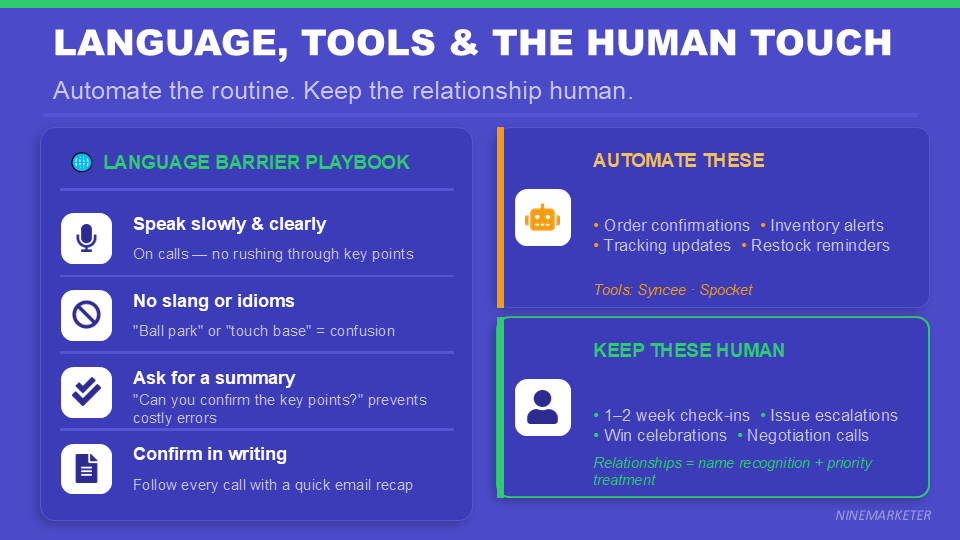
Tools like Syncee and Spocket automate a ton of communication around orders and inventory, but don’t let automation replace the human touch entirely.
The suppliers who remember your name and respond within hours instead of days?
Those relationships were built on real conversations, not just automated order notifications.
Proving Your Worth as a Reliable Partner
You know what separates dropshippers who get prioritized from those stuck at the back of the line?
Consistency.
Suppliers aren’t looking for the biggest orders, they’re looking for partners they can actually count on month after month.
Payment schedules matter way more than most people realize.
When suppliers don’t receive payment, they won’t process your orders it’s that simple.
But here’s the thing: paying on time isn’t just about getting your current orders fulfilled.
It builds a reputation.
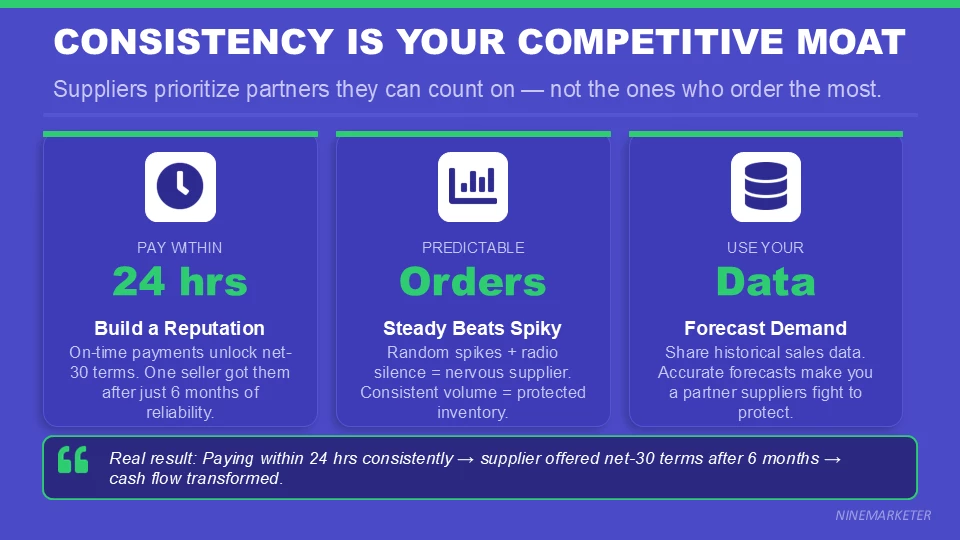
One seller shared how consistently paying within 24 hours of placing orders led to their supplier offering net-30 payment terms after six months, which completely changed their cash flow situation.
Order patterns tell suppliers whether you’re serious or just testing waters.
Random spikes followed by radio silence make suppliers nervous about keeping inventory for you.
Steady, predictable ordering, even if the volumes are smaller, shows you’re building something real.
And when you can provide accurate demand forecasts using historical sales data, you become the type of partner suppliers want to protect during inventory shortages.
Being transparent about your business changes everything.
Share your growth trajectory with your main suppliers.
If you’re planning a big marketing push for Q2, tell them in January so they can prepare inventory.
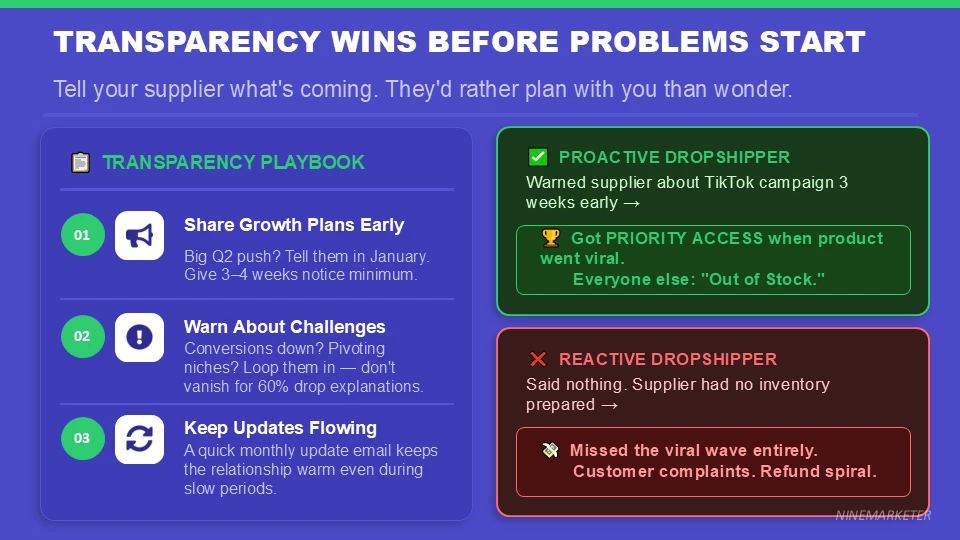
One dropshipper mentioned how warning their supplier about an upcoming TikTok campaign three weeks early meant they had priority access when the product went viral and everyone else was scrambling.
But transparency works both ways, right?
When you’re facing challenges, maybe conversions are down or you’re pivoting to a new niche, keeping suppliers in the loop prevents misunderstandings and helps them plan too.
They’d rather know upfront than wonder why your orders suddenly dropped by 60%.
Quality control feedback loops are criminally underused.
Most dropshippers only reach out when something’s wrong, but the smart ones share customer feedback regularly, both positive and negative.
Forward those five-star reviews mentioning product quality.
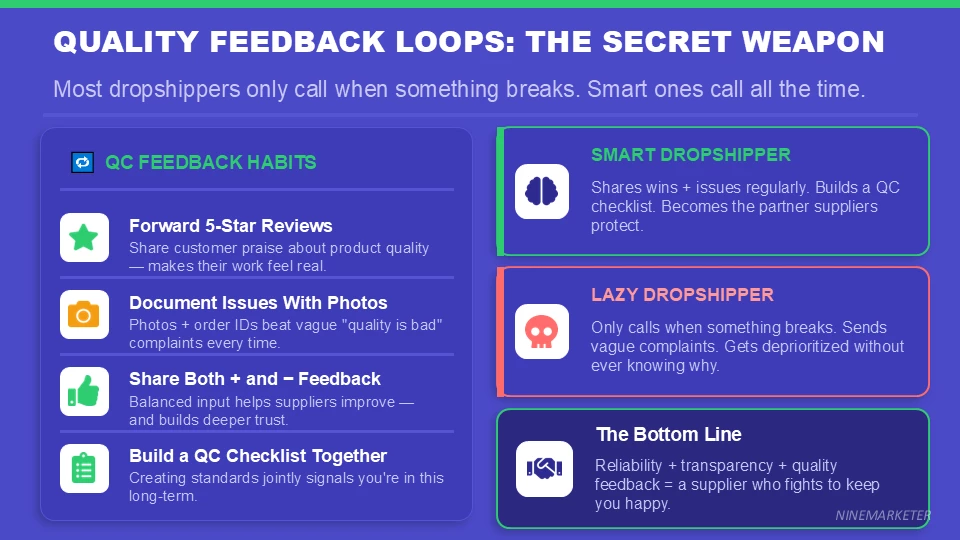
When issues pop up, document them with photos and specific details rather than vague complaints like “quality is bad.”
This constructive feedback actually helps suppliers improve their processes, which benefits everyone.
Transparent communication about quality standards from day one prevents most problems before they start.
Creating a quality checklist together shows you’re invested in the partnership long-term, not just squeezing margins.
Negotiating Better Terms Without Damaging Relationships
Here’s the brutal truth about negotiating with suppliers: if you try it on your first order, you’ll probably get shut down hard.
Timing matters way more than most dropshippers realize, wait until you’ve established a track record first.
The magic number?
Most successful dropshippers wait at least 3-6 months before initiating serious negotiations.
By then, you’ve got the data that actually matters: consistent order volume, spotless payment history, and proof you’re not another tire-kicker who’ll vanish after two orders.
Before you even think about approaching your supplier, gather your ammunition.
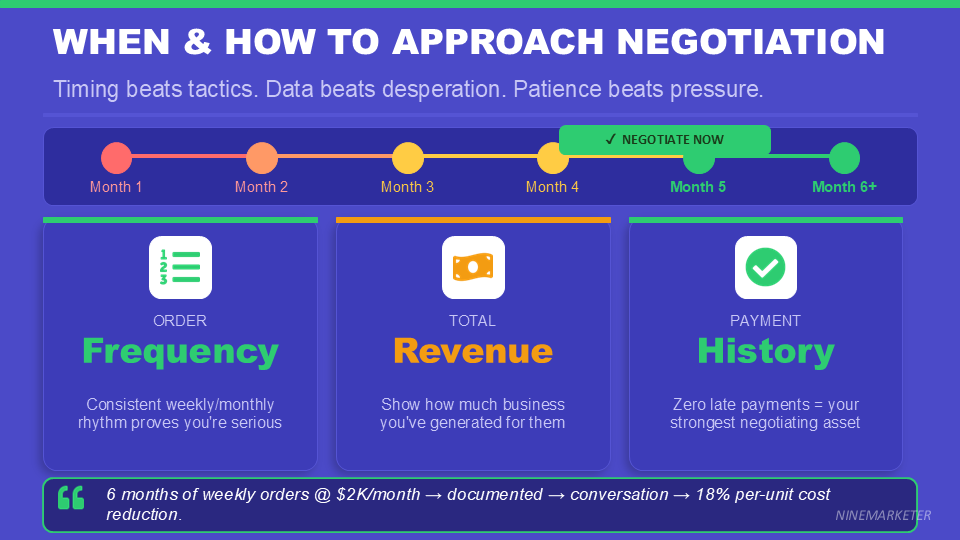
You need concrete numbers showing your order frequency, total revenue generated for them, and your payment consistency.
One seller shared how documenting six months of weekly orders averaging $2,000 per month led to a conversation that dropped their per-unit costs by 18%.
That’s not luck, that’s leverage.
Here’s where most people screw up: they treat negotiations like a battle instead of a collaboration.
The best negotiations frame everything as “how can we both win here?”
Instead of demanding lower prices, try “I’m planning to double my order volume next quarter, what would that do to our pricing structure?” See the difference?
Price isn’t even the only thing worth negotiating, honestly.
Creative negotiation points include shipping speed improvements, custom packaging options, or lower minimum order quantities.
Sometimes getting your shipping time reduced from 7 days to 4 days is worth more than a 5% price cut because it directly impacts customer satisfaction and repeat purchases.
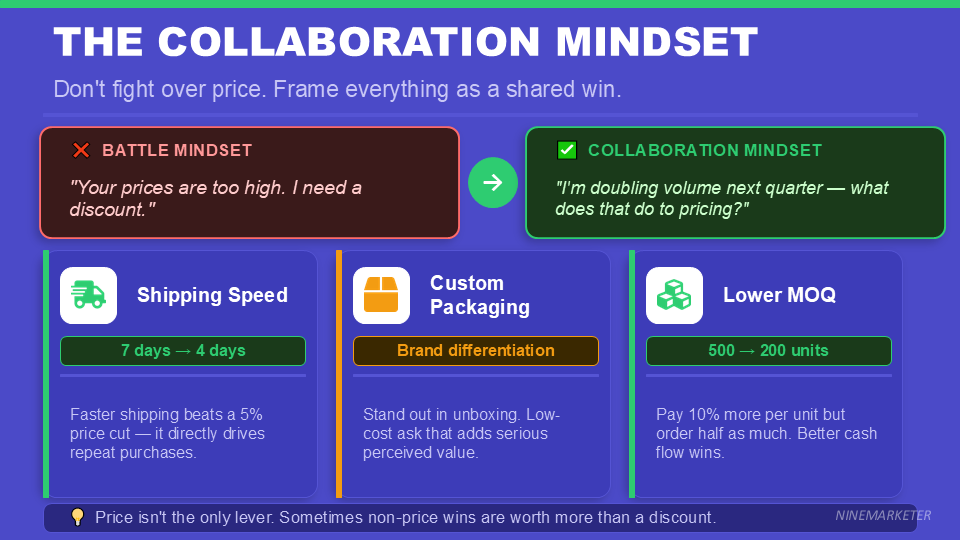
MOQs can often be lowered just by asking, especially if you commit to future orders.
Many suppliers set MOQs higher than necessary and are willing to flex for reliable partners.
One dropshipper negotiated their MOQ from 500 units down to 200 by offering to pay slightly more per unit, sometimes paying 10% more per item but ordering half as much makes way more business sense.
When a supplier says no?
Don’t burn bridges.
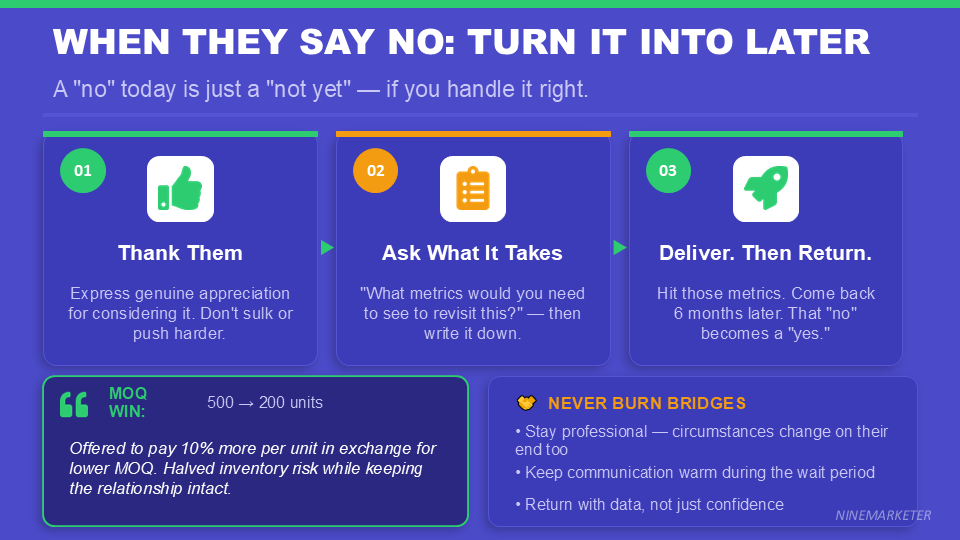
Thank them for considering it, ask what metrics they’d need to see to revisit the conversation, and actually deliver on those metrics.
That “no” today becomes a “yes” six months later when you’ve proven yourself.
Keep communication open and professional, you never know when circumstances might change on their end.
Strategies for Scaling the Partnership as You Grow
You know what kills most dropshipping partnerships?
Growth that happens too fast without the right foundation.
Scaling typically takes 6 to 12 months when done right, and rushing it before your supplier’s ready creates chaos for everyone involved.
Gradual volume increases matter way more than sudden spikes.
Instead of going from 50 orders a week to 500 overnight, smart dropshippers increase by 20-30% per quarter and give their suppliers a heads-up about the growth trajectory.
One seller shared how warning their supplier about a planned marketing push three months early meant they got priority fulfillment when orders tripled, while competitors scrambled with stockouts.
Here’s where things get really interesting though.
Once you’ve proven yourself reliable over 6-12 months with consistent orders and payment, that’s when you start conversations about private label opportunities.
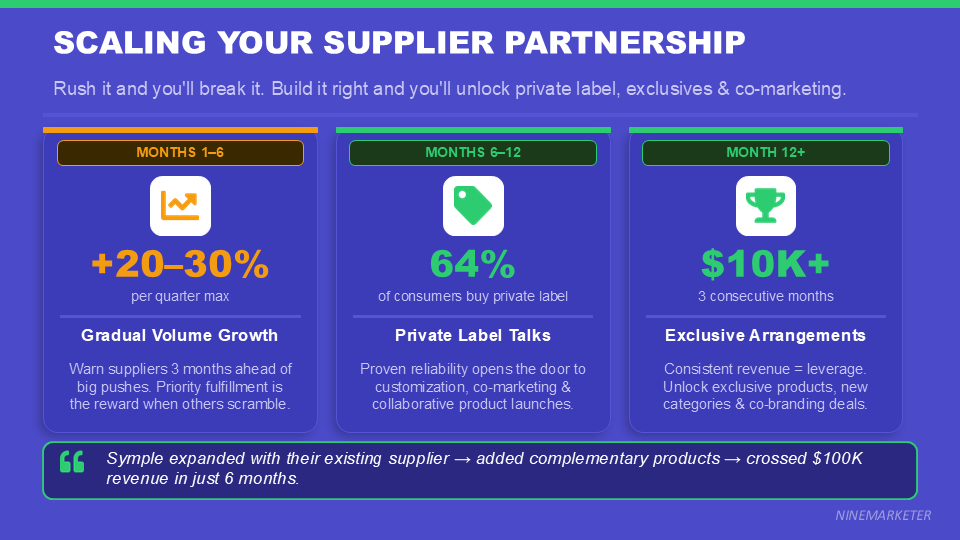
Research shows 64% of US consumers purchased private label products in 2024, and suppliers are way more likely to invest in customization when you’ve already demonstrated sustainable demand.
Co-marketing initiatives and collaborative launches are criminally underused strategies that benefit both parties.
Think about it, your supplier gets exposure to your audience, you get exclusive access to new products before anyone else, and you both split marketing costs.
Brands like Fellow partnered with coffee roasters to create entire marketplaces where both sides win through dropshipping arrangements that go way beyond transactional orders.
The right time to discuss exclusive supplier arrangements?
When you’re consistently generating meaningful revenue for them, typically after you’ve hit $10,000+ per month in orders for at least three consecutive months.
Private label suppliers are selective about partnerships because they’re investing in manufacturing customized products, so they want proof you can move inventory before committing.
Expanding into new product categories with existing suppliers is easier than most people realize.
Your supplier already trusts you, knows your standards, and understands your business model.
When Symple wanted to expand their supplement line they worked with their existing supplier to add complementary products and crossed $100K in revenue within six months of launch, something that would’ve taken way longer with a new supplier relationship.
Managing Multiple Supplier Relationships Effectively
You know what nobody tells you about scaling a dropshipping business?
Managing multiple suppliers is where most people completely fall apart.
Working with multiple dropship suppliers creates unique challenges that don’t exist when you’re just dealing with one, and honestly, without a system in place, you’re setting yourself up for chaos.
Creating a supplier relationship management system isn’t optional anymore, it’s survival.
The most successful dropshippers use order management systems that track supplier availability, shipping times, and stock levels in real-time to ensure the right supplier fulfills each order efficiently.
Without this, you’re manually juggling spreadsheets and praying nothing slips through the cracks.
Here’s the tension nobody wants to talk about though: balancing loyalty with diversification.
Dropshipping with multiple suppliers helps businesses offer wider product ranges and reduce reliance on any one supplier, but it also creates complexity and increases supply chain disruption risks.
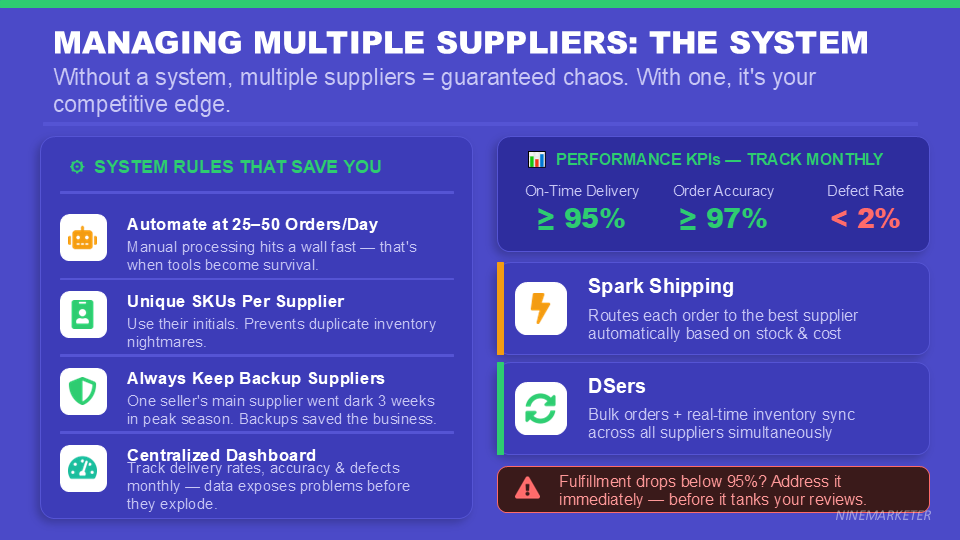
One seller shared how their main supplier went dark for three weeks during peak season, having backup suppliers literally saved their business from collapse.
The question everyone wrestles with is when to consolidate versus when to expand your supplier network.
Manual order processing works for low volumes but becomes unsustainable beyond 25-50 orders daily.
At that inflection point, you either consolidate with fewer reliable partners or invest in serious automation tools to handle the complexity.
Performance tracking separates amateurs from pros.
Smart dropshippers monitor on-time delivery rates, order accuracy, defect rates, and communication responsiveness for each supplier monthly.
The data doesn’t lie, if a supplier’s order fulfillment rate drops below 95%, that’s a red flag worth addressing immediately before it tanks your customer satisfaction scores.
Tools make the difference between drowning and thriving.
Platforms like Spark Shipping connect one product to multiple suppliers and automatically route orders to the best supplier based on stock availability and lowest cost.
DSers allows you to place multiple orders at once while synchronizing inventory across all suppliers in real-time, preventing those nightmare “we’re out of stock” situations after someone already paid.
The last thing to say is that creating unique SKUs for each supplier using their initials prevents duplicate inventory nightmares, and using centralized dashboards to track everything from one place saves hours every single week.
It’s not sexy work, but it’s what separates stores that scale from stores that crash.
Handling Conflicts and Challenges Professionally
You know what separates dropshippers who maintain long-term supplier relationships from those constantly scrambling for new partners?
How they handle problems when things go sideways.
Quality issues affect 48% of dropshippers, and shipping delays remain one of the biggest pain points in this business model.
These aren’t occasional hiccups, they’re predictable challenges that you need systems for handling professionally.
The art of the difficult conversation starts with documentation.
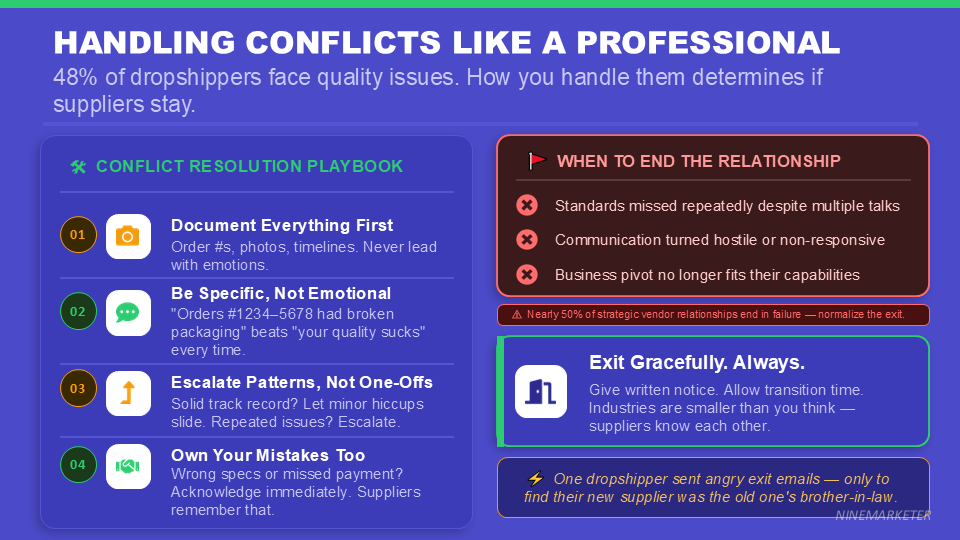
When addressing quality issues or delays, never lead with emotions or vague complaints like “your products suck.”
Instead, gather specifics: order numbers, photos of defects, customer feedback, and exact timelines.
One seller shared how switching from “this is unacceptable” to “orders #1234 and #5678 both arrived with broken packaging, can we discuss improved packing procedures?” completely changed their supplier’s responsiveness.
Here’s where it gets tricky though, knowing when to escalate versus when to let things go.
Minor one-off issues?
Let them slide, especially if your supplier’s track record is solid.
Patterns of problems affecting customer satisfaction scores?
That requires escalation through proper channels, starting with your main contact before jumping to their manager.
And honestly, sometimes you screw up too.
Maybe you sent the wrong product specs or missed a payment deadline.
Recovery from mistakes on your end requires immediate acknowledgment, no excuses, and a concrete plan to prevent recurrence.
Suppliers remember partners who own their mistakes way more than those who deflect blame.
But sometimes relationships just need to end.
Nearly 50% of strategic vendor relationships end in failure, so you’re not alone if you reach this point.
The key signs?
Consistent failure to meet agreed standards despite multiple conversations, communication that’s become hostile or non-responsive, or fundamental shifts in your business model that no longer align with their capabilities.
Ending it gracefully means giving written notice per your agreement terms and allowing transition time.
Never burn bridges, industries are smaller than you think, and suppliers often know each other.
One dropshipper torched a relationship with angry emails only to discover six months later that their new preferred supplier was actually the brother-in-law of the one they’d insulted.
Final Thoughts
Strong supplier relationships aren’t built overnight, they’re cultivated through consistent, professional interactions and genuine mutual respect.
Every email you send, every payment you make on time, every piece of constructive feedback you offer is an investment in a partnership that can transform your dropshipping business.
The suppliers who give you the best terms aren’t doing it because they’re generous, they’re doing it because you’ve proven yourself to be a partner worth investing in.
Start implementing these strategies today, even if you’re just placing your first few orders.
Your future self (and your profit margins) will thank you!
Ready to elevate your supplier relationships?
Start with one action this week: reach out to your top supplier with a simple message of appreciation or ask them how you can be a better partner.
That small gesture could be the beginning of a relationship that gives you a serious competitive advantage.