


You’ve found the perfect product on AliExpress.
The price is right, the photos look amazing, and you’re ready to hit that order button.
But wait!
I’ve seen too many new dropshippers get burned by rushing into orders without properly vetting their suppliers first.
One bad supplier can mean angry customers, refund requests, and a damaged reputation that takes months to rebuild.
Here’s the thing: AliExpress has thousands of incredible suppliers who can help you build a profitable business.
But it also has suppliers you should absolutely avoid.
The difference between success and failure often comes down to those crucial first steps, checking the right things before you commit to a partnership.
In my experience working with dropshippers, the ones who succeed are the ones who take supplier vetting seriously from day one.
In this guide, I’ll walk you through 10 essential things you need to check before ordering from any AliExpress supplier.
Whether you’re just starting out or looking to add new products to your store, this checklist will help you spot red flags, identify trustworthy suppliers, and set yourself up for long-term success!
Why Supplier Vetting Matters for Your Dropshipping Success
Look, here’s the brutal truth: over 84% of dropshippers say finding reliable suppliers is their biggest challenge.
Not marketing, not product research, suppliers. And when you’re just starting out, it’s tempting to scroll through AliExpress and pick whoever has the cheapest price.
That’s a recipe for disaster.
The real cost of working with unreliable suppliers ain’t just about money slipping through your fingers.
Sure, dealing with refunds sucks, but think about your brand’s reputation.
When a customer receives junk that breaks in two days or waits three weeks for an order that never shows up, they’re not blaming some random supplier.
They’re blaming you.
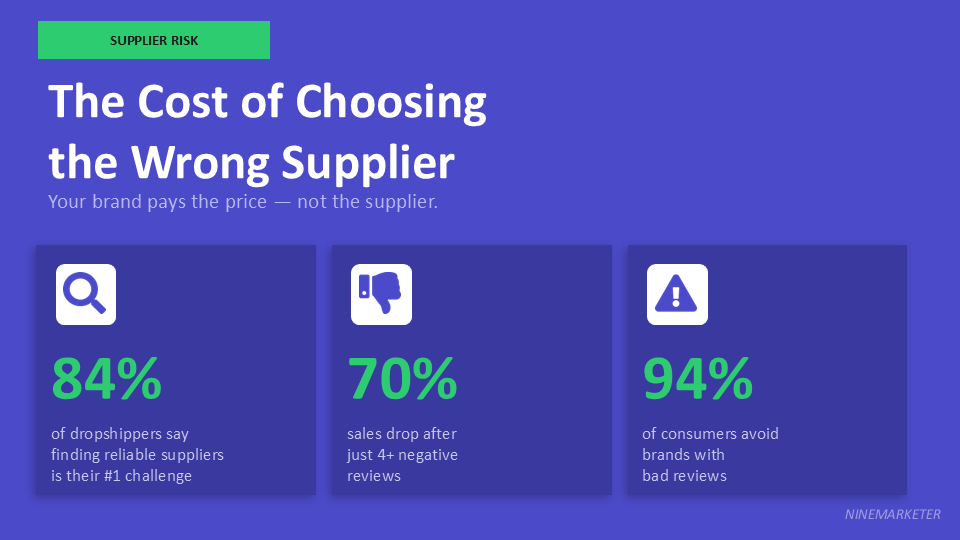
Here’s where it gets scary: more than four negative reviews can tank your sales by up to 70%.
And get this, 94% of consumers will straight-up avoid a company because of bad reviews.
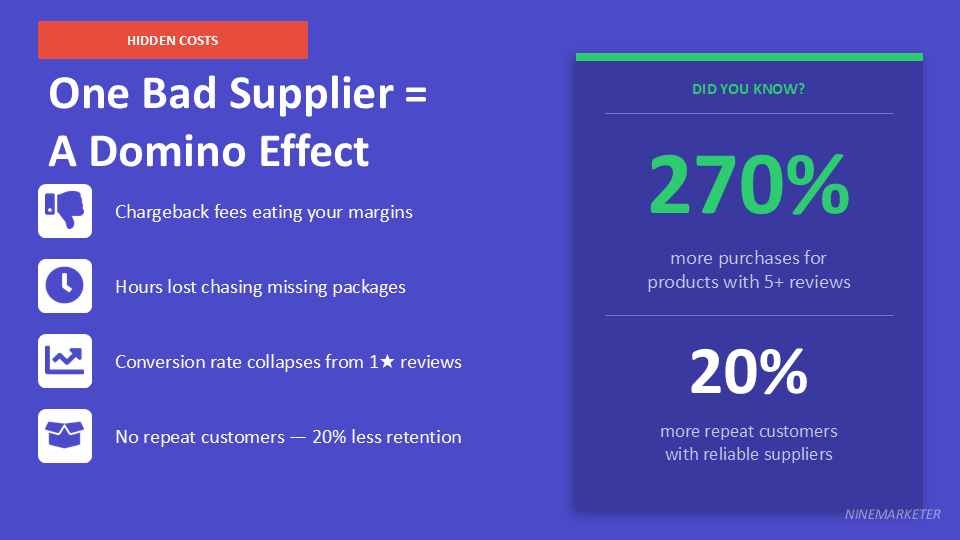
One sketchy supplier shipping damaged goods can trigger a domino effect of one-star reviews that murders your conversion rate before your store even gets off the ground.
Proper supplier vetting saves you from customer service nightmares, chargeback fees, and endless hours tracking down missing packages.
Think about the time you’ll waste responding to angry emails versus the hour it takes upfront to properly vet a supplier.
Products with at least 5 reviews have a 270% better chance of getting purchased, so every bad supplier experience directly costs you future sales.
Now, vetting isn’t the same as just comparing prices.
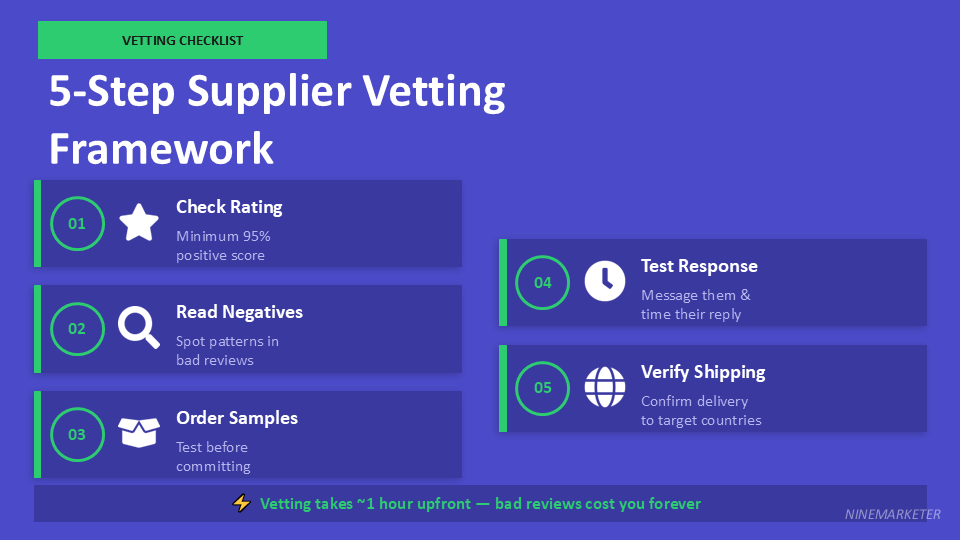
Real vetting means checking if that supplier has at least a 95% positive rating, reading through their negative reviews to spot patterns, ordering samples yourself, and testing their response time when you message them.
Beginners make the same mistakes over and over.
They pick the absolute lowest price without checking shipping times.
They ignore suppliers with 92% ratings thinking “close enough” when stores working with reliable suppliers get 20% more repeat customers.
They don’t verify if the supplier ships to their target countries.
Biggest mistake?
Not ordering samples before committing to an entire product line.
Bottom line, treating supplier vetting like a quick checkbox instead of a critical business decision will cost way more than doing it right from the start.
1. Check the Supplier’s Store Rating and Feedback Score
Here’s the deal: AliExpress shows you a percentage next to every supplier’s name, and that number is basically their report card.
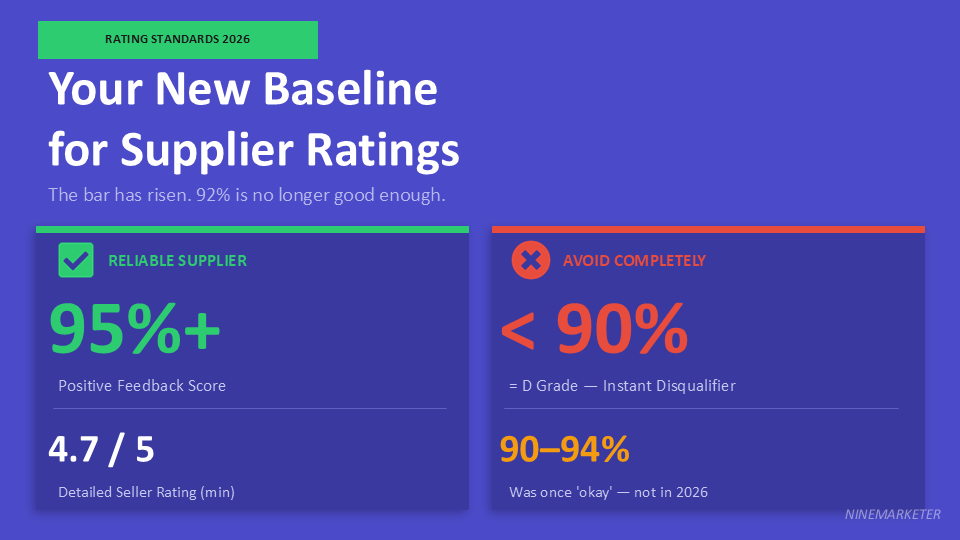
When you’re scrolling through products and see a supplier with at least 95% positive feedback, you’re looking at someone who’s been keeping customers happy.
Anything below that?
You’re rolling the dice with your business.
Now, what’s considered “good” in 2026 has gotten tougher.
Back in the day, folks would accept 92% or 93% ratings and call it decent.
Not anymore.
Expert dropshippers now prioritize suppliers with 95% or higher positive feedback scores and detailed seller ratings of at least 4.7 out of 5.
That’s your new baseline for 2026.
But here’s where beginners mess up, they just look at that overall percentage and move on.
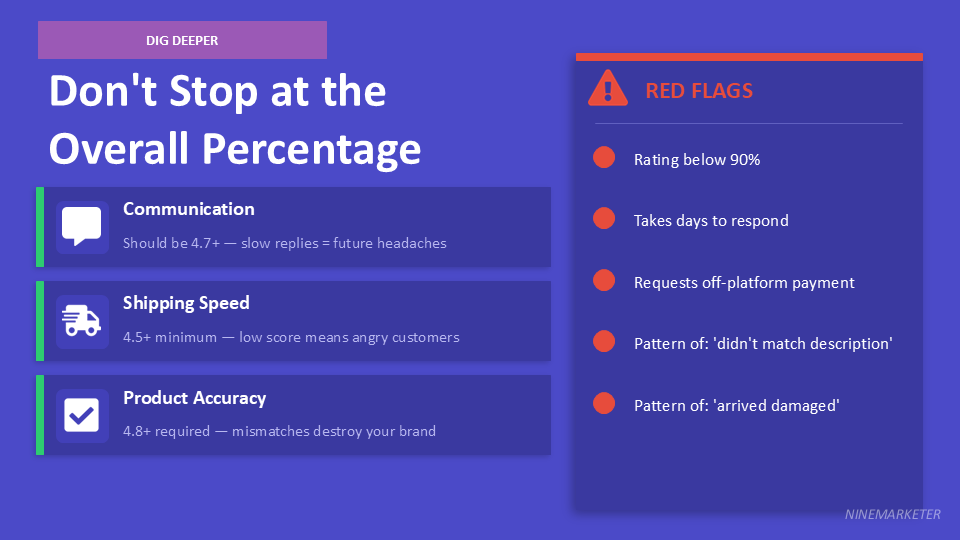
You gotta click into the supplier’s profile and check the breakdown scores for communication, shipping speed, and product accuracy.
A supplier might have 96% overall but only 4.3 on shipping speed, which means your customers are gonna wait forever and then blame you for it.
Red flags are everywhere if you know where to look.
Suppliers with ratings below 90% should be avoided completely, that’s basically a D grade.
Same goes for sellers who take days to respond to your messages or who ask you to pay outside the AliExpress platform.
That off-platform payment thing?
Huge scam warning.
Read through the negative reviews, not just the positive ones.
Look for patterns like “product didn’t match description” or “arrived damaged.”
If you see the same complaints pop up multiple times, that ain’t bad luck, that’s how they operate.
Now, don’t automatically skip newer suppliers just because they haven’t been around for years.
Some fresh stores are run by experienced sellers who opened new shops, or they’re offering unique products you won’t find elsewhere.
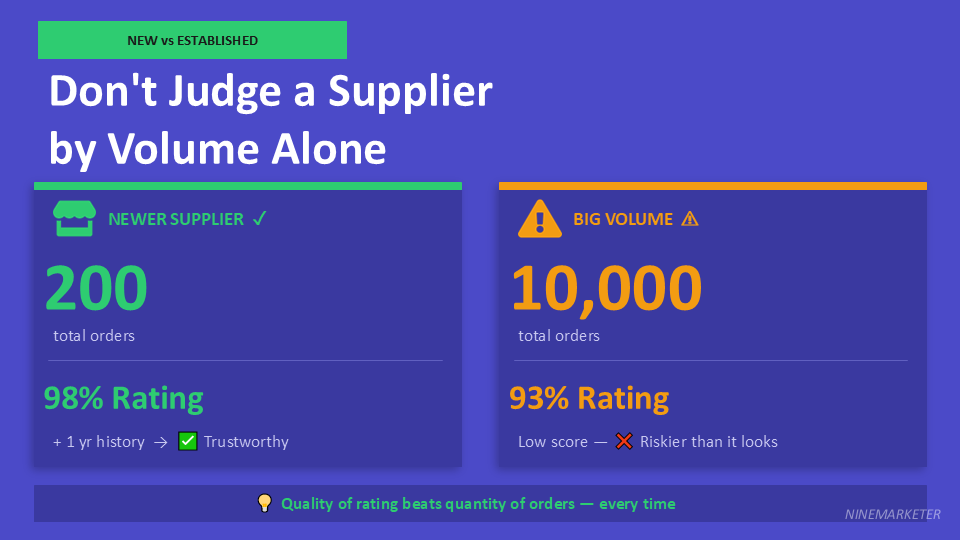
The trick is checking if they’ve got at least one year of history and solid ratings even with fewer total orders.
A supplier with 200 orders and 98% rating can be more reliable than one with 10,000 orders and 93% rating.
2. Analyze Customer Reviews and Feedback Quality
Here’s what most people miss when checking AliExpress reviews, they skim the five-star ratings and call it good research.
That’s gonna cost you.
The real gold is buried in the details, and fake reviews are everywhere if you know what to look for.
If a product has dozens of glowing reviews posted within days followed by complete silence, that’s a red flag screaming “fake.”
Legit suppliers get steady reviews over time, not suspicious bursts.
Another trick sellers use?
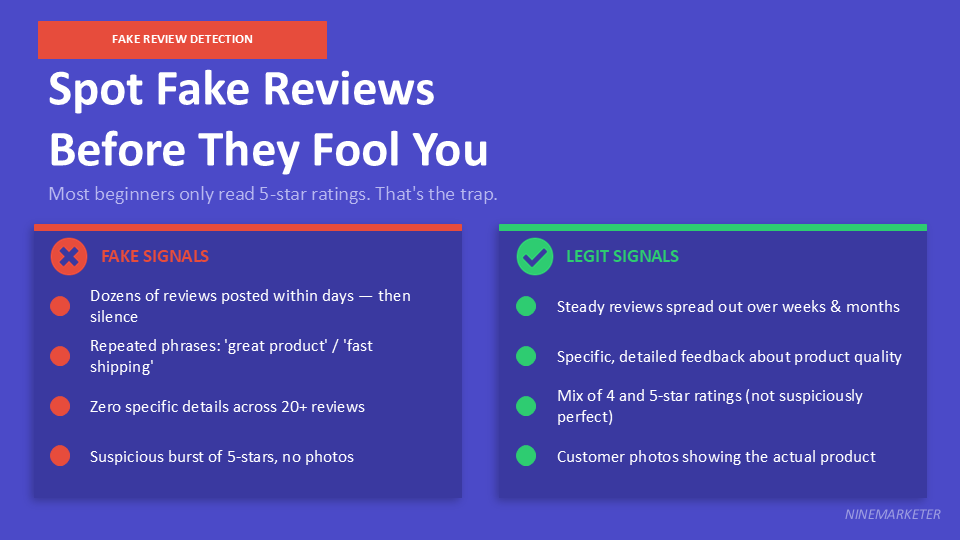
Multiple five-star reviews using similar phrases or writing styles.
When you see “great product” and “fast shipping” repeated across 20 reviews with zero specifics, those are probably bought and paid for.
Reading between the lines matters more than you’d think.
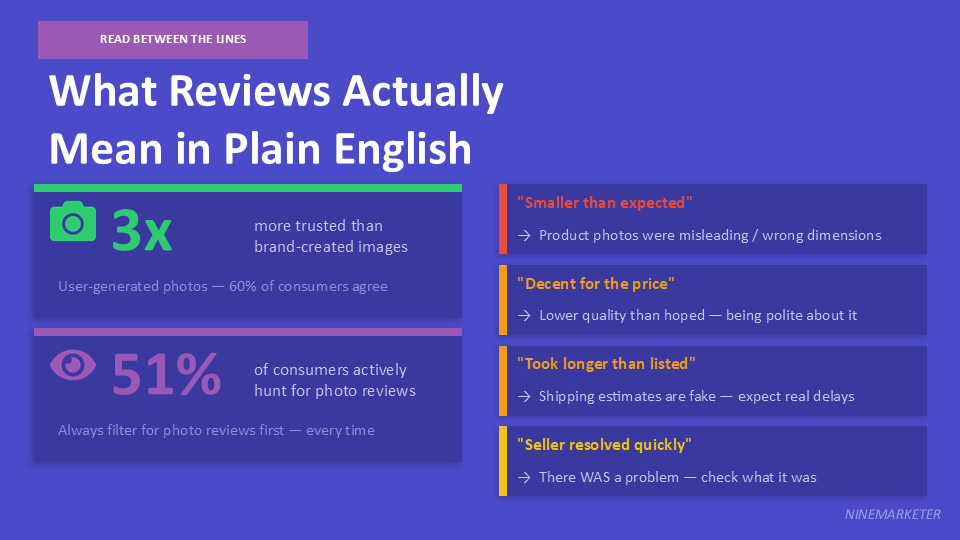
When customers say “smaller than expected,” they usually mean the product photos were misleading or the dimensions weren’t accurate.
If someone writes “decent for the price,” that’s code for “lower quality than I hoped but I’m trying to be nice.”
Pay attention to what people aren’t saying just as much as what they are.
This is critical: always hunt for reviews with photos.
60% of consumers believe user-generated photos are 3x more authentic and trustworthy than brand-created images.
Why?
Because real customers show the actual product, not some filtered, professionally lit version.
51% of consumers actively look for reviews that include photos, and they’ll trust those way more than text-only feedback.
Now here’s something beginners ignore, check recent reviews versus older ones.
A supplier might’ve been solid two years ago but quality tanked recently when they switched manufacturers.
Sort by “most recent” and scan the last 30 days worth of feedback.
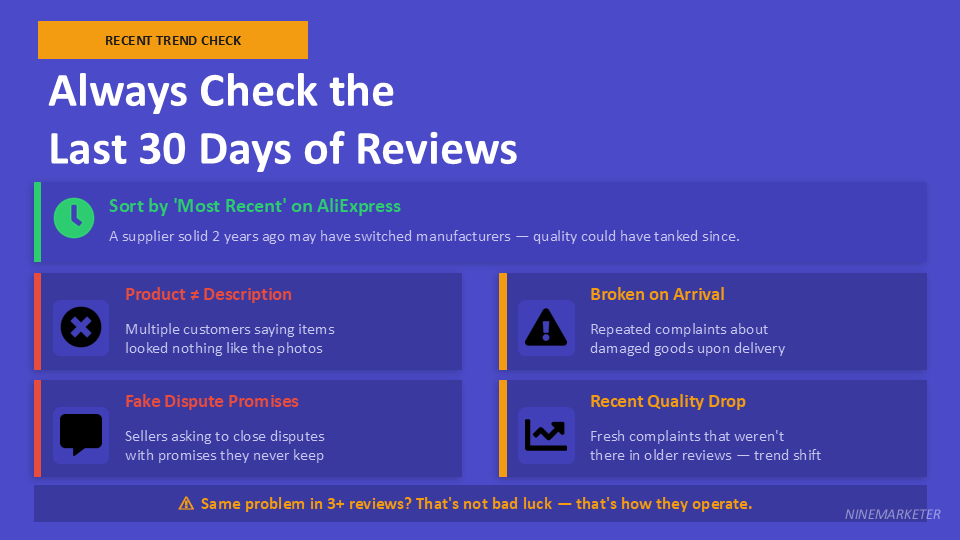
If you’re seeing fresh complaints about shipping delays or quality issues that weren’t there before, trends are changing and not in your favor.
Warning signs you shouldn’t ignore: customers mentioning products that didn’t match descriptions, multiple people reporting broken items on arrival, or complaints about sellers asking buyers to close disputes with promises they never keep.
When the same specific problems show up in 3, 4, 5 different reviews?
That ain’t bad luck, that’s how they do business.
3. Verify Supplier Response Time and Communication
Here’s something you’ll learn real quick in dropshipping: a supplier who takes three days to reply will likely take even longer to fix mistakes.
Communication ain’t just about being polite, it’s your best predictor of how they’ll handle problems when orders go sideways.
Think about it this way.
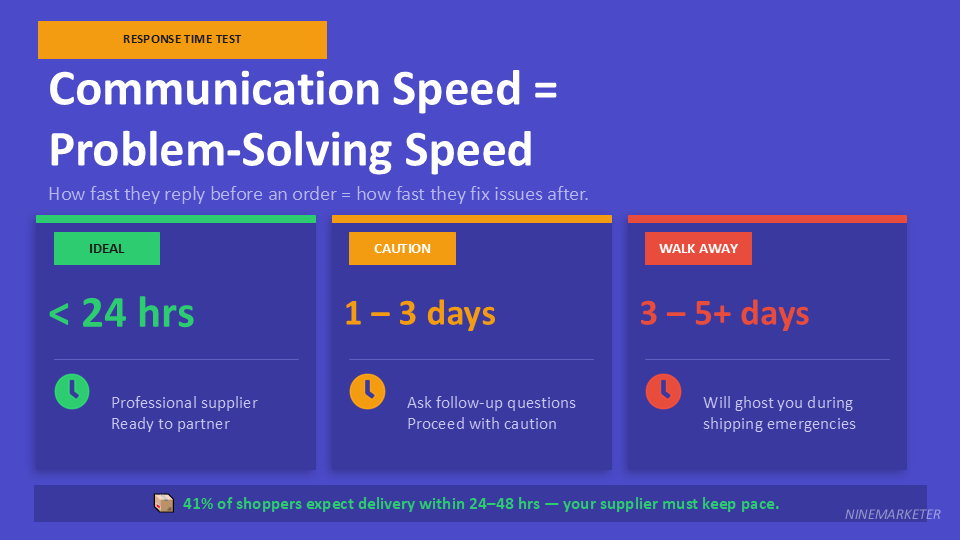
If a supplier ghosts you for 48 hours before you’ve even placed an order, what happens when there’s a shipping emergency with 20 pending orders?
You’ll be stuck dealing with angry customers while waiting for someone to answer your emails.
Testing supplier responsiveness before committing is simple but most folks skip this step.
Send them a message with specific questions about their processing times, return policies, and shipping methods.
Good suppliers should reply within a maximum of 24 hours on business days.
If they’re taking 3-5 days just to respond to a basic inquiry, that’s your warning sign right there.
Now, what questions should you ask to gauge their professionalism?
Don’t just ask about prices, that’s rookie stuff.
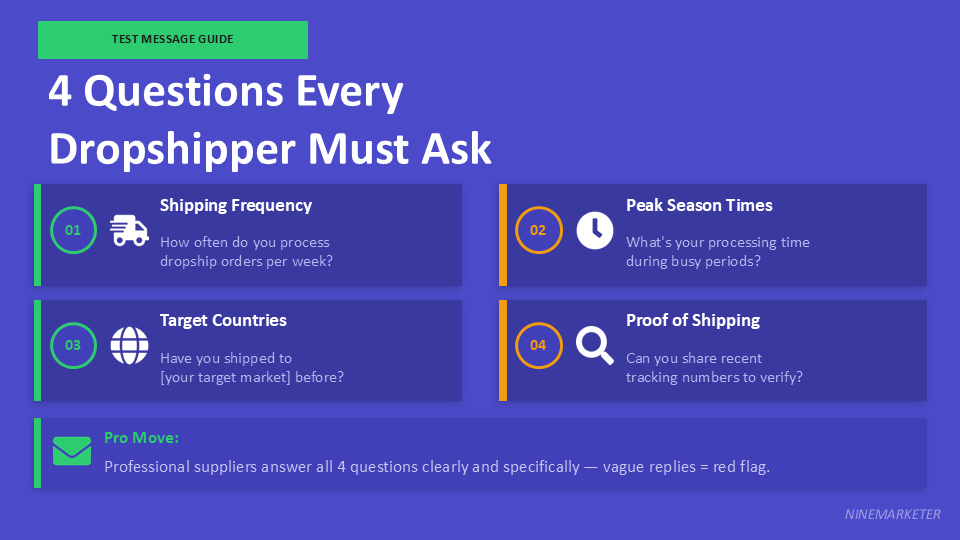
Ask them how often they ship dropship orders (some only process them twice a week), what their actual processing time is during peak seasons, and if they’ve shipped to your target countries before.
Request to see recent tracking numbers or recent deliveries to verify their advertised shipping times are legit.
Professional suppliers will answer these questions clearly and specifically.
Red flags in communication are everywhere once you know what to look for.
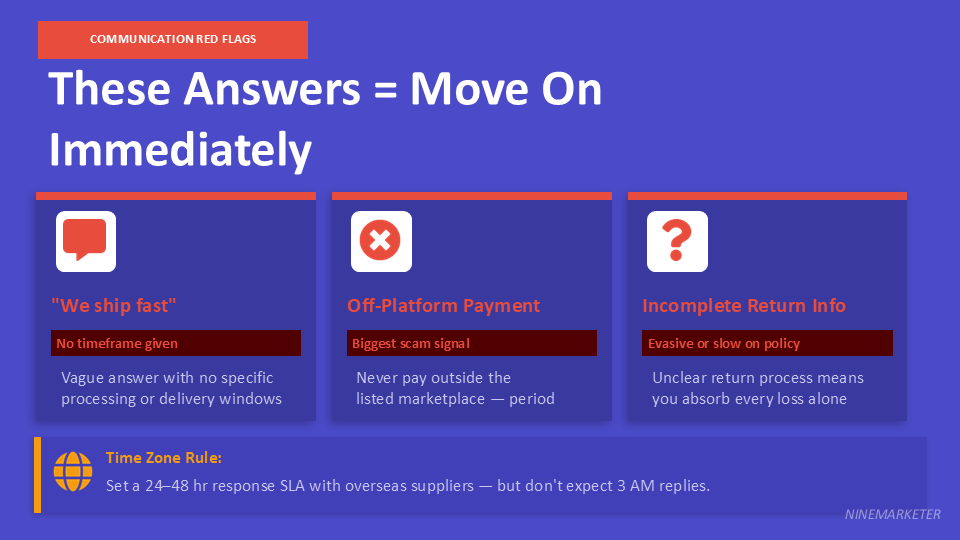
Vague answers like “we ship fast” without specific timeframes?
Red flag.
Asking you to pay outside the platform they’re listed on? Huge red flag.
Taking forever to respond or giving you incomplete information when you ask about their return process?
You’re better off moving on.
Time zones matter more than people think, especially if you’re working with suppliers overseas.
If your supplier’s in a completely different time zone, set a communication SLA with max 24-48 hours response time.
But be realistic, don’t expect instant replies at 3 AM their time.
41% of shoppers globally expect orders within 24-48 hours, so your supplier needs to be responsive enough to handle issues quickly when they pop up during your business hours.
4. Examine Product Quality Through Photos and Videos
You know what’s wild?
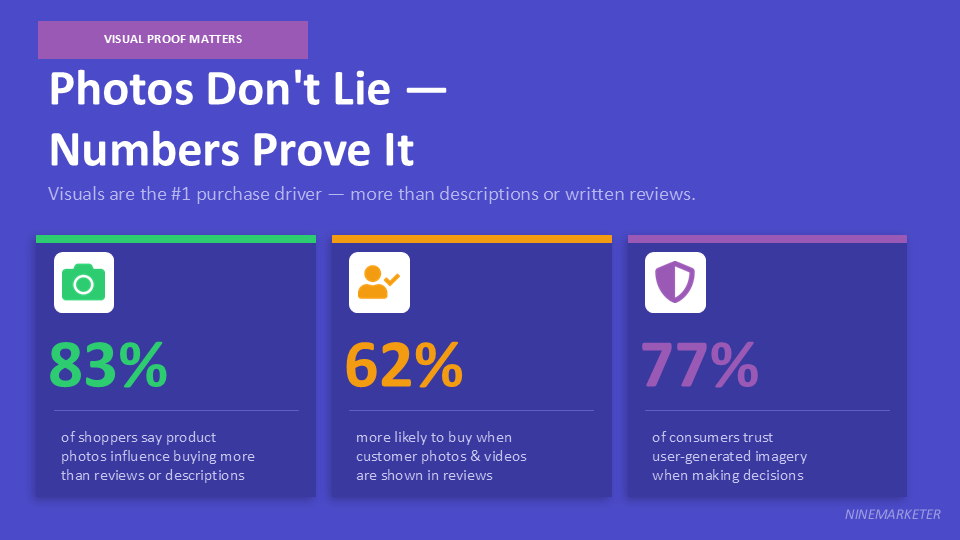
83% of shoppers consider product photos more influential than descriptions or reviews when they’re deciding whether to buy.
That’s why examining product quality through visuals ain’t optional, it’s everything.
First things first: message your supplier directly and ask for real product photos.
Not the polished marketing shots, but actual photos of the exact items they’re shipping.
Professional suppliers will have these ready to go.
If they hesitate or only offer you the same generic images everyone else is using, that’s a red flag worth noting.
Spotting stock photos versus actual product images gets easier with practice.
Stock photos usually look too perfect, professionally lit,
pristine white backgrounds, zero imperfections.
Real product photos show minor details like fabric texture, actual color variations, or how light hits the surface.
When you see the exact same photo on five different seller pages with just the color swapped?
That’s definitely stock imagery.
Here’s where it gets really valuable: customer review photos.
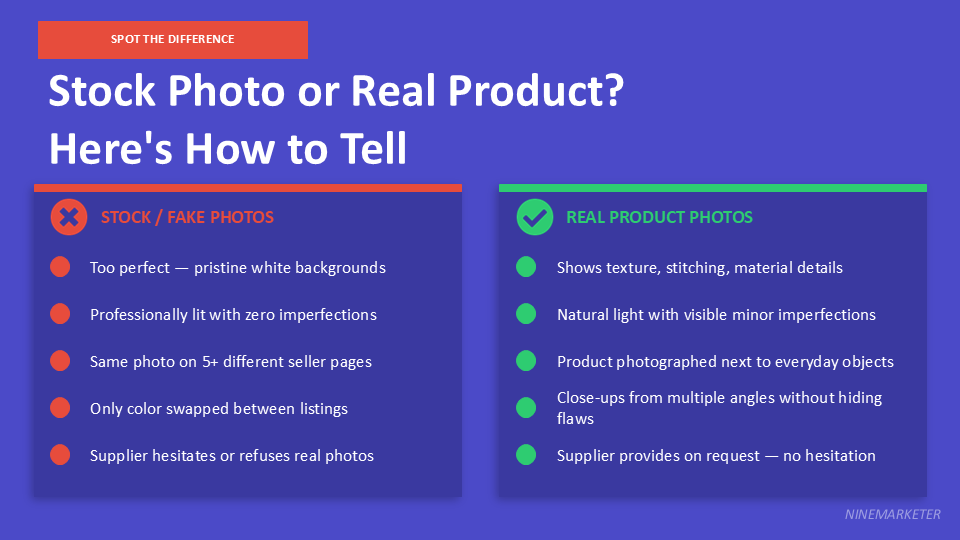
62% of consumers are more likely to purchase when they see photos and videos from other customers, and for good reason.
These unfiltered shots show what actually arrives at someone’s door.
Look for reviews where people photographed the product next to common objects for scale, or showed it in actual use rather than staged settings.
What should you look for in product detail shots?
Check if close-ups reveal stitching quality on fabric items, surface finish on electronics, or material thickness.
Blurry detail shots or photos that conveniently avoid showing certain angles usually mean the supplier’s hiding something.
And here’s the gold standard: video evidence.
Research shows that consumers prefer video reviews of products before purchasing online, and they’re willing to pay more for items with video documentation.
Videos can’t hide cheap materials or shoddy construction the way static images can.
Ask suppliers if they have unboxing videos or product demonstration footage.
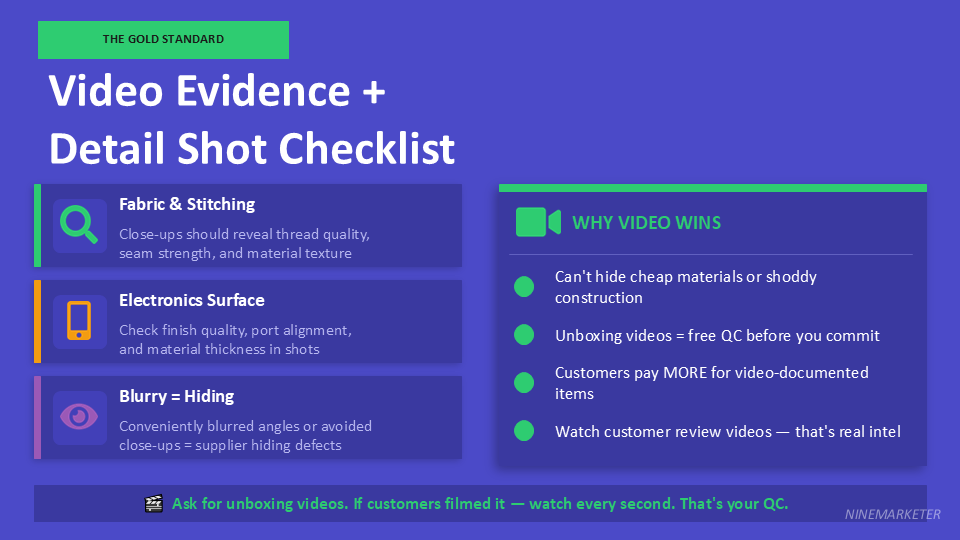
If customer reviews include videos showing the product in action, watch those carefully, they’re basically free quality control.
77% of consumers trust user-generated imagery when making purchase decisions, so prioritize finding suppliers whose products have been photographed and filmed by real customers.
That’s your best insurance policy against quality disasters.
5. Investigate Shipping Times and Methods
Promising your customers a two-week arrival when packages actually take six weeks?
That’s a business killer.
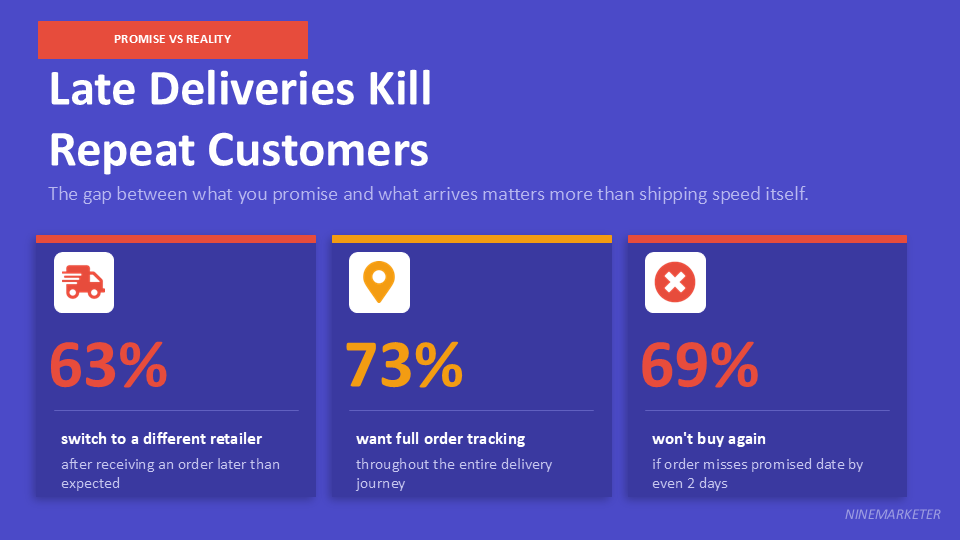
When customers receive orders later than expected, 63% will choose a different retailer for their next purchase.
The gap between promise and reality matters more than the actual transit period.
Let’s break down what you’re working with on AliExpress.
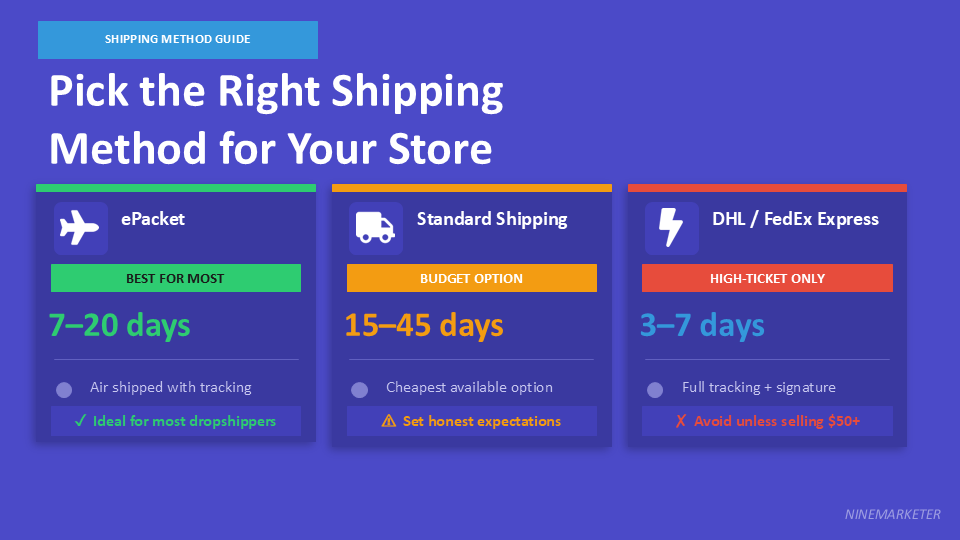
ePacket delivers in 7 to 20 business days to the US and offers the sweet spot between affordability and speed for lightweight packages under 2 kg.
It’s shipped by air with tracking included, which makes it ideal for budget-conscious dropshippers who still need reliable service.
Meanwhile, Standard Shipping spans 15 to 45 days depending on destination and customs processing, though some lucky customers see packages arrive in two weeks during slower periods.
For premium express carriers like DHL or FedEx, you’re looking at 3 to 7 days but the costs will demolish your profit margins unless you’re selling high-ticket items.
Most dropshippers can’t make the math work on express options for products under $50.
Here’s something non-negotiable: tracking availability.
Research shows 73% of consumers want to track their orders throughout the entire journey, and when tracking numbers are provided, 96% of them actually use it.
Without proper tracking, your inbox becomes a flood of “where’s my package” inquiries that drain your time and patience.
Before locking in any supplier relationship, dig through customer reviews specifically mentioning delivery experiences.
Look for recent feedback about actual arrival times versus advertised timeframes.
If multiple reviewers report “took 50 days when listing said 20-30,” that supplier’s estimates are worthless and they’ll create constant problems for your store.
The brutal reality about fulfillment windows: 69% of shoppers won’t buy from a retailer again if purchases don’t arrive within two days of the promised date.
Notice that’s not about the shipping method itself, it’s about keeping your word.
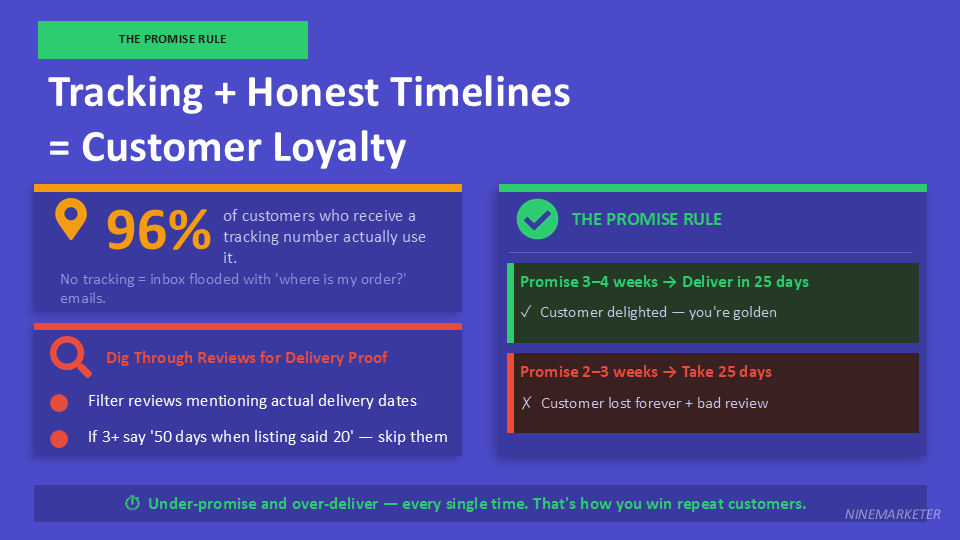
Promise 3-4 weeks and deliver in 25 days?
You’re golden.
Promise 2-3 weeks and take 25 days?
You just lost that customer forever, along with anyone who reads their angry review.
6. Review the Supplier’s Transaction History
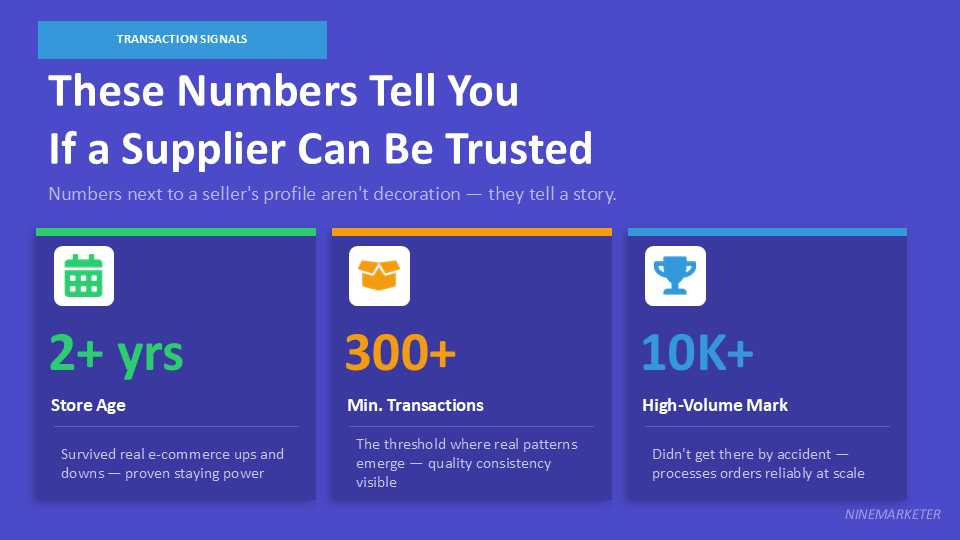
The numbers next to a seller’s profile ain’t just decorations, they’re telling you a story about reliability.
When you see stores that have been open for at least two years, you’re looking at a business that’s survived the ups and downs of e-commerce.
Fresh shops opening last month?
They might be great, but there’s no track record to prove it yet.
Order volume tells you more than just popularity.
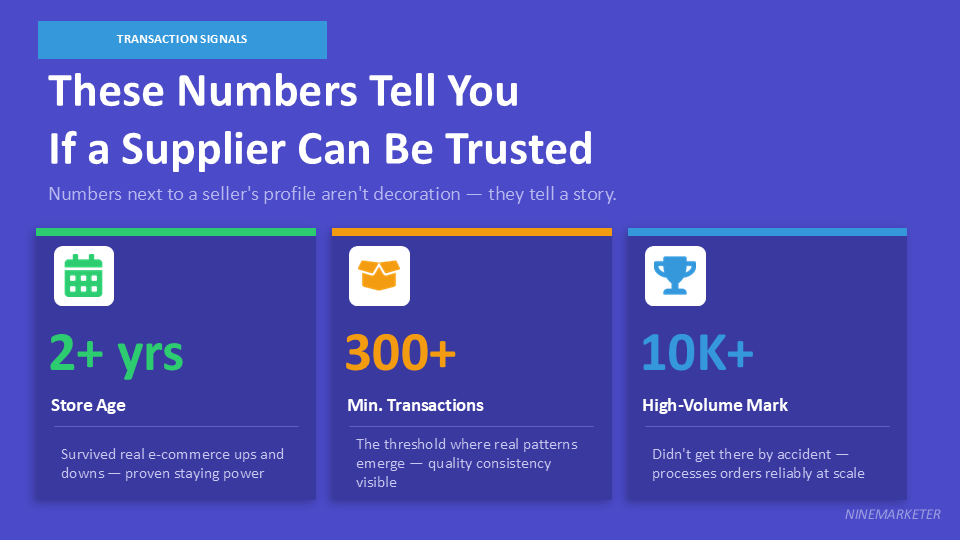
Products with lots of previous orders suggest consistent demand, which means customers keep coming back to that vendor because they’re delivering what they promise.
A merchant showing 10,000+ completed transactions didn’t get there by accident, they got there by not screwing up repeatedly.
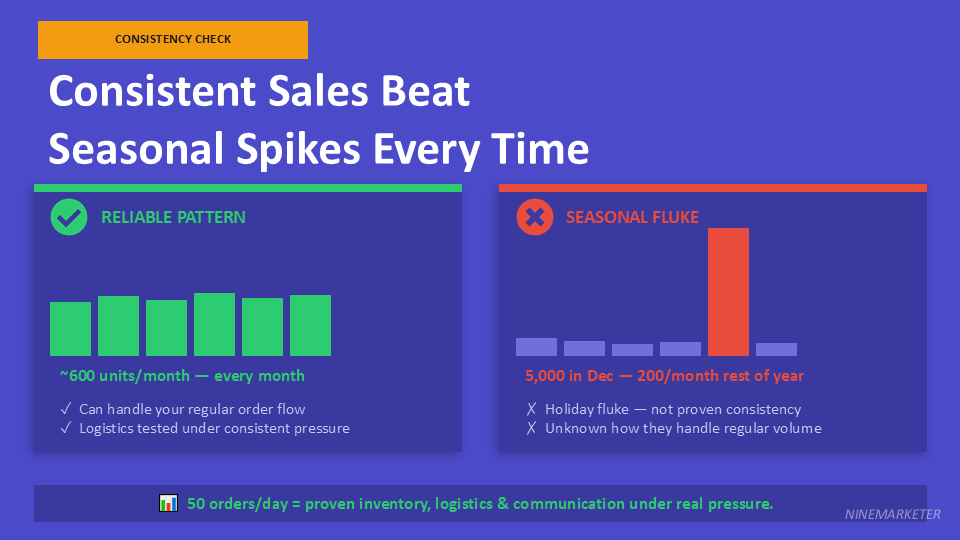
Now here’s where beginners get tripped up: they see seasonal sales spikes and think they found gold.
Maybe a store sold 5,000 phone cases in December but barely moved 200 units every other month of the year.
That’s not reliability, that’s a holiday fluke.
Consistent monthly sales patterns matter way more than those huge spikes because they show the business can handle regular order flow without falling apart.
Look for sellers with hundreds or thousands of sales showing they have experience fulfilling large quantities.
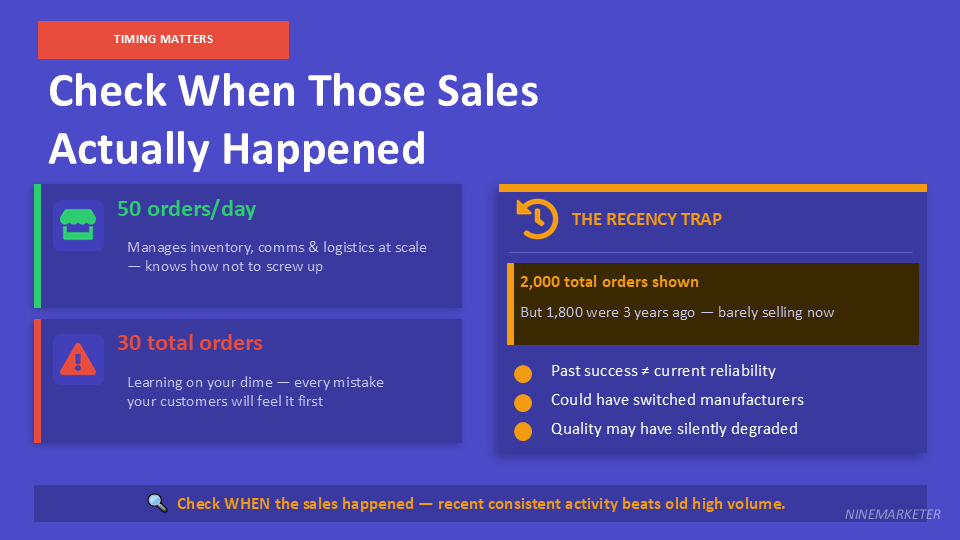
Someone processing 50 orders daily knows how to manage inventory, communication, and logistics under pressure.
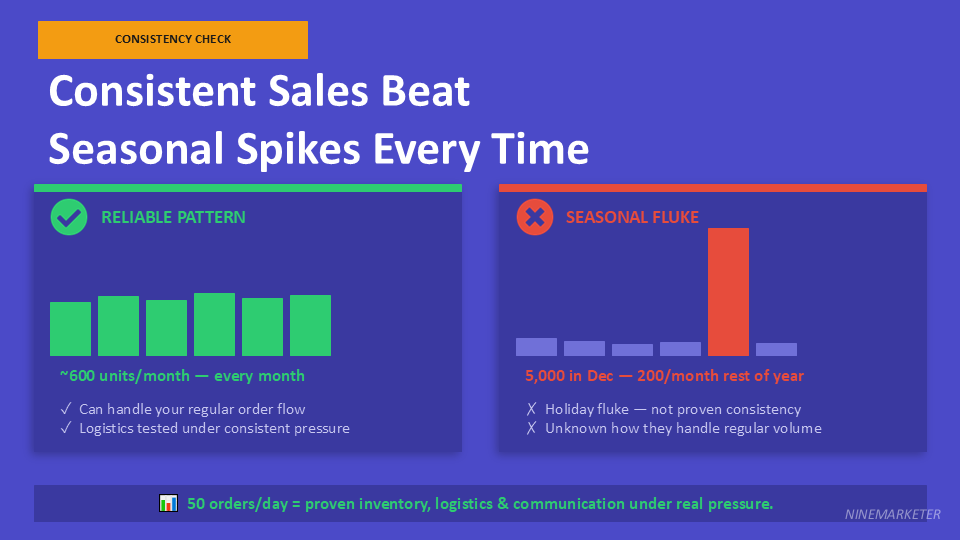
Compare that to a shop that’s only handled 30 total orders, they’re basically learning on your dime.
What’s the minimum threshold you should actually look for?
Most experienced dropshippers won’t touch a vendor unless they’ve got at least 300 completed transactions demonstrating proven demand.
That’s not some random number, it’s the point where you can start seeing real patterns in customer feedback and spot whether quality stays consistent over time.
But don’t just stare at the total number and call it research.
Check when those sales happened.
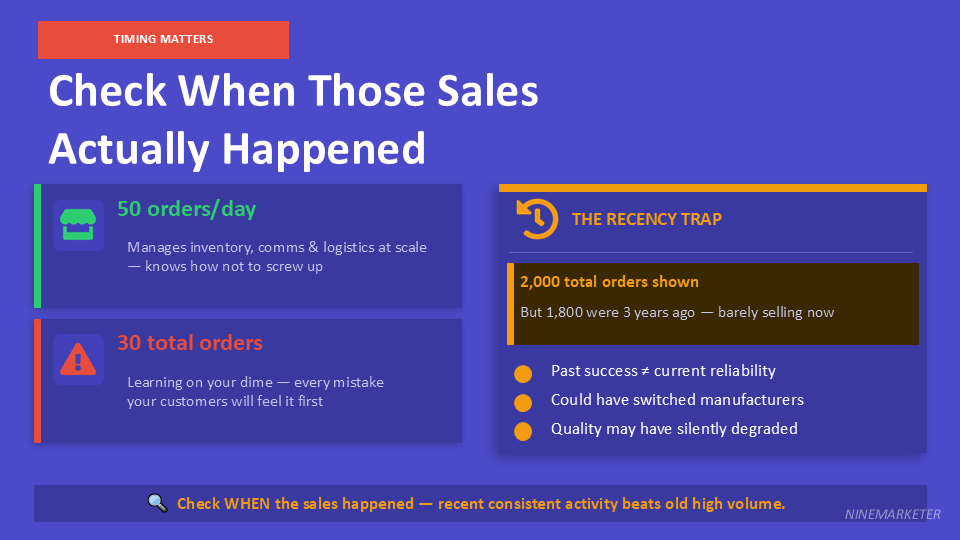
If a shop shows 2,000 orders but 1,800 of them were three years ago and they’ve barely sold anything recently, something changed.
Maybe their product quality tanked, or they switched manufacturers.
Either way, you’re looking at past success that doesn’t predict current reliability.
7. Assess Return and Refund Policies
Understanding AliExpress buyer protection basics ain’t optional, it’s your safety net when things go sideways.
The platform holds your payment in escrow until you confirm delivery or the protection window closes, which typically ranges from 30 to 60 days and sometimes extends to 90 days.
During this period, you can open disputes for items that never arrive, show up damaged, or don’t match what was advertised.
Beyond the platform’s baseline guarantees, supplier-specific refund guidelines reveal a lot about who you’re dealing with.
Look for vendors who clearly state their handling process for defective merchandise, whether they cover return shipping costs, and how quickly they process refunds.
Some sellers offer Domestic Returns programs where you can send products back to a warehouse in your country instead of shipping internationally, which saves time and hassle.
Here’s something most dropshippers miss: return rates can reveal serious product quality problems before you even place your first order.
When around 81% of products come back because they’re damaged or defective, that’s a massive red flag about quality control.
If you’re checking reviews and seeing multiple customers mention returns for the same issue, broken parts, wrong specifications, or items that don’t match descriptions, that supplier’s got systemic problems you don’t want to inherit.
Questions about defective merchandise handling separate professional vendors from fly-by-night operations.
Ask them directly: What’s your process when a customer receives a faulty item?
Do you offer partial refunds, full replacements, or both?
How long does dispute resolution typically take?
Professional suppliers won’t hesitate or dodge these questions because they’ve got established procedures.
Sketchy ones will give vague answers or pressure you to close disputes early with promises they never keep.
When policies seem unclear or suspiciously vague, protect yourself by documenting everything.
Take screenshots of product listings showing descriptions, prices, and shipping promises before ordering.
Keep all communication with the vendor saved in one place.
If you need to open a dispute within 15 days after order completion, having evidence ready, photos, videos, correspondence, dramatically improves your chances of winning.
Remember that you can only open one dispute per order, so make it count by submitting comprehensive evidence the first time.
The brutal truth about ecommerce: at least 30% of all products ordered online get returned, compared to under 9% in physical stores.
Your supplier’s approach to handling these situations will either make your dropshipping business sustainable or constantly drain your time fighting fires.
8. Evaluate Product Pricing and Hidden Costs
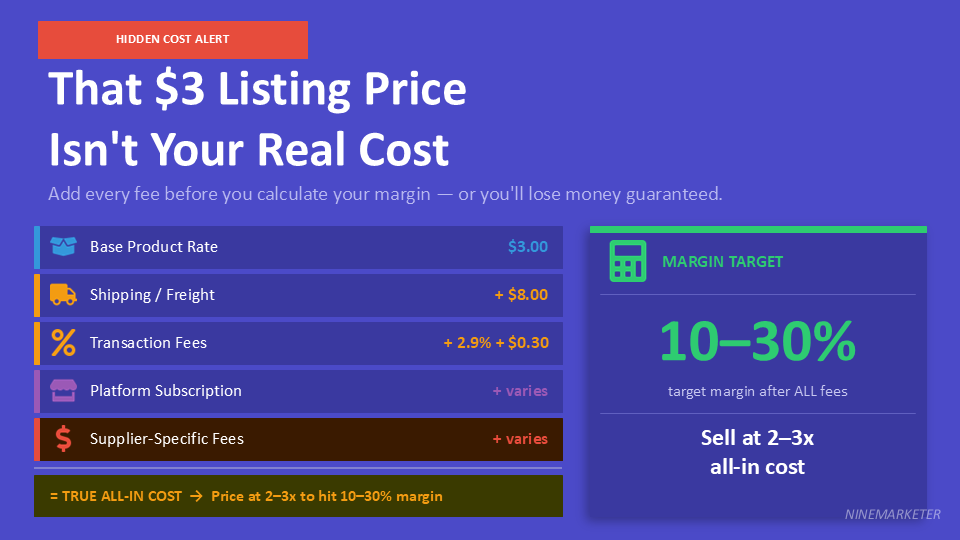
Here’s what beginners miss when they see that $3 listing price on AliExpress, that number ain’t the real cost.
You gotta factor in delivery fees, and sometimes a $3 product might need $8 in shipping charges, completely wrecking your profit calculations before you even start.
Calculating true expenses for margin planning means adding up every single fee that’s gonna hit your business.
Start with the base product rate, then pile on freight costs, transaction fees that typically run around 2.9% + $0.30 per sale, platform subscriptions, and any supplier-specific charges.
Most successful dropshippers aim for margins between 10% and 30% after everything’s accounted for, which means you need to sell products at roughly 2-3 times what they actually cost you all-in.
Now, suspiciously low vendor rates?
If it seems too good to be true, it usually is.
When you see prices far below market value, you’re probably looking at counterfeit merchandise, bait-and-switch tactics, or suppliers who’ll disappear after taking your money.
Legit manufacturers have real expenses, labor, materials, quality control, and those don’t magically vanish just because someone’s offering rock-bottom numbers.
Comparing rates across multiple vendors for identical items reveals who’s actually competitive versus who’s running a scam.
Pull up the same phone case from five different sellers and you’ll notice patterns.
If four suppliers quote $8-$12 and one quotes $2, that outlier isn’t offering a deal, they’re offering problems.
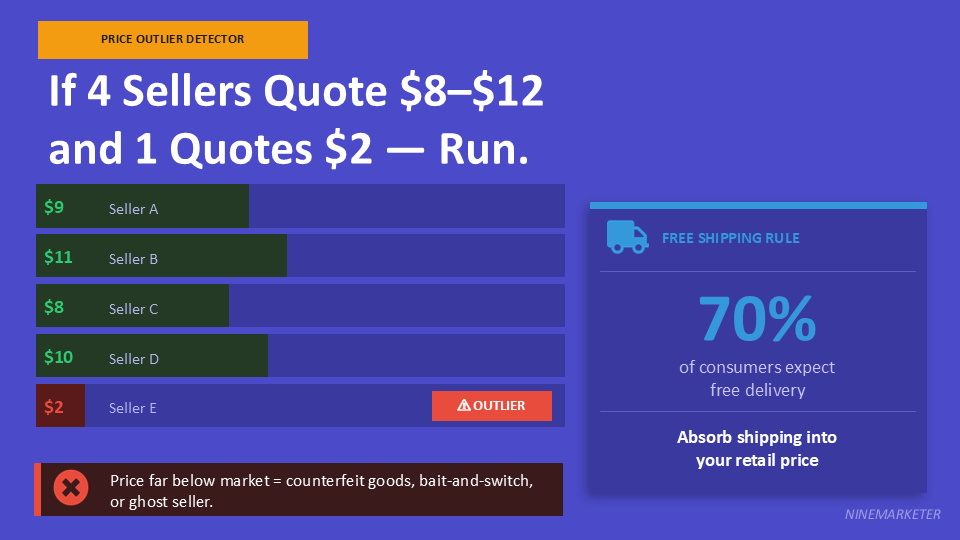
Check if nearly 70% of consumers expect free delivery, which means you’ll probably need to absorb shipping expenses in your retail price anyway.
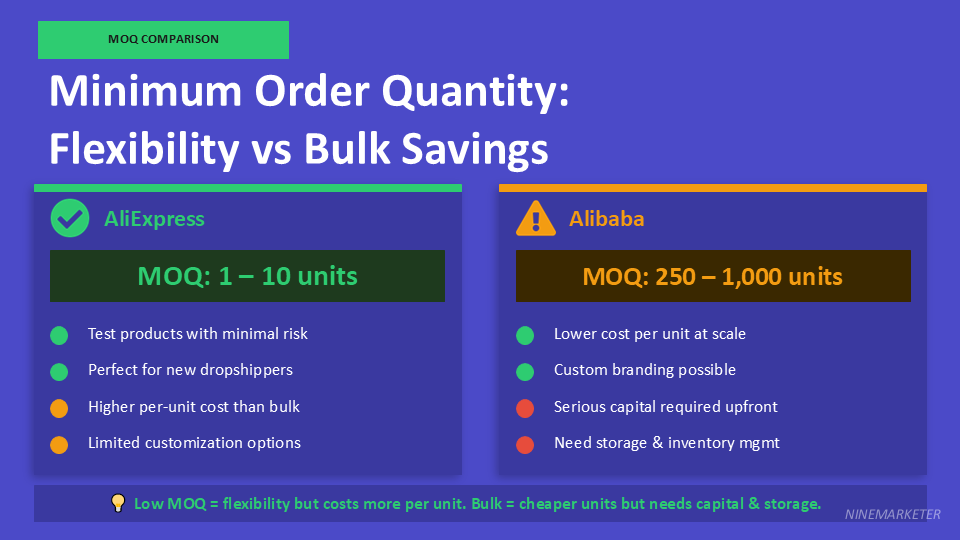
Understanding MOQ (minimum order quantity) requirements matters more than people think.
AliExpress sellers usually set MOQs as low as 1 to 10 units, making them perfect for testing products without huge upfront investment.
Meanwhile, Alibaba vendors often demand 250 to 1000 units minimum because they’re dealing with wholesale manufacturing operations.
Lower minimums mean flexibility but higher per-unit rates, while bulk commitments slash individual item expenses but require serious capital and storage solutions you might not have yet.
9. Check for Product Certifications and Compliance
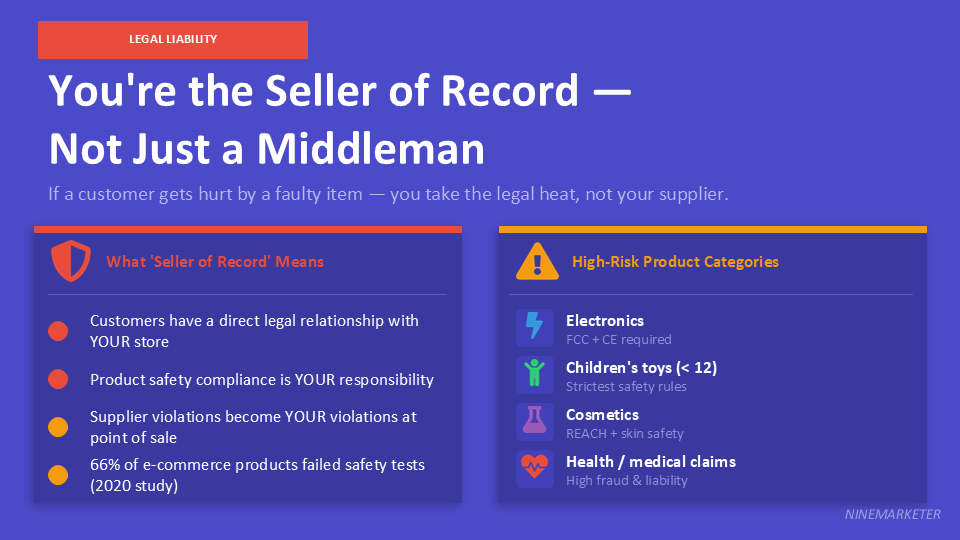
Here’s the harsh reality: even as a dropshipper, you’re responsible for product safety in every market you sell to.
You’re not just some middleman passing products along, legally, you’re the seller of record.
If a customer gets hurt by a faulty item or receives something that violates local regulations, guess who takes the heat?
Safety marks matter way more in certain categories than others.
Electronics, children’s toys, cosmetics, and medical devices sit at the top of that high-risk pyramid.
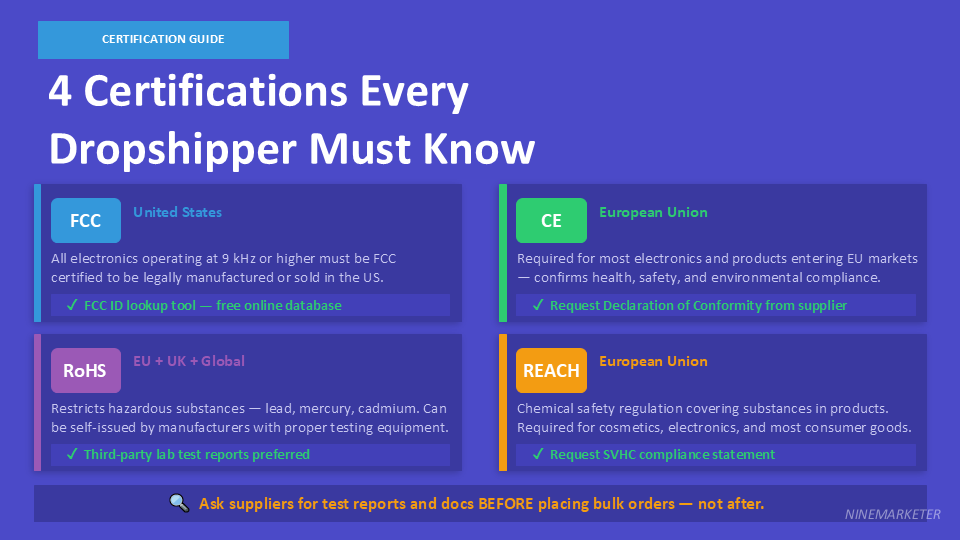
For instance, all electronics oscillating at 9 kHz or higher must be FCC certified before they can legally be manufactured or sold in the United States.
Meanwhile, the CE mark is required for most electronics entering European markets, showing they meet EU health, safety, and environmental protection standards.
Common standards you’ll encounter include FCC for radio frequency emissions, CE marking for European compliance, RoHS for restricting hazardous substances like lead and mercury, and REACH for chemical safety.
RoHS certification can actually be self-issued by manufacturers if they have proper testing equipment, though most use third-party labs instead.
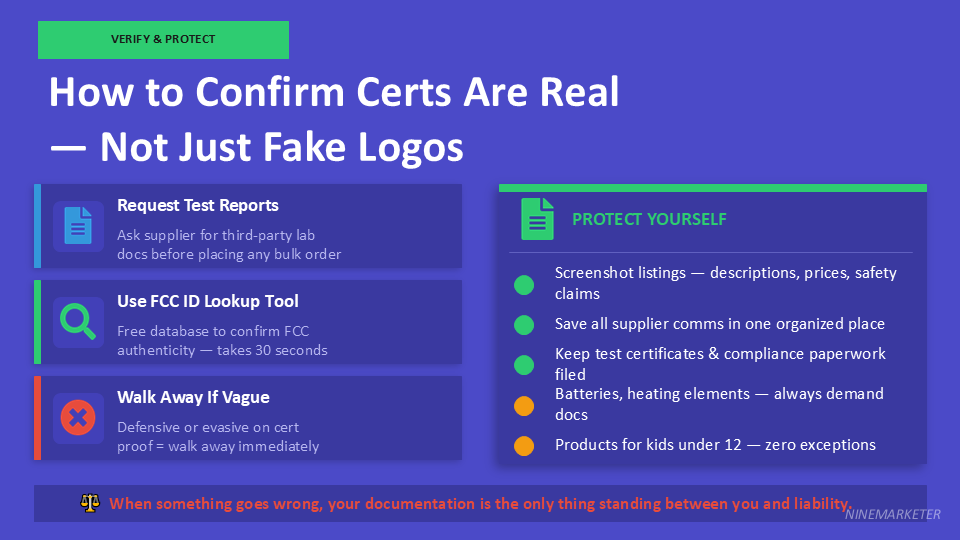
Now, how do you verify claimed credentials are legitimate and not just fake logos slapped on product listings?
Ask suppliers directly for test reports and documentation before placing bulk orders.
Check manufacturer websites for compliance details, or use online databases like the FCC ID lookup tool to confirm authenticity.
If a vendor gets defensive or vague when you request proof, that’s your cue to walk away.
Categories requiring extra scrutiny include anything with batteries or heating elements, products marketed to kids under 12, beauty items that touch skin, and gear claiming health benefits.
A 2020 study revealed that 66% of products from various e-commerce platforms failed safety tests, which should scare you into being more careful about what you list.
Protecting yourself from liability starts with proper documentation.
Save screenshots of product listings showing descriptions and safety claims before ordering.
Keep all supplier communication, test certificates, and compliance paperwork organized in one place.
Dropshippers are considered sellers of record, meaning customers have a direct legal relationship with your store, not your supplier, when something goes wrong.
10. Test with a Small Sample Order
Here’s something you need to understand: 84% of ecommerce retailers say finding reliable suppliers is their biggest obstacle, and the only way to verify someone’s worth their salt is by ordering test products yourself.
Skipping this step is just gambling with your business reputation.
When that preliminary shipment arrives at your door, you’re not just checking if it works, you’re experiencing exactly what your customers will receive.
Inspect the packaging first because shoddy boxes or missing protective materials mean damaged goods showing up on doorsteps.
Then examine product quality closely: Does the fabric feel cheap?
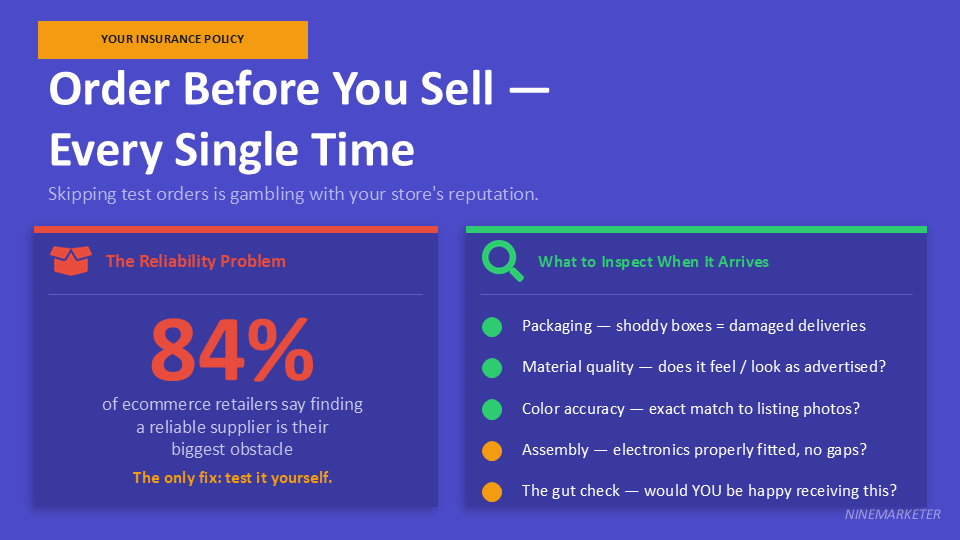
Are electronics assembled properly?
Does the color match what’s advertised?
If you wouldn’t be happy receiving it yourself, your customers won’t be either.
Conducting thorough quality assessments means testing functionality for several days.
If you’re selling phone accessories, use them daily and see if they hold up.
For clothing items, check stitching, wash them, look for shrinkage or color bleeding.
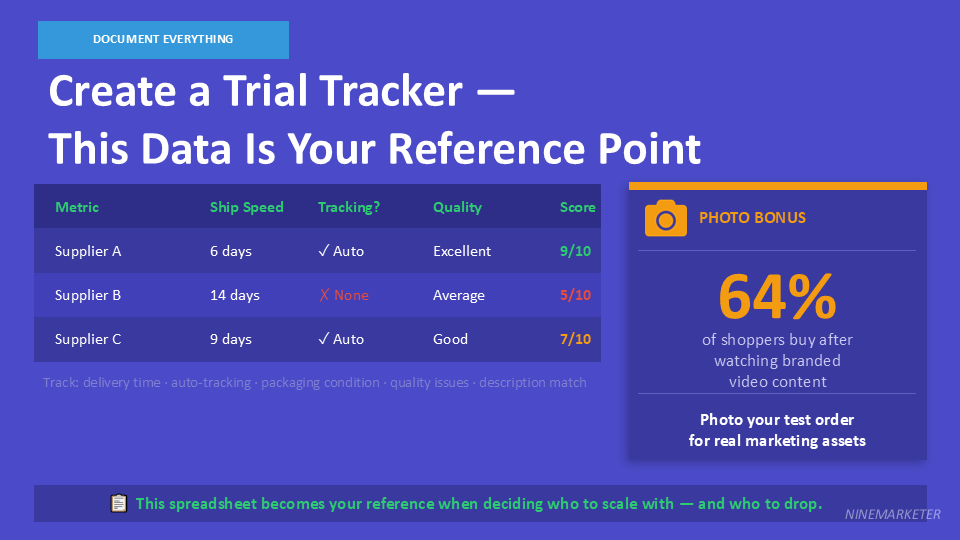
Take detailed photos during this process because you’ll use these for marketing, 64% of shoppers make purchases after watching branded video content.
And stock images ain’t gonna cut it when everyone else has access to the same ones.
Document everything obsessively during your trial period.
Create a spreadsheet tracking delivery timeframes, communication response rates, packaging condition, and any quality issues discovered.
Note how long the vendor took to ship after you ordered, whether tracking was provided automatically, and if the item matched descriptions.
This documentation becomes your reference point when comparing multiple suppliers or deciding whether to scale up.
Now here’s the tough part: knowing when to walk away versus when to commit to a partnership.
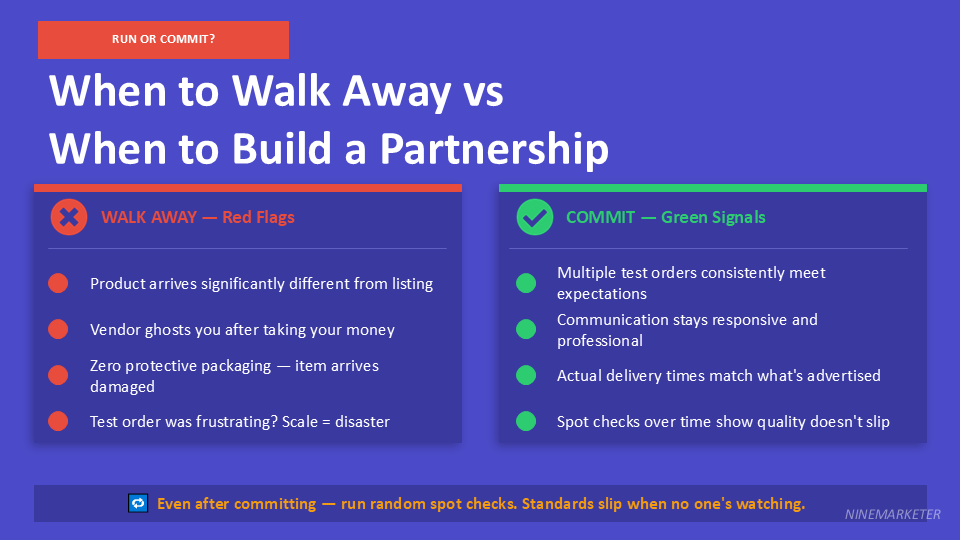
Red flags that scream “run” include products arriving significantly different from listings, vendors who ghost you after taking your money, or specimen items showing up damaged with zero protective packaging.
Trust your gut, if the test order experience was frustrating, imagine dealing with hundreds of similar orders while angry customers flood your inbox.
Commit to a supplier relationship when trial shipments consistently meet expectations across multiple orders, communication stays responsive and professional, and actual delivery times match what’s advertised.
Some successful dropshippers even place random spot checks periodically after establishing partnerships to ensure standards don’t slip over time.
Bottom line: treat preliminary purchases as your insurance policy against disaster, not an optional expense you can skip.
Your Next Steps to Supplier Success
Vetting AliExpress suppliers might seem like extra work upfront, but trust me, it’s the foundation of a successful dropshipping business.
Every minute you spend checking these 10 things before ordering is a minute saved from dealing with customer complaints, refund requests, and damaged reputation down the line.
Start with this checklist for every new supplier relationship.
Make it a habit, not a one-time thing!
The best dropshippers I know treat supplier vetting like a ritual, they never skip steps, even when they’re excited about a hot new product.
Your future self (and your customers) will thank you.
Ready to find your next reliable supplier?
Grab this checklist, open up AliExpress, and start vetting with confidence.
Remember: the goal isn’t perfection, it’s finding suppliers who are transparent, communicative, and committed to quality.
Those partnerships will carry your business forward for years to come!