



Your customer just sent their third email asking where their order is. It’s been two weeks.
You check the tracking, still sitting in a warehouse overseas. Sound familiar?
Here’s the brutal truth: slow shipping is killing dropshipping businesses faster than bad products ever could.
In 2026, customers expect Amazon-level speed, and if you can’t deliver, they’ll find someone who can.
But here’s what most dropshippers don’t realize, those shipping times aren’t set in stone.
I’ve seen store owners cut their delivery times in half simply by knowing how to have the right conversation with their suppliers.
The difference between a 30-day nightmare and a 10-day success story often comes down to negotiation skills, not luck.
In this guide, you’ll discover the exact strategies to negotiate better shipping times with your suppliers, build leverage even as a small store, and create win-win partnerships that actually stick.
Let’s turn those shipping times from your biggest weakness into your competitive advantage!
Why Shipping Speed Matters More Than Ever in Dropshipping
You know what’s crazy?
Back when two-day shipping became the standard, people thought it was fast.
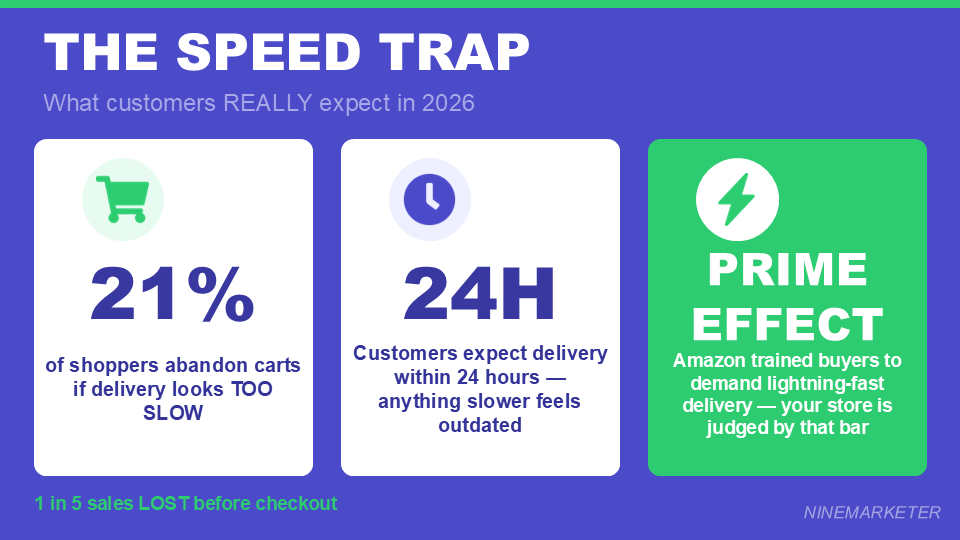
Now customers are expecting delivery within 24 hours, and anything slower feels like you’re running a business from 2010.
Here’s the brutal truth about dropshipping in 2026, your customers don’t care that you’re working with suppliers halfway across the world.
Amazon Prime trained them to expect lightning speed, and 21% of shoppers will abandon their cart if delivery looks too slow.
That’s one in five sales gone before you even get started.
But losing the initial sale?
That’s just the beginning of your problems.
When orders take forever, customers get antsy and start filing disputes with their banks.
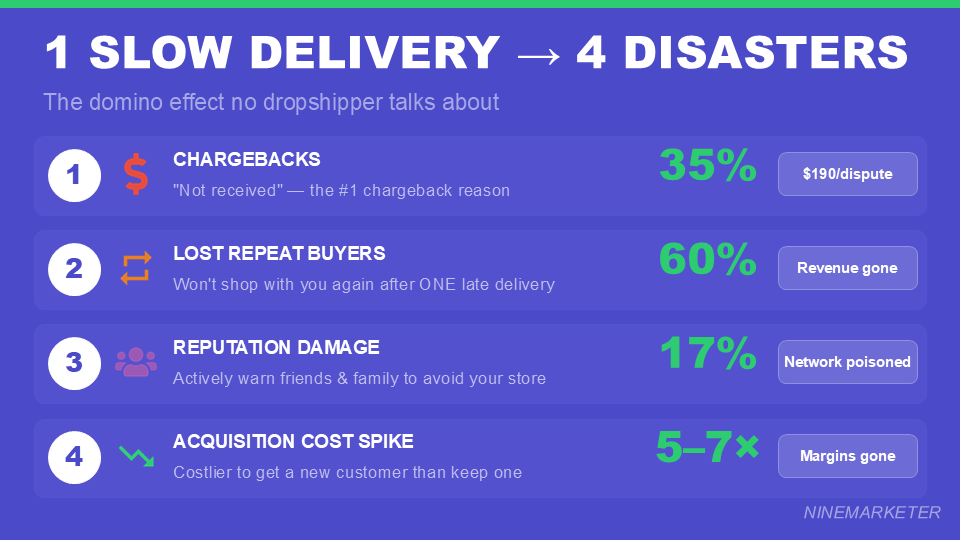
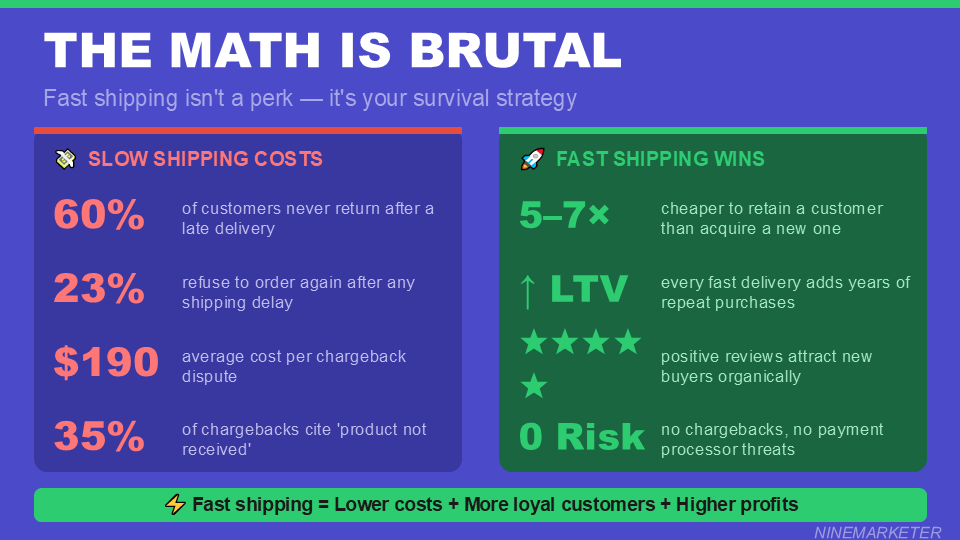
The most common chargeback reason is “product not received” at 35%, and here’s the kicker, each chargeback costs merchants around $190 when you factor in fees and lost merchandise.
Do that enough times and you’re not just losing money, you’re risking your payment processor dropping you entirely.
The damage doesn’t stop there either.
Late deliveries don’t just frustrate people, they turn them into your worst nightmare.
23% of customers refuse to order again after shipping delays.
Even worse, 17% will actively tell friends and family to avoid your store.
You’re not just losing one customer, you’re losing their entire network.
And those angry reviews?
They stick around forever, scaring off new customers who were this close to buying.
Meanwhile, your competition with faster shipping is scooping up all the sales you’re missing.
Here’s what really gets me though, acquiring a new customer costs five to seven times more than keeping an existing one.
So when you lose customers to slow shipping, you’re not just losing their repeat business.
You’re forcing yourself to spend way more money replacing them, which eats into your already thin dropshipping margins.
The math is simple: 60% of customers won’t shop with you again after a late delivery.
That means every slow shipment is potentially costing you years of future purchases.
Fast shipping isn’t a nice-to-have anymore.
It’s the difference between building a real business and constantly scrambling to replace angry customers.
Understanding Your Current Supplier’s Shipping Limitations
Here’s something most dropshippers don’t realize until it bites them, there’s a massive difference between what your supplier says their shipping time is and what actually happens in the real world.
You ever notice how a supplier claims “7-10 days” but customers are emailing you three weeks later asking where their stuff is?
Yeah, that’s because nobody bothered to dig into what those numbers actually mean.
The first thing you gotta understand is that total delivery time equals processing time plus shipping time.
Your supplier needs time to pull the product off the shelf, wrap it up, slap a label on it, and hand it off to the carrier, that’s processing time.
Then there’s the actual time the package spends bouncing around in trucks and planes before landing on your customer’s doorstep, that’s shipping time.
Most suppliers love to advertise their shipping time and conveniently forget to mention their processing takes another five days.
Wanna know the real numbers?
Do what successful dropshippers do and order test products from every supplier you’re working with.
Don’t just order one either.
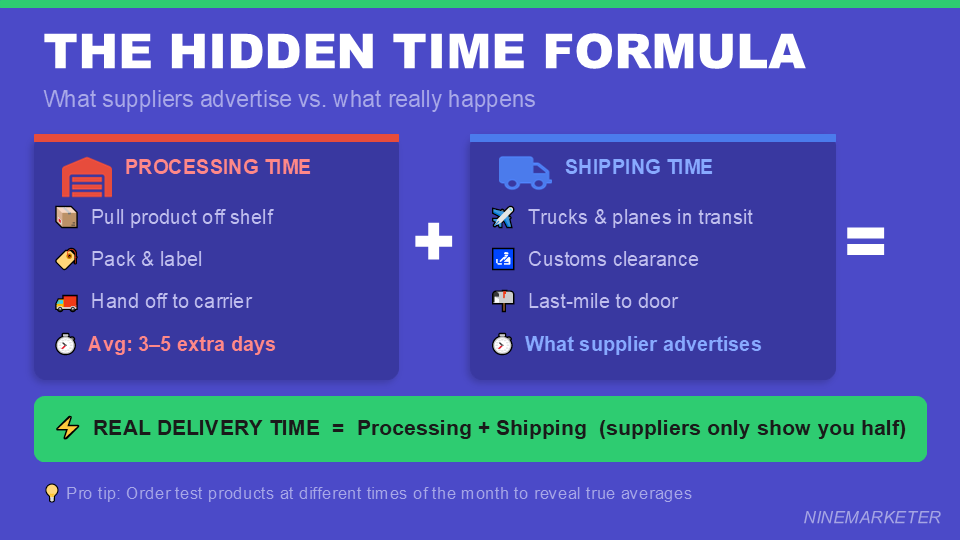
Place a couple orders at different times of the month so you can see if they’re consistently fast or if that first order was just lucky timing.
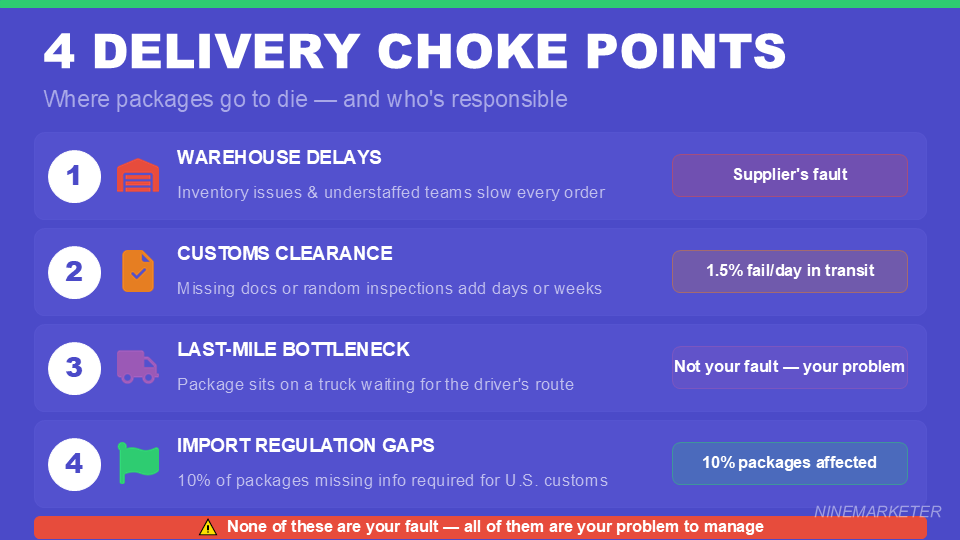
And here’s where it gets messy, the dropshipping supply chain has more choke points than you’d think.
Warehouse delays happen when your supplier’s inventory system is trash or they’re understaffed.
Customs clearance delays occur due to incomplete documentation or random inspections, which can add days or even weeks.
Then there’s last-mile delivery, where your package sits on a truck waiting for the driver to get around to your customer’s neighborhood.
Speaking of customs, this is where international dropshipping gets brutal.
Each additional day in transit reduces import likelihood by 1.5%, and customs can hold packages for inspection whenever they feel like it.
Recent changes to U.S. import regulations created massive bottlenecks with 10% of packages missing information required for customs clearance.
That’s not your supplier’s fault, but it’s definitely your problem.
So how do you figure out if shipping delays are systemic or just bad luck?
Ask your supplier specific questions.
Don’t let them give you vague answers.
You need to know: What’s your average processing time during regular season versus peak season?
Which carriers do you use and what’s their actual transit time?
Where are your warehouses located?
How often do you experience stockouts that delay orders?
What happens when customs holds a package?
Do you have a process for fixing documentation issues?
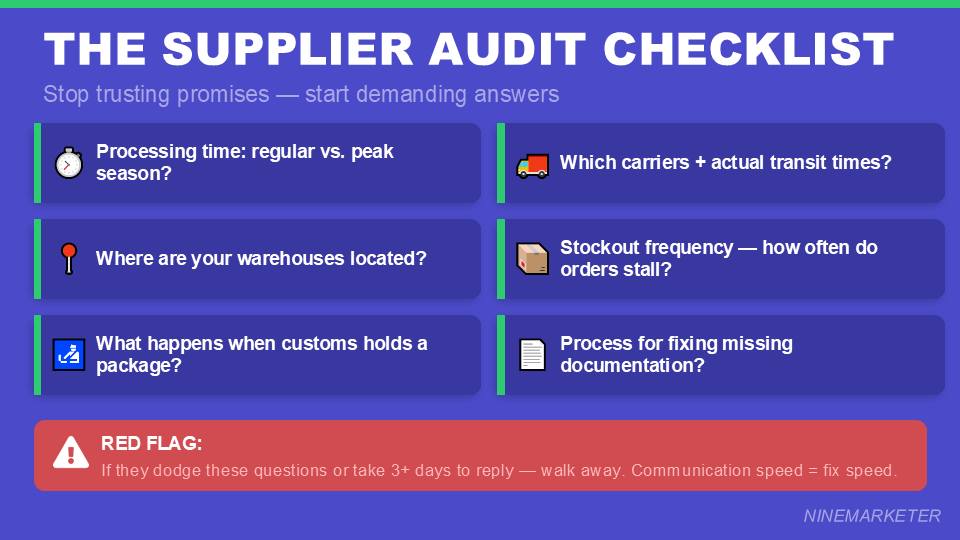
If they can’t answer these questions clearly or they dodge them entirely, that’s your red flag right there.
A supplier who takes three days to reply will take even longer to fix mistakes, so gauge their communication speed too.
The bottom line?
Stop trusting supplier promises at face value and start auditing the actual performance yourself.
Building Leverage Before You Negotiate
Here’s what most dropshippers get wrong, they think suppliers negotiate shipping times just to be nice to them.
Nope.
Suppliers care about faster shipping because it helps them too.
When they can move inventory quicker, they free up warehouse space, reduce holding costs, and take on more clients.
That’s their incentive, and you gotta understand that before walking into any negotiation.
But here’s the thing, suppliers aren’t gonna bend over backwards for someone who orders 10 units a month.
They need a reason to prioritize you, and that reason usually comes down to whether you’re worth their time long-term.
This is where positioning yourself as a valuable partner matters way more than just asking nicely.
The fastest way to gain leverage?
Volume.
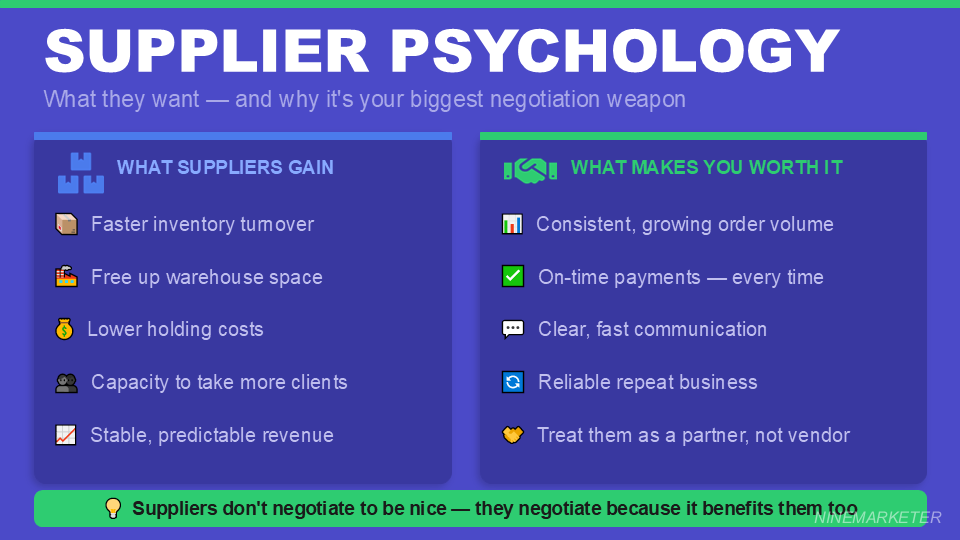
When one dropshipper hit around 500 orders monthly, they renegotiated shipping rates and saved approximately 12% on costs.
That’s real money back in your pocket, but more importantly, it’s proof you’re serious.
Suppliers pay attention when your numbers show consistent growth, and that’s when they start offering better terms without you even asking.
Consistency beats everything though.
A supplier would rather work with someone placing 50 orders every single week than someone who randomly drops 500 orders once then disappears for two months.
Effective communication in negotiations can lead to a 30% increase in successful outcomes, and part of that communication is showing you’re reliable.
Pay on time, every time.
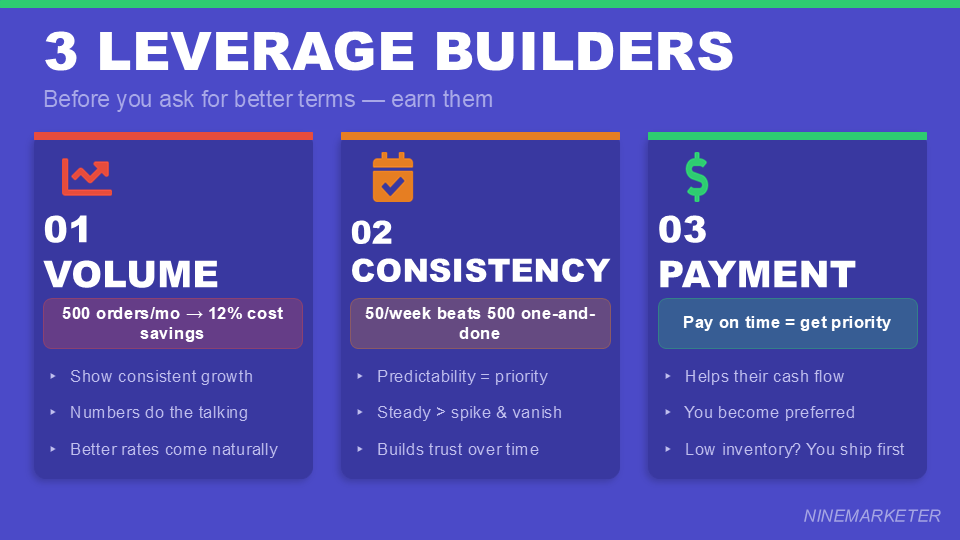
Prompt payment helps suppliers manage their cash flow and positions you as a preferred customer.
It sounds basic, but you’d be shocked how many dropshippers miss payments or pay late, then wonder why their supplier treats them like garbage.
And yeah, ensuring timely payments demonstrates respect and helps build trust for long-term partnerships.
When you’re the one who always pays on time while everyone else is dodging invoices, guess whose orders get priority when inventory runs low?
Now here’s the part nobody likes to hear but everyone needs to do, research alternative suppliers.
Even if your current supplier is great, you need backup options.
This isn’t about being shady, it’s about having leverage and protecting yourself.
25% of business bankruptcies are due to unhealthy supplier relationships, often because of late payments or broken agreements.
When you can walk into a negotiation knowing you’ve got three other suppliers ready to go, your confidence shows, and suppliers sense that.
Plus, researching alternatives gives you real market data.
You’ll know if your supplier’s shipping times are actually competitive or if they’re just feeding you lines.
Find out what other suppliers in the same niche are offering and use that information when discussing improvements.
But leverage isn’t just about numbers and alternatives. It’s about professionalism.
Reply to emails fast.
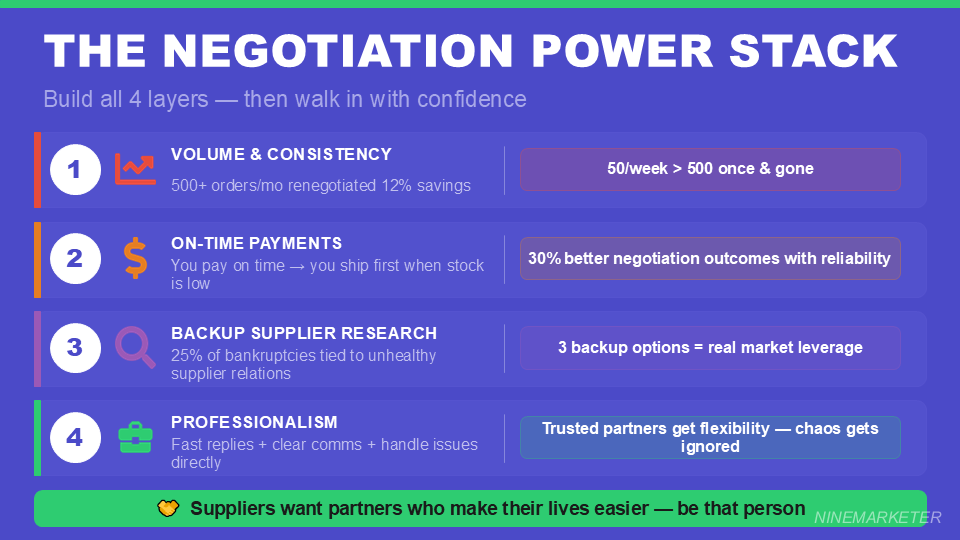
Communicate clearly about what you need.
If there’s a problem, bring it up directly instead of letting it fester.
Suppliers who trust you are more likely to be flexible and accommodating.
When you handle issues like a professional instead of freaking out or ghosting them, they remember that.
Think about it from their perspective for a second, would you rather work with someone who’s organized, pays on time, communicates well, and brings steady volume?
Or someone who’s all over the place, constantly asking for special favors, and only orders when they feel like it?
Suppliers are running businesses too, and they want partners who make their lives easier, not harder.
Preparation: Research and Data Collection
Look, you can’t walk into a negotiation blind and expect your supplier to magically offer faster shipping.
You gotta do your homework first, and that means gathering actual data, not just gut feelings about what “should” work.
Start by checking out what your competition is offering.
Go to stores in your niche and actually place test orders.
See how long their packages take to arrive.
Most successful dropshippers track competitors’ stores using tools like ZIK Analytics, which lets you spy on Shopify stores and see their top-selling products, suppliers, and even shipping times.
When you know that three of your competitors are delivering in eight days while you’re stuck at twenty, that’s real ammunition for your negotiation.
Now here’s where most people mess up, they don’t track their own supplier’s actual performance.
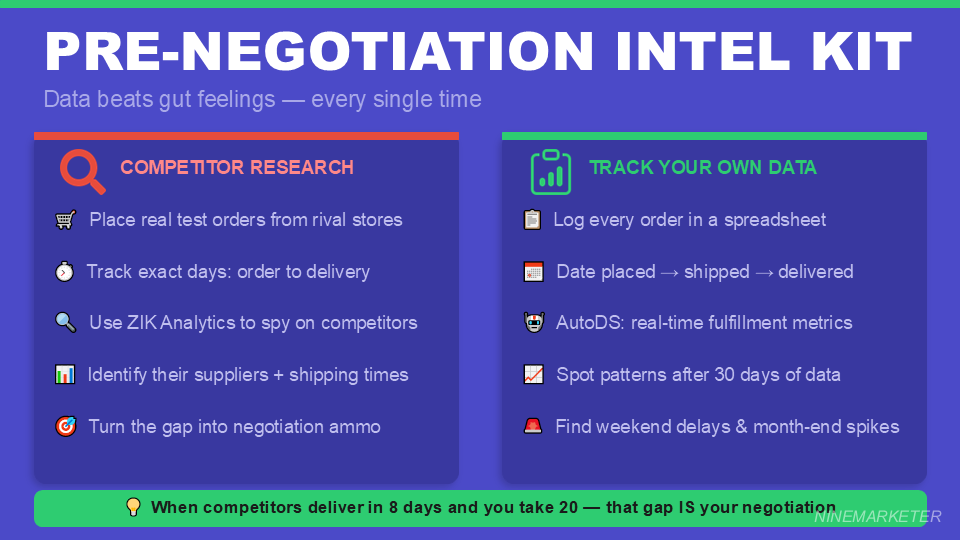
You need hard numbers, not promises.
Tools like AutoDS provide real-time insights into supplier performance metrics including order volumes and fulfillment times.
Set up a simple spreadsheet and log every single order: date placed, date shipped, date delivered.
After thirty days, you’ll see patterns.
Maybe your supplier consistently ships two days late during weekends, or processing jumps from three days to seven at month-end.
When you’ve got the data, it’s time to understand what shipping options actually exist.
There’s ePacket shipping that costs around $7.69 for a 0.5kg parcel and takes seven to thirty days.
Then there’s air freight at roughly $5-8 per kilo for shipments between 150kg and 500kg, delivering in eight to ten days.
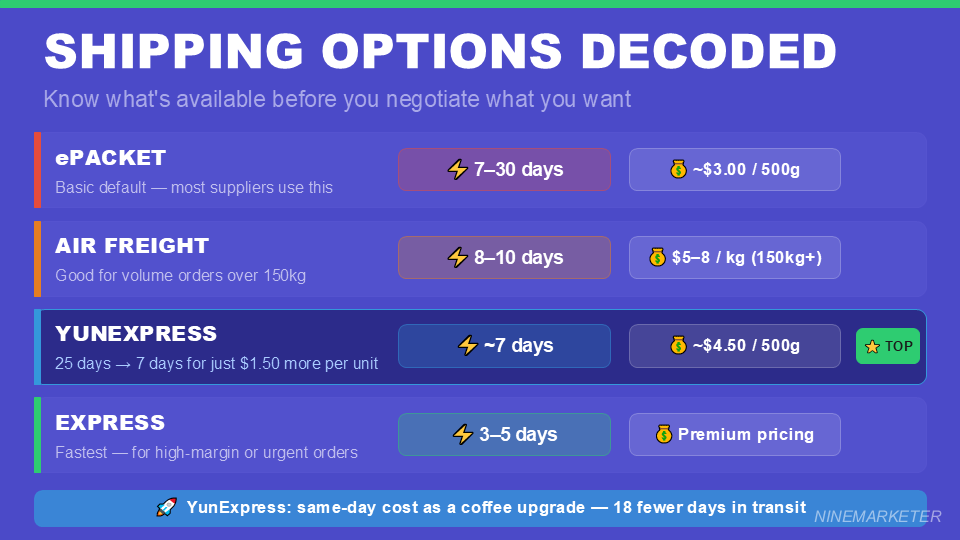
Express shipping?
That’s three to five days but you’re looking at premium pricing.
Here’s something that’ll blow your mind, switching from ePacket to specialized carriers like YunExpress cut shipping times from 25 days down to about 7 days for one dropshipper, and it only cost about $4.50 versus $3 for 500g.
That extra buck and a half per package is nothing compared to the sales you’re losing from slow delivery.
Freight forwarding is another option worth understanding, especially if you’re moving volume.
Freight forwarders negotiate better rates through high-volume partnerships and can often beat what you’d pay going direct.
They handle all the customs paperwork too, which saves you headaches when packages get held up.
But here’s the real trick, create a cost-benefit analysis that shows your supplier why faster shipping helps them too.
Calculate how many extra sales you could make with faster delivery, then show them the increased order volume.
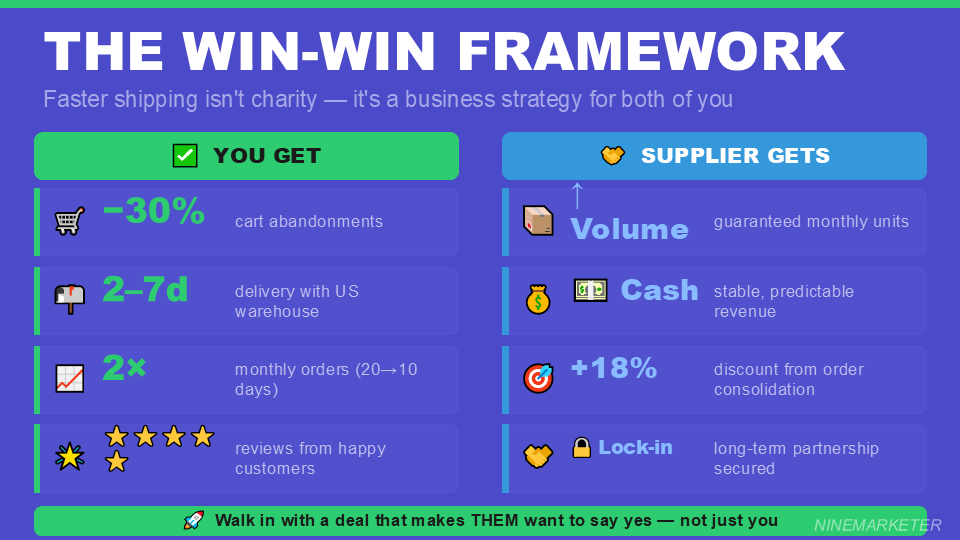
When they see that cutting shipping from twenty days to ten days could double your monthly orders from 100 to 200 units, suddenly they’re interested.
Money talks.
Run the numbers on different scenarios.
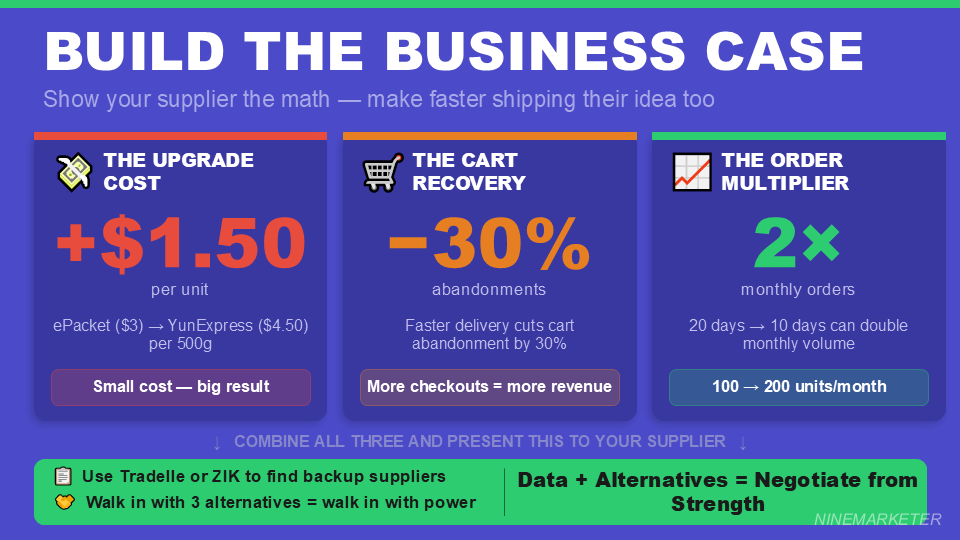
If upgrading to YunExpress costs roughly $4.50 per 500g package versus basic postal at $3, that’s $1.50 more per unit.
But if faster shipping means 30% fewer cart abandonments, you’re making way more profit overall.
Don’t forget to research alternative suppliers as backup.
Use platforms like Tradelle that monitor competing stores and track sales data to find suppliers with better shipping infrastructure.
Having concrete alternatives gives you leverage, you can walk into that negotiation knowing exactly where else you could take your business if your current supplier won’t budge.
The bottom line?
Data beats guessing every single time.
Suppliers respect dropshippers who come prepared with actual metrics, competitor comparisons, and realistic proposals.
Do the research work upfront and you’ll negotiate from a position of strength instead of desperation.
The Negotiation Framework: Step-by-Step Process
Alright, so you’ve done your homework and you’re ready to actually talk to your supplier about faster shipping.
But here’s where most dropshippers screw up, they pick the worst possible time to bring it up or they come in swinging with demands instead of solutions.
Timing matters way more than people realize.
End of year, end of contract periods, or slow selling times can be ideal times to request favorable terms.
When your supplier’s got extra warehouse capacity sitting around or they’re trying to hit quarterly targets, suddenly they’re a lot more flexible.
Don’t walk in during their busiest season when they’re drowning in orders and expect them to care about your shipping times.
Now here’s the part that separates amateurs from pros, how you frame the conversation.
This isn’t about making demands.
It’s about presenting an opportunity for both of you to make more money.
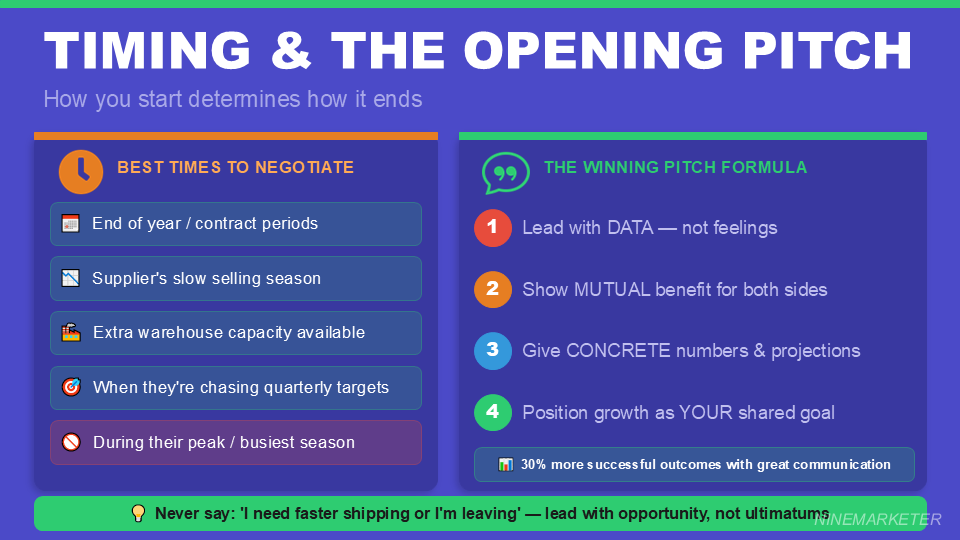
Effective communication in negotiations can lead to a 30% increase in successful outcomes, and most of that comes down to positioning.
Your opening pitch should sound something like this: “Hey, I’ve been tracking our numbers and I noticed something interesting.
When I ran test orders with faster shipping, cart abandonment dropped significantly.
I did the math, if we could cut shipping time from twenty days to ten days, I could realistically double my order volume within three months.
That means going from 100 units monthly to 200 units.
Here’s the data I’ve collected over the past sixty days showing the correlation between shipping speed and conversion rates.”
See what happened there?
You led with data, showed mutual benefit, and positioned yourself as someone who’s serious about growth.
You didn’t say “I need faster shipping or I’m leaving.”
But what happens when your supplier pushes back?
Because they will.
They might say their hands are tied, or costs are too high, or it’s just not possible.
This is where using the 70/30 rule comes in, spend 30% of your time talking and 70% listening.
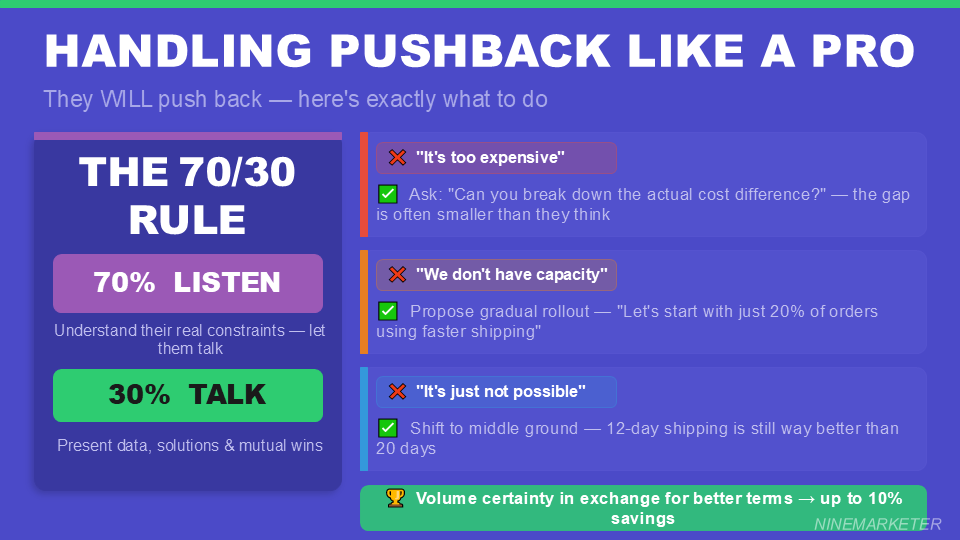
Let them explain their constraints.
Really listen.
Then ask questions that help you understand the real obstacles.
If they say “it’s too expensive,” ask them to break down the actual cost difference between their current method and faster options.
Sometimes the gap isn’t as big as they think.
If they say “we don’t have capacity,” ask about gradual implementation, maybe start with 20% of orders using faster shipping to test it out.
And here’s the thing about compromise, go in knowing your ideal outcome, but leave room for middle ground.
Maybe you wanted seven-day shipping but they can realistically do twelve days.
That’s still better than twenty, right?
Strategic buyers who offered volume certainty in exchange for better terms saved up to 10% on major categories.
The follow-up is where most negotiations die.
Don’t let the conversation just fade away.
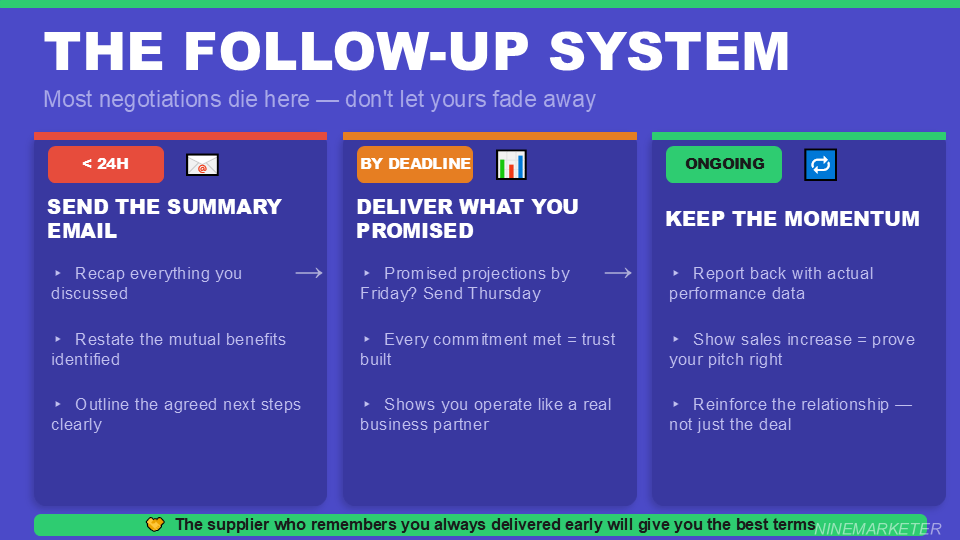
Send a summary email within twenty-four hours outlining what you discussed, the mutual benefits you identified, and the next steps.
Then actually follow up on those steps.
If you said you’d provide sales projections by Friday, do it by Thursday.
Creative Solutions and Win-Win Proposals
Okay, so you’re ready to negotiate but worried your supplier’s gonna say no to faster shipping?
Here’s the thing, most successful negotiations aren’t about one side winning and the other losing.
They’re about finding solutions where both parties actually benefit.
And trust me, there’s way more flexibility than you think once you start getting creative.
The most straightforward approach is committing to higher volumes in exchange for better shipping.
Suppliers love predictability, and when you say “I’ll guarantee 500 units per month instead of 200 if you upgrade my shipping,” suddenly they’re way more interested.
One company consolidated their orders with a single supplier and achieved an 18% volume discount just by bundling their requirements across locations.
That same principle works for shipping, buyers who commit to annual volumes receive better rates in exchange for stabilizing demand.
But here’s where it gets really interesting, warehousing solutions can completely transform your shipping times without your overseas supplier changing anything.
Using US-based fulfillment centers can cut delivery times from 20+ days down to 2-7 days.
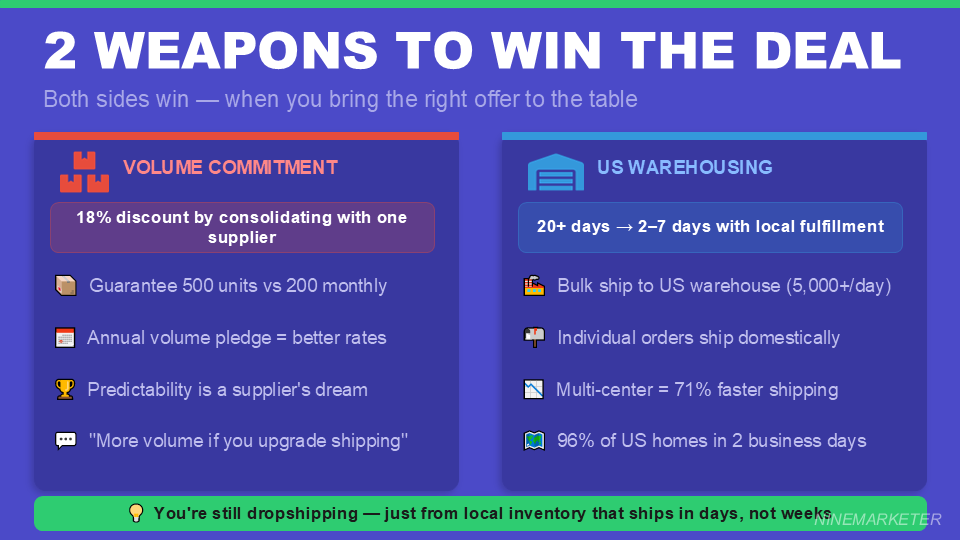
The way this works is simple: your supplier ships products in bulk to a US warehouse that can handle over 5,000 orders daily, then individual orders ship domestically.
You’re still dropshipping, but from local inventory.
And yeah, it costs more upfront to send bulk shipments and pay warehouse storage, but do the math.
Distributing inventory across multiple fulfillment centers reduces shipping times by 71% compared to single-location operations.
Plus strategically located warehouses in central US positions can reach 96% of American homes within two business days using standard ground shipping.
That’s crazy fast compared to international delivery.
Don’t have the capital to commit to bulk orders?
Try a hybrid model instead.
Propose faster shipping only for your best-selling products or orders above a certain value.
Maybe everything under fifty bucks ships standard, but orders over a hundred bucks get express shipping.
This lets you test faster delivery on a portion of your business without blowing your entire budget.
Many successful dropshippers work with multiple warehouses to reduce delivery times based on customer location.
Another approach that works surprisingly well is cost-sharing.
Tell your supplier “Look, I know express shipping costs more.
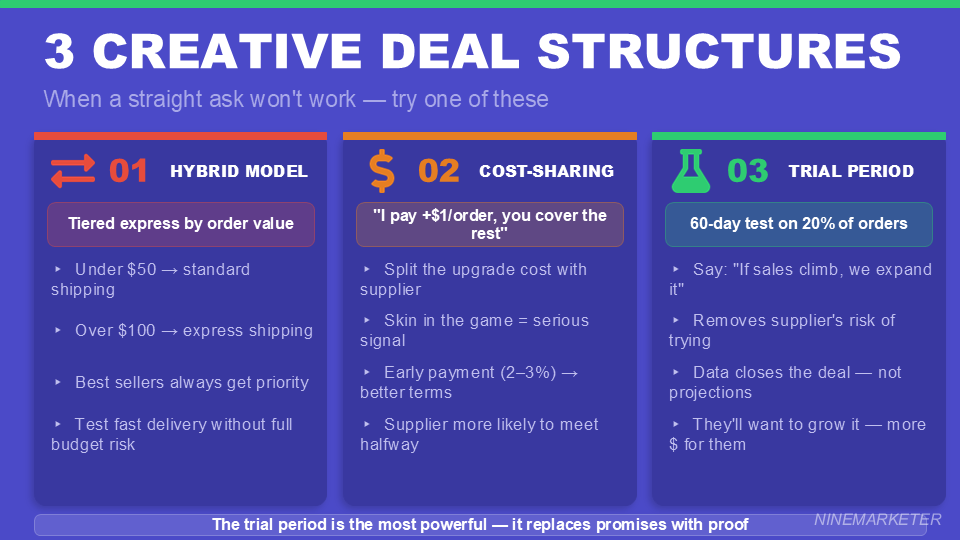
What if we split the difference?
I’ll pay an extra dollar per order and you cover the rest of the upgrade cost.”
When they see you’re willing to put skin in the game, they’re way more likely to meet you halfway.
Remember, buyers who offer early payment discounts of 2-3% often secure better pricing terms, and the same flexibility applies to shipping arrangements.
Now here’s my favorite strategy, propose a trial period.
Most suppliers resist change because they’re worried it won’t actually increase your orders like you claim.
So take that risk off the table.
Say “Let’s test faster shipping on 20% of my orders for sixty days.
If my sales increase like I’m predicting, we roll it out to everything and I commit to higher volumes.
If not, we go back to the old way.”
This is genius because it proves your point with actual data instead of just projections.
When your supplier sees conversion rates jump and order volume climb during the trial, the negotiation basically closes itself.
They’re gonna want to expand the program because they’re making more money too.
The key to all these solutions is showing your supplier what’s in it for them.
Faster shipping isn’t charity, it’s a business strategy that benefits both of you when done right.
Leveraging Technology and Third-Party Solutions
Look, sometimes the fastest way to get better shipping isn’t convincing your supplier to change, it’s taking control of the process yourself.
And that’s where technology and third-party solutions come in clutch.
Freight forwarders are game-changers for dropshippers who are tired of waiting on suppliers.
These companies act as intermediaries between you and carriers, handling everything from customs paperwork to route optimization.
Freight forwarders can provide opportunities for quicker timescales and reduced costs compared to standard shipping.
The way it works is simple, instead of your supplier handling shipping, you work with a forwarder who has connections with trucking companies, air freight, ocean freight, and rail carriers.
They figure out the fastest, cheapest route for your products.
Here’s what’s crazy though, freight forwarders can save businesses 20-50% on shipping costs through their volume negotiations with carriers.
When you’re shipping enough volume, they can get rates you’d never access on your own.
Plus they handle all the customs nonsense that slows down international shipments.
But if you wanna really transform your delivery times, look into 3PL providers.
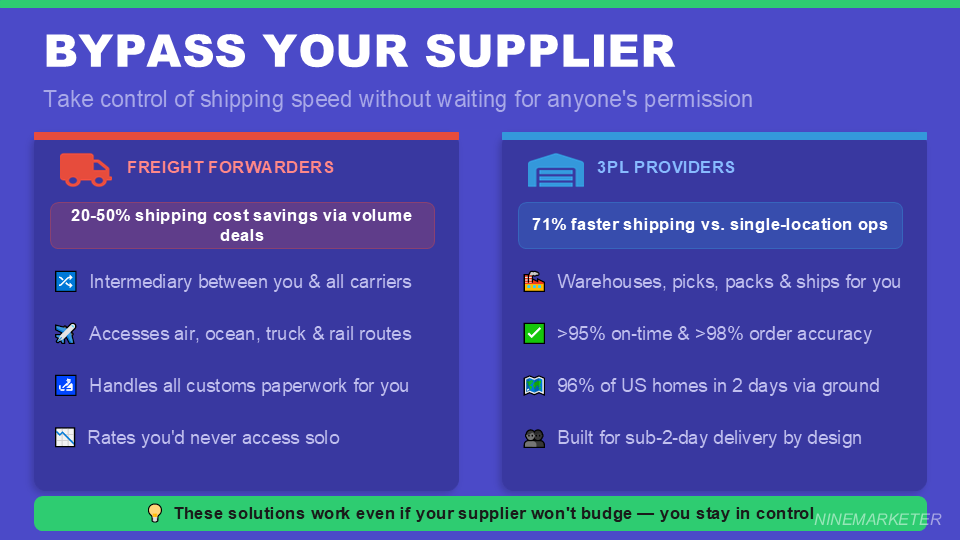
Third-party logistics companies don’t just ship your stuff, they warehouse it, pick it, pack it, and send it out.
53% of 3PLs report that customers expect deliveries in less than two days, which means these companies are set up for speed.
The difference between a good 3PL and a mediocre one?
Top-performing 3PLs maintain on-time delivery rates above 95% and order accuracy rates above 98%.
When you partner with a 3PL that has multiple fulfillment centers strategically located, you can reduce shipping times by 71% compared to shipping from one location.
That’s because as we said before centrally positioned warehouses in the US can reach 96% of American homes within two business days using standard ground shipping.
No express fees needed.
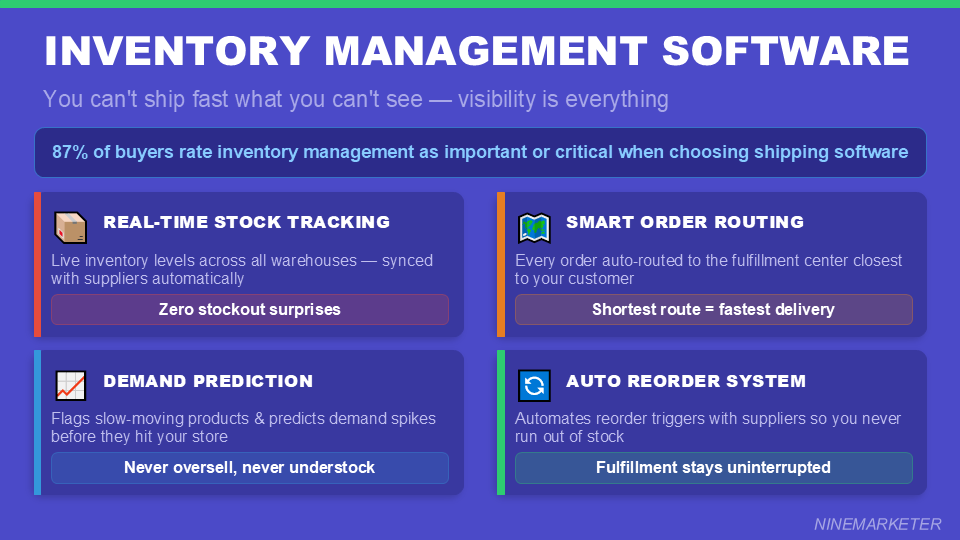
Now let’s talk inventory management software, because this is where coordination happens.
You can’t leverage faster shipping if you don’t know what inventory you have or where it’s located.
Modern inventory management systems provide real-time stock level tracking across multiple warehouses and automatically sync with your suppliers.
This means when an order comes in, the system routes it to the fulfillment location closest to your customer.
87% of reviewers rated inventory management features as important or highly important when choosing shipping software.
Why? Because without visibility into your stock, you’re flying blind.
These systems flag slow-moving products, predict demand spikes, and even automate reorder processes with suppliers so you never run out of stock.
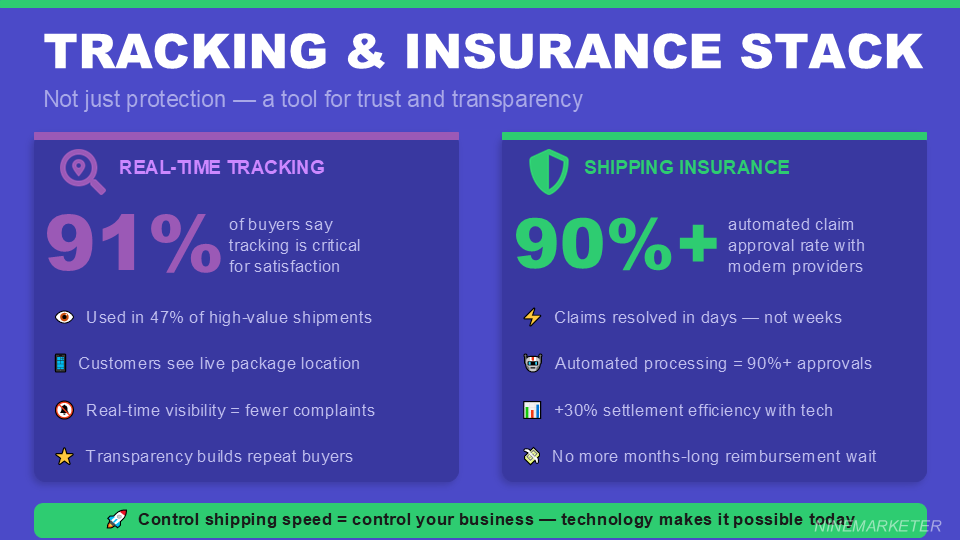
And here’s something most dropshippers miss, shipping insurance and tracking systems aren’t just about covering losses.
They’re about transparency.
Real-time tracking integration is used in over 47% of high-value shipments, and there’s a good reason for that.
When customers can see exactly where their package is, complaints drop dramatically.
91% of reviewers rated shipment tracking as important or highly important for managing customer expectations.
Shipping insurance used to feel like a hassle, but modern providers have streamlined everything.
Insurance providers offering automated claims processing see approval rates exceeding 90%, with claims typically resolved in just a few days instead of weeks.
Plus, coupling freight insurance with logistics technology improved claim settlement efficiency by over 30%.
That means when something does go wrong, you’re not stuck waiting months for reimbursement.
The bottom line?
Technology gives you options your supplier probably can’t match.
Whether it’s using freight forwarders to bypass slow shipping lanes, partnering with 3PLs for distributed fulfillment, or implementing inventory software that coordinates everything automatically, these solutions put you in the driver’s seat.
And in dropshipping, control over shipping speed is control over your business success.
Alternative Strategies When Direct Negotiation Fails
Okay, so you tried negotiating with your supplier and they’re not budging on shipping times.
Maybe they gave you excuses, maybe their infrastructure just can’t handle it, or maybe they’re too comfortable with their current setup to care.
Whatever the reason, sitting around waiting for them to change isn’t a strategy, it’s a death sentence for your business.
Time to pivot and look at your other options, because here’s the reality: 84% of dropshippers say finding reliable suppliers is their main challenge.
You’re not alone in this struggle, and the solution often isn’t fixing your current supplier, it’s finding better ones.
Start by building a list of backup suppliers for your best-selling products.
Most dropshippers test 4 to 6 suppliers before choosing a long-term partner, so don’t feel like you need to commit immediately.
Order samples from multiple suppliers at different times of the month to see how their processing and shipping times actually compare.
One supplier might look great during normal season but completely fall apart when volume picks up.
Use platforms like SaleHoo that provides access to 8,000+ vetted suppliers or Spocket for curated networks.
The vetting process matters because 58% of companies experienced supplier-related disruptions in the past two years, with 10% seeing significant operational impact.
You can’t afford to wing this.
Now here’s a strategy most dropshippers sleep on, working with multiple suppliers simultaneously.
This creates competitive pressure and protects you from stockouts or sudden price increases.
Top stores work with multiple suppliers to manage stock issues and price fluctuations.
When one supplier knows you’ve got alternatives ready to go, they’re way more motivated to keep you happy.
But the real game-changer?
Switching to domestic or regional suppliers.
Look, I get it, overseas suppliers are cheaper.
But stores that work with US-based suppliers get 35% faster shipping and 20% more repeat customers.
That’s not a small difference.
Domestic suppliers can deliver within 2 to 5 days, compared to 2 to 4 weeks for international shipments.
Yeah, your product costs go up with domestic suppliers, but do the math on what you’re losing from cart abandonment and chargebacks with slow shipping.
And here’s something interesting, when you can’t negotiate better shipping, sometimes the answer is controlling shipping yourself through private labeling or holding inventory.
I know, I know, that sounds like the opposite of dropshipping.
But hear me out.
Private label dropshipping allows you to sell products under your own brand while a supplier handles fulfillment.
The difference?
You have way more control over the entire process, including which shipping methods get used.
Plus, private label products can achieve profit margins around 40% compared to 10-25% with regular dropshipping, because you’re not competing with a hundred other stores selling the exact same generic product.
If you’re doing serious volume, consider buying bulk inventory and using a US-based fulfillment center that can handle over 5,000 orders daily.
Ship products in bulk to a domestic warehouse, then individual orders go out in 2-3 days.
Yeah, it requires upfront capital and comes with inventory risk, but distributing inventory across multiple fulfillment centers reduces shipping times by 71% compared to single-location operations.
When switching suppliers, do it strategically so you don’t tank your business during the transition.
Test new suppliers with a small percentage of orders first, maybe 20%, while keeping your main supplier as backup.
Monitor customer feedback closely.
If the new supplier performs better, gradually shift more volume their way.
The bottom line?
Don’t get stuck thinking your current supplier is your only option.
They’re not.
Whether it’s finding backup suppliers, creating competitive pressure with multiple partners, switching to domestic sources, or moving to private labeling, you’ve got options.
Pick the strategy that fits your current volume and capital situation, then execute it before your competitors beat you to the punch.
Final Thoughts
Faster shipping times won’t fall into your lap, you have to negotiate for them.
The good news?
Most dropshippers never bother to have these conversations, which means you’re already ahead of the competition just by trying.
Remember, suppliers want successful partners who stick around, and if you can show them how faster shipping benefits both of you, they’ll work with you to make it happen.
Start by auditing your current shipping performance, build your leverage through consistent orders, and approach your supplier with a clear, data-backed proposal.
Even shaving off five days from your delivery time can transform your customer experience and reviews.
Take action this week, reach out to your top supplier and start the conversation. Your future customers (and your inbox) will thank you!