

You’ve found the perfect product.
The supplier’s price looks reasonable, you can mark it up 2x, and boom, instant profit, right?
Wrong.
Three months later, you’re drowning in expenses you never saw coming, and that “profitable” niche is barely keeping the lights on.
Here’s the thing: most new dropshippers focus on revenue while completely ignoring their actual profit margins.
They see a $50 product they can sell for $100 and think they’re making $50 per sale.
But after factoring in advertising costs, payment processing fees, returns, and platform fees, that $50 suddenly becomes $8. Or worse, a loss!
In this guide,
I’m going to walk you through exactly how to calculate profit margins before you commit to a dropshipping niche.
You’ll learn the real formulas professionals use, discover hidden costs that eat into your margins, and get actionable strategies to choose niches that actually make money.
Let’s turn you into a profit-calculating machine!
Understanding Profit Margin Basics for Dropshipping
You know what trips up most new dropshippers?
They confuse markup with profit margin and end up wondering where all their money went.
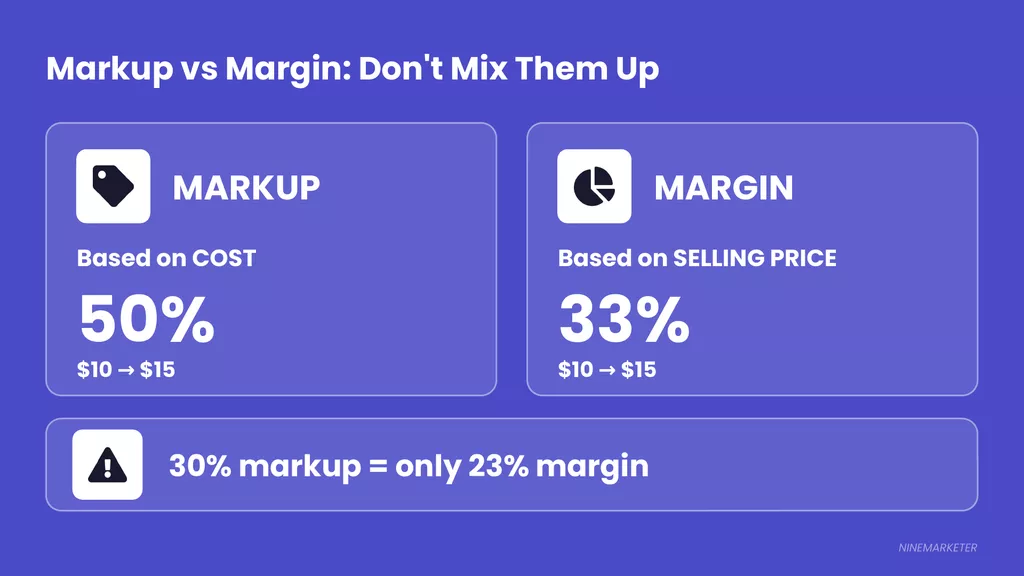
Here’s the deal: if you add a 30% markup to your product cost, you’re only making a 23% profit margin.
Yeah, that math surprised a lot of folks when they first learned it.
Markup is calculated based on your cost, while profit margin is calculated based on your selling price.
So when you buy something for $10 and sell it for $15, that’s a 50% markup but only a 33% margin.
This difference matters big time when you’re trying to figure out if your store’s actually profitable or just spinning its wheels.
Now let’s talk about gross versus net profit margin, because this is where things get real.
Your gross profit margin is simple, it’s what you make after paying your supplier.
But your net profit margin?
That’s what’s left after you factor in advertising costs, platform fees, apps, returns, and all those sneaky expenses that nobody warns you about.
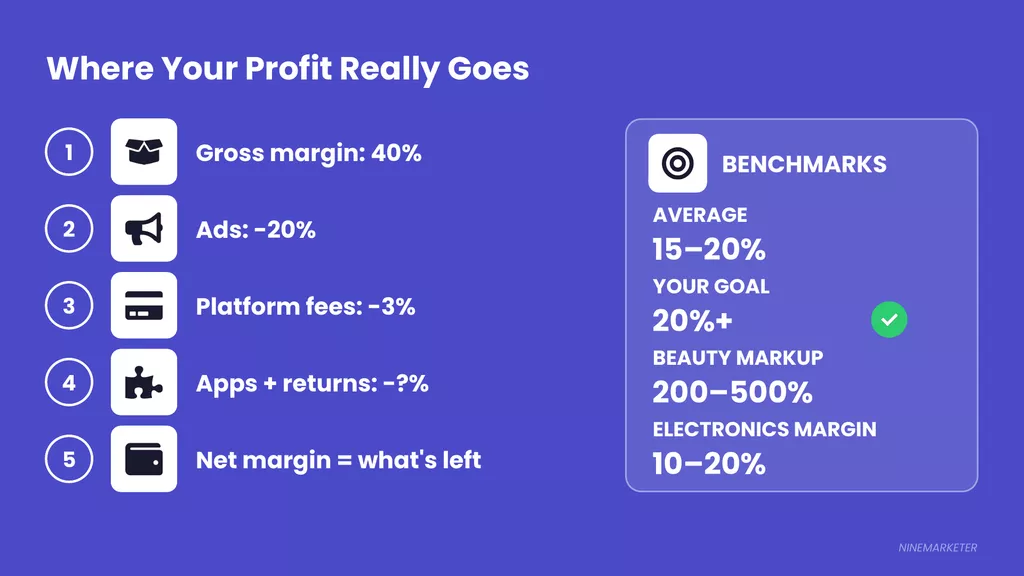
A product might show a sweet 40% gross margin, but after Facebook ads eat 20% and Shopify fees take another 3%, you’re looking at way less actual profit.
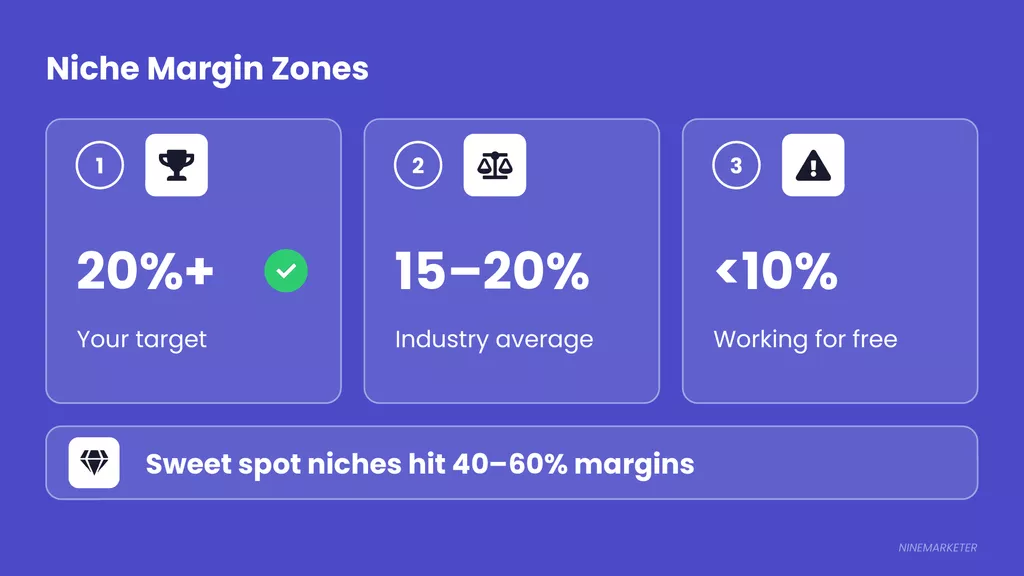
Here’s something most beginners don’t realize: the average dropshipping profit margin sits between 15-20%, and you should really be aiming for above 20% to make decent money.
Some niches like beauty products can hit 200-500% markups, while electronics barely scratch 10-20% margins.
That’s why picking your niche based on profit margins, not just revenue, is crucial for survival.
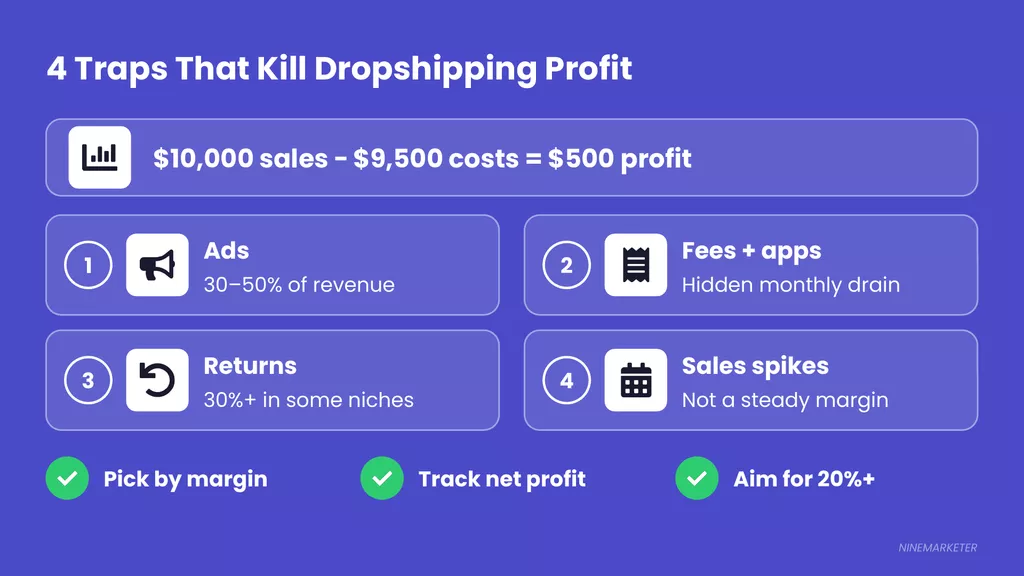
Too many dropshippers get excited about doing $10,000 in monthly sales without realizing they spent $9,500 to get there.
Revenue makes you feel successful, but profit margins determine whether you’re actually building a business or just creating a fancy hobby.
You can’t pay your bills with revenue.
The biggest misconception?
Thinking that a simple markup formula means automatic profit.
New sellers often forget to account for advertising costs, which can eat up 30-50% of revenue in competitive niches.
They also overlook transaction fees, app subscriptions, and the cost of returns, which in some categories exceed 30%.
Another mistake is confusing a one-time sale spike with sustainable margins.
Holiday sales might look great, but if you can’t maintain those numbers year-round, your business model needs work.
The Complete Cost Breakdown for Dropshipping
When you’re getting your product cost from a supplier, understanding FOB pricing matters more than most folks realize.
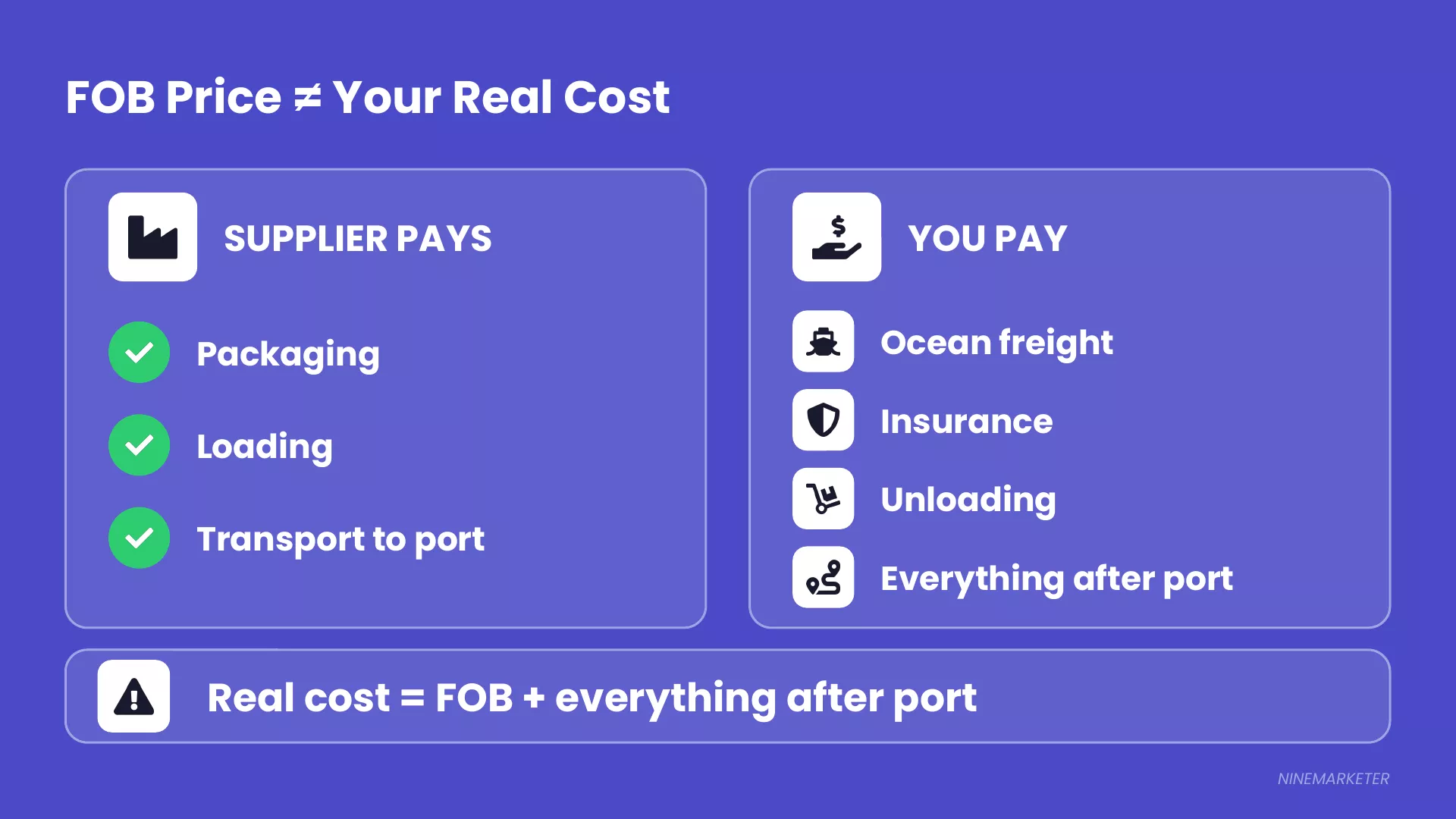
FOB, or Free On Board, tells you that the supplier covers packaging, loading, and inland transport to the port.
But here’s where beginners mess up: they think the FOB price is their total product cost.
It ain’t.
You’re still on the hook for ocean freight, insurance, unloading, and everything after those goods leave the port.
That’s gonna add up quick.
Shipping costs depend heavily on where your suppliers are located.
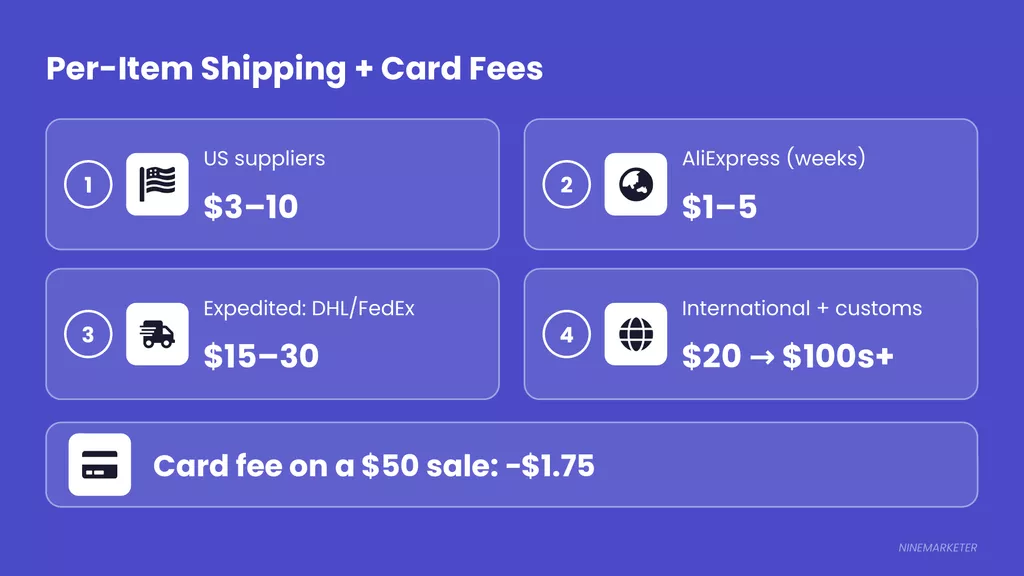
If you’re working with US-based suppliers, standard shipping typically runs $3-10 per item, while overseas suppliers from places like AliExpress charge $1-5 for economy shipping that takes weeks.
Want expedited?
That’ll cost you $15-30 per item through DHL or FedEx.
International shipping gets even messier, small parcels start around $20 but can hit hundreds for larger items with customs fees thrown in.
Payment processing fees eat into every single sale you make.
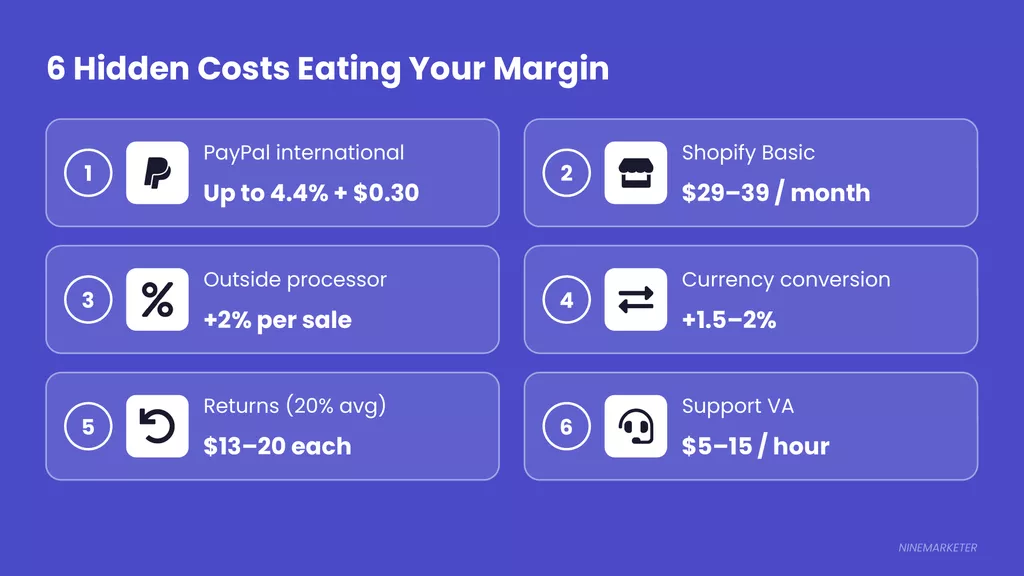
Both Stripe and PayPal charge 2.9% + $0.30 per transaction for domestic sales, but PayPal’s international rates can climb to 4.4% + $0.30.
If someone orders a $50 product, you just lost $1.75 right there before anything else.
Platform fees vary depending on where you set up shop.
Shopify’s Basic plan costs $29/month (or $39 if billed monthly) with a 2.9% + $0.30 credit card rate.
But if you use a third-party payment processor instead of Shopify Payments, they tack on an additional 2% transaction fee.
WooCommerce seems cheaper at first, but you’re paying for hosting, security, and plugins separately.
Currency conversion costs typically add another 1.5-2% when selling internationally.
Returns will crush you if you don’t plan for them, the average ecommerce return rate hit 20% in 2024, with clothing returns averaging 26%. Processing each return costs $13-20 between return shipping, restocking, and lost sale.
Customer service expenses pile up too.
Whether you’re answering emails yourself or paying a VA $5-15/hour, someone’s gotta handle the inevitable “where’s my order” messages.
The Profit Margin Calculation Formula
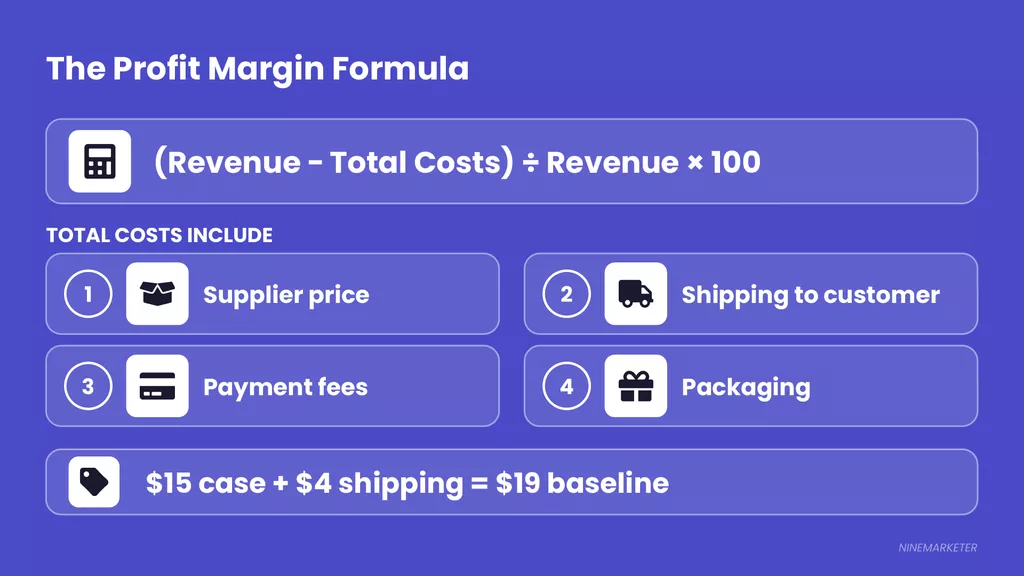
The actual formula is super straightforward: (Revenue – Total Costs) / Revenue × 100.
But here’s where beginners mess up, they forget what “total costs” really means.
It ain’t just the product price from your supplier.
Your product cost baseline starts with what you pay the supplier, but you gotta add shipping from them to the customer, payment processing fees, and any packaging costs.
So if your supplier charges $15 for a phone case and shipping adds another $4, your baseline is already $19 before you even think about other expenses.
Most folks skip this step and wonder why their margins look way better on paper than in their bank account.
Variable costs per transaction stack up fast.
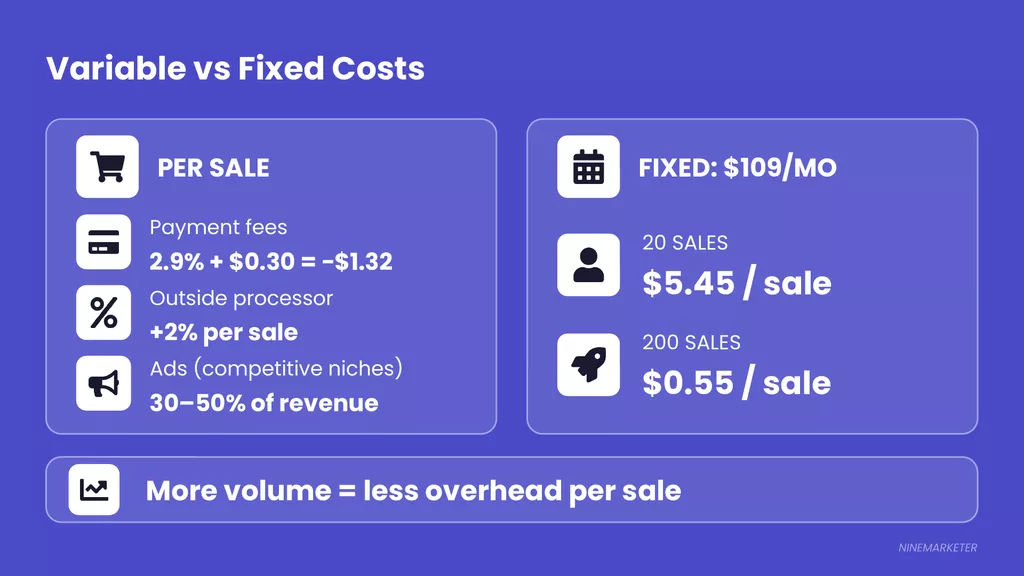
You’ve got payment processing at 2.9% + $0.30 per sale, platform transaction fees (Shopify adds 2% if you’re not using Shopify Payments), and advertising costs that can eat 30-50% of your revenue in competitive niches.
If someone buys that phone case for $35, you just lost another $1.32 to payment fees right there.
Then tack on your ad spend, maybe $8 to acquire that customer through Facebook ads.
Fixed monthly costs need to be spread across your sales, and this is where things get tricky.
Say you’re paying $29 for Shopify, $50 for apps, and $30 for email marketing, that’s $109/month.
If you only make 20 sales, each sale needs to cover $5.45 of overhead.
Make 200 sales?
That drops to just $0.55 per sale.
This is why volume matters so much in dropshipping.
Using Google Sheets or Excel templates automates all this math.
You can set up formulas once and just plug in your numbers for each product.
Most free templates already include fields for COGS, shipping, fees, and ad spend.
Let’s walk through a real example.
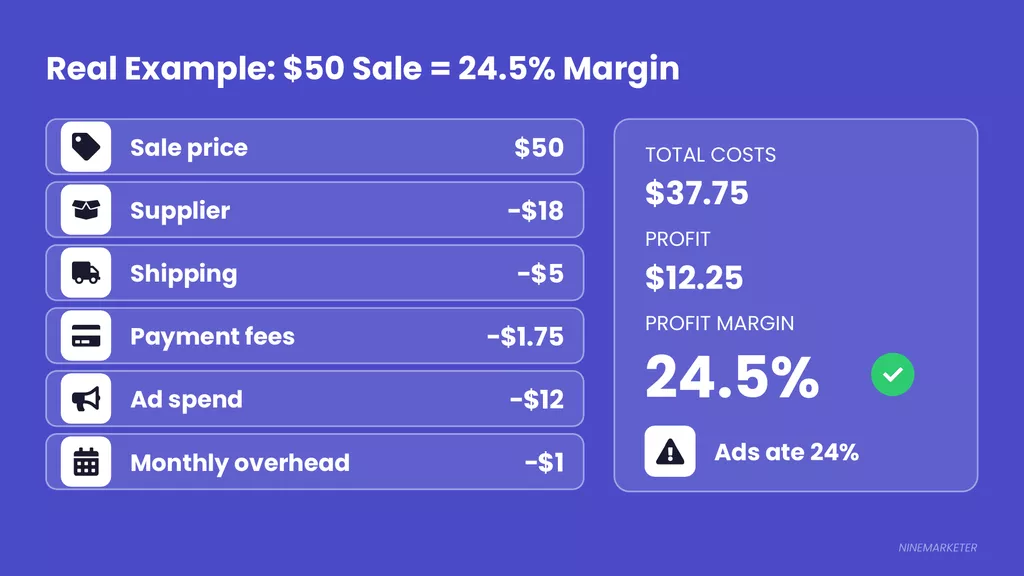
You sell a product for $50.
Supplier cost is $18, shipping is $5, payment processing is $1.75, ad spend is $12, and your amortized monthly costs per sale are $1.
Total costs: $37.75.
Your profit is $12.25, which gives you a 24.5% profit margin.
That’s decent, but notice how ad spend alone took up 24% of your revenue.
Advertising Costs and Customer Acquisition
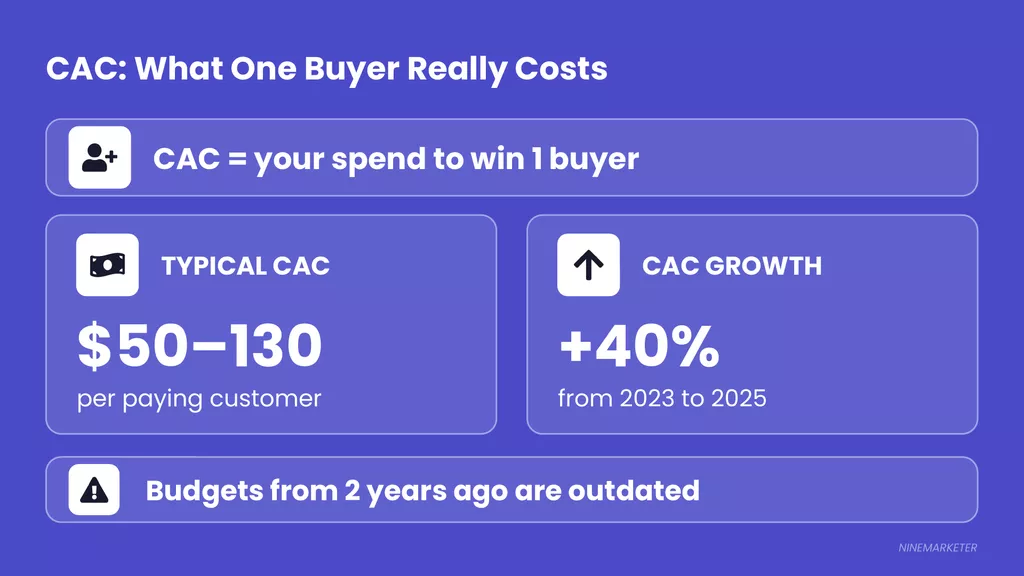
Customer Acquisition Cost sounds fancy but it’s basically this: how much you’re spending to get someone to actually buy from your store.
For dropshippers, CAC typically ranges between $50 and $130, though some beginners think they can get away with way less.
They can’t.
What really stings is that ecommerce CAC jumped up about 40% between 2023 and 2025, so budgets that worked two years ago are totally outdated now.
Different platforms eat different amounts of your budget.
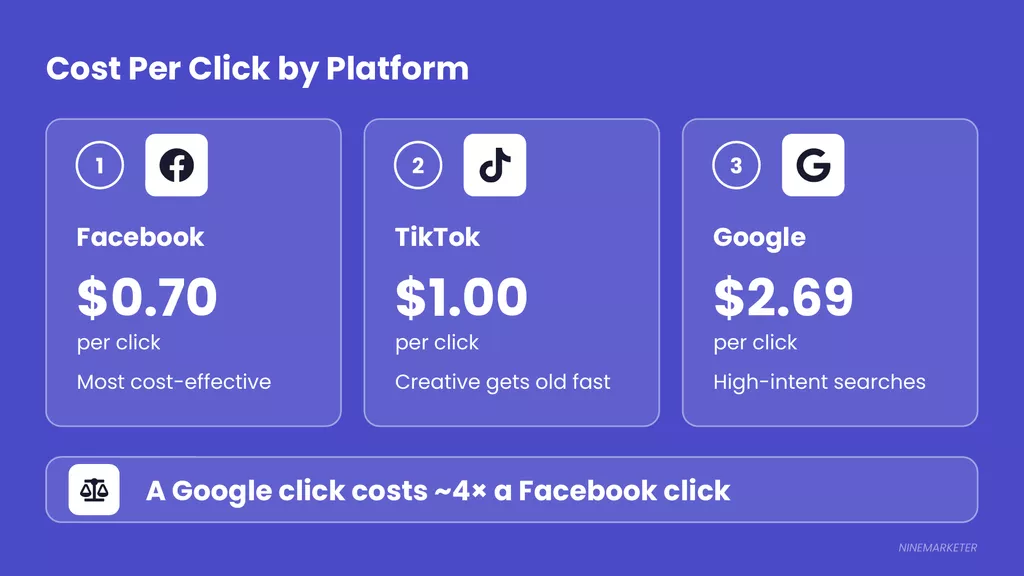
Facebook Ads average about $0.69-0.70 per click, which makes them the most cost-effective option for most dropshippers.
Google Ads run higher at around $2.69 per click because you’re competing for high-intent search terms.
TikTok sits in the middle at about $1.00 per click, and yeah, the creative gets old fast so you’re constantly making new videos.
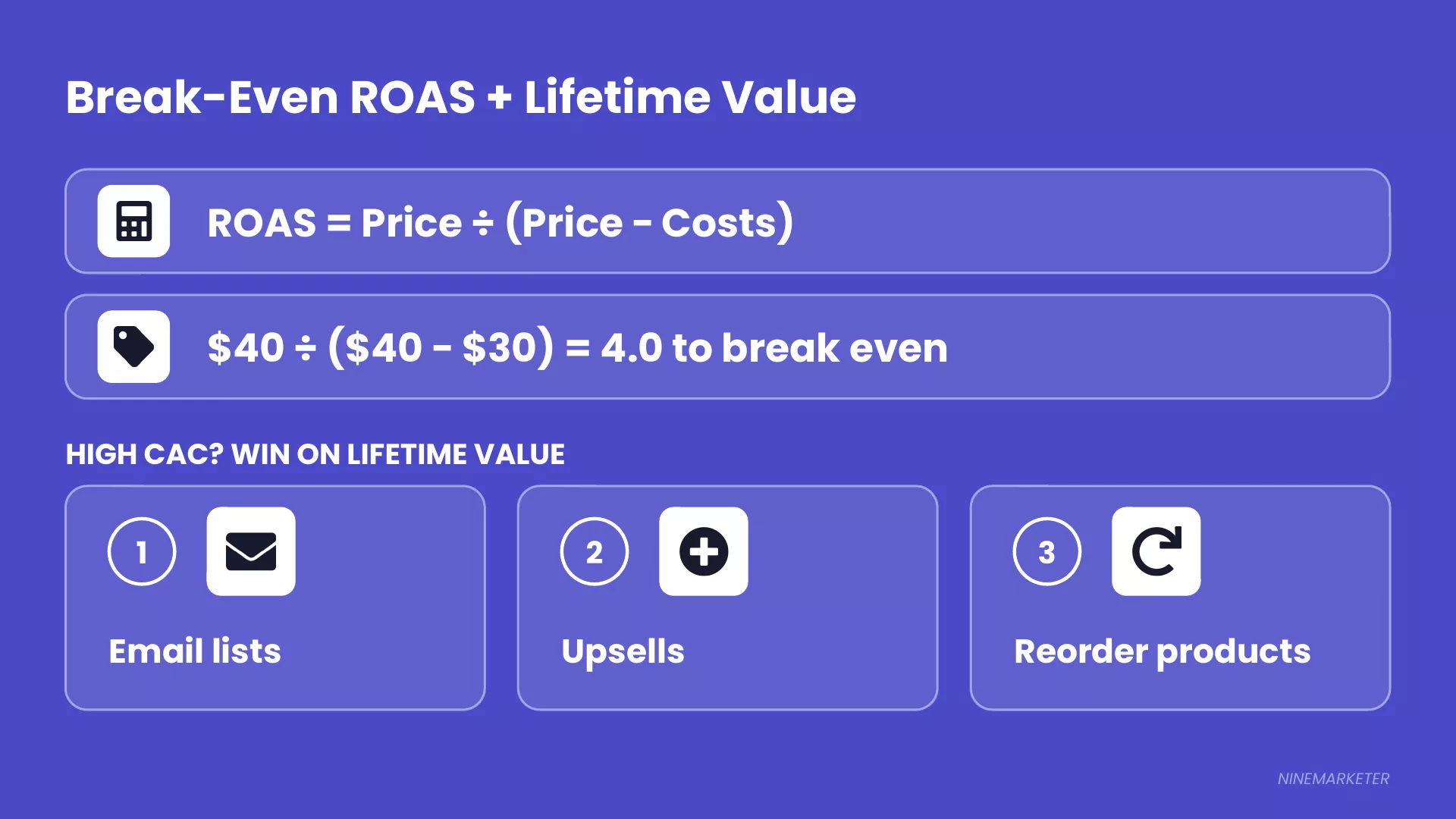
Break-even ROAS is where most folks realize their “winning product” ain’t winning at all.
The formula is simple: selling price divided by (selling price minus total costs).
If you’re selling something for $40 and your costs are $30, you need a ROAS of 4.0 just to break even.
Anything below that?
You’re literally paying for the privilege of making sales.
Here’s the brutal truth: high advertising costs force you to increase your minimum viable profit margin.
You can’t survive with 20% margins when your customer acquisition eats up 35% of revenue.
This is why electronics retailers struggle with CAC around $85 while fashion brands get away with lower costs, the competition and keyword prices are totally different.
For high-cost niches, the strategy shifts to maximizing customer lifetime value.
If it costs you $80 to acquire someone, that first sale better not be the only one.
Smart dropshippers in expensive niches build email lists, create upsells, and focus on products people reorder.
Low-cost niches can get away with one-time sales, but even there, repeat customers are what separate profitable stores from those just treading water.
Hidden Costs That Destroy Profit Margins
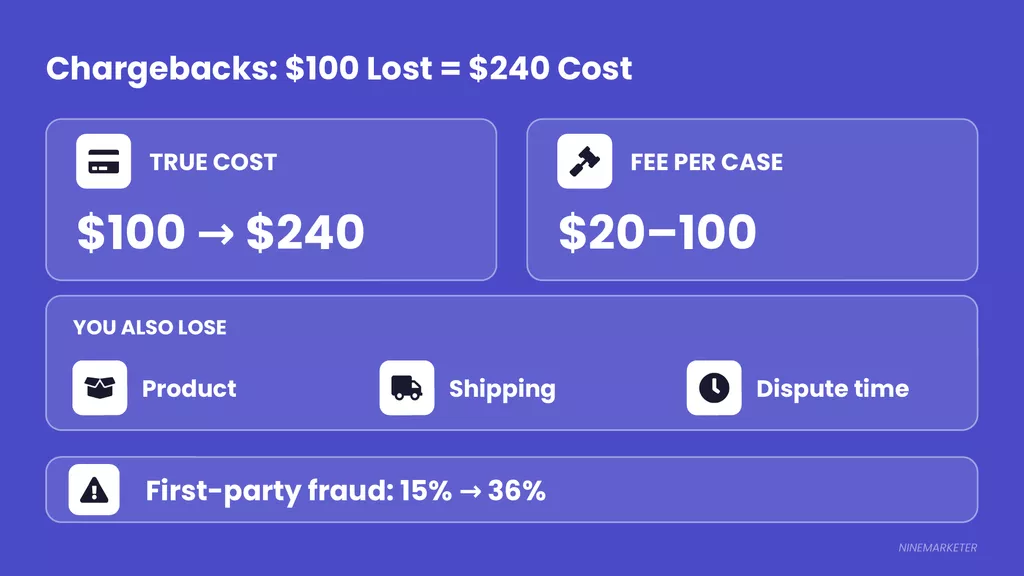
Here’s a brutal fact most beginners don’t see coming: every $100 lost to chargebacks actually costs you $240.
Chargeback fees themselves run $20 to $100 per case, but that’s just the start.
You lose the product, the shipping, and the time spent fighting the dispute.
First-party fraud jumped to 36% of all reported fraud in 2024, up from 15% the year before, meaning customers are disputing legitimate purchases more than ever.
Software subscriptions sneak up fast.
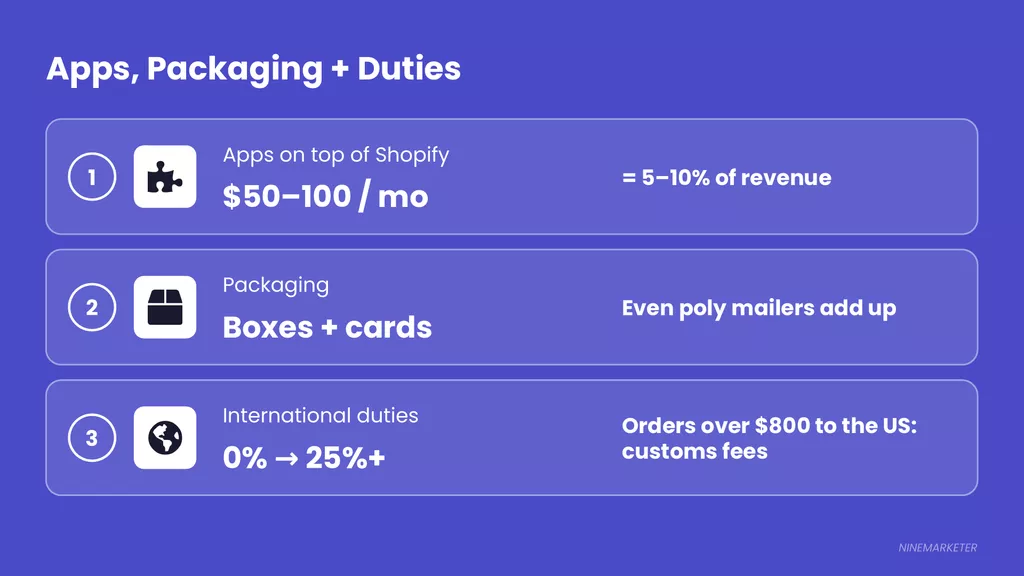
Most successful stores use at least 3-5 apps, and those “free” apps turn into $10-20 monthly fees before you know it.
Between email marketing tools, review apps, and automation software, you’re looking at an extra $50-100 per month on top of your Shopify subscription.
If you’re not careful, app costs alone can eat 5-10% of your monthly revenue.
Packaging ain’t free either.
Custom branded boxes, tissue paper, thank you cards, these touches boost customer experience but cost money.
Even basic poly mailers add up when you’re shipping hundreds of orders monthly.
Taxes and customs fees for international orders are where things get messy.
Duty rates typically range from 0% to over 25% depending on product classification.
Orders over $800 entering the US trigger customs fees, and someone’s gotta pay them.
If your customers get hit with unexpected duties at delivery, expect complaints and returns.
Seasonal fluctuations in shipping destroy budgets.
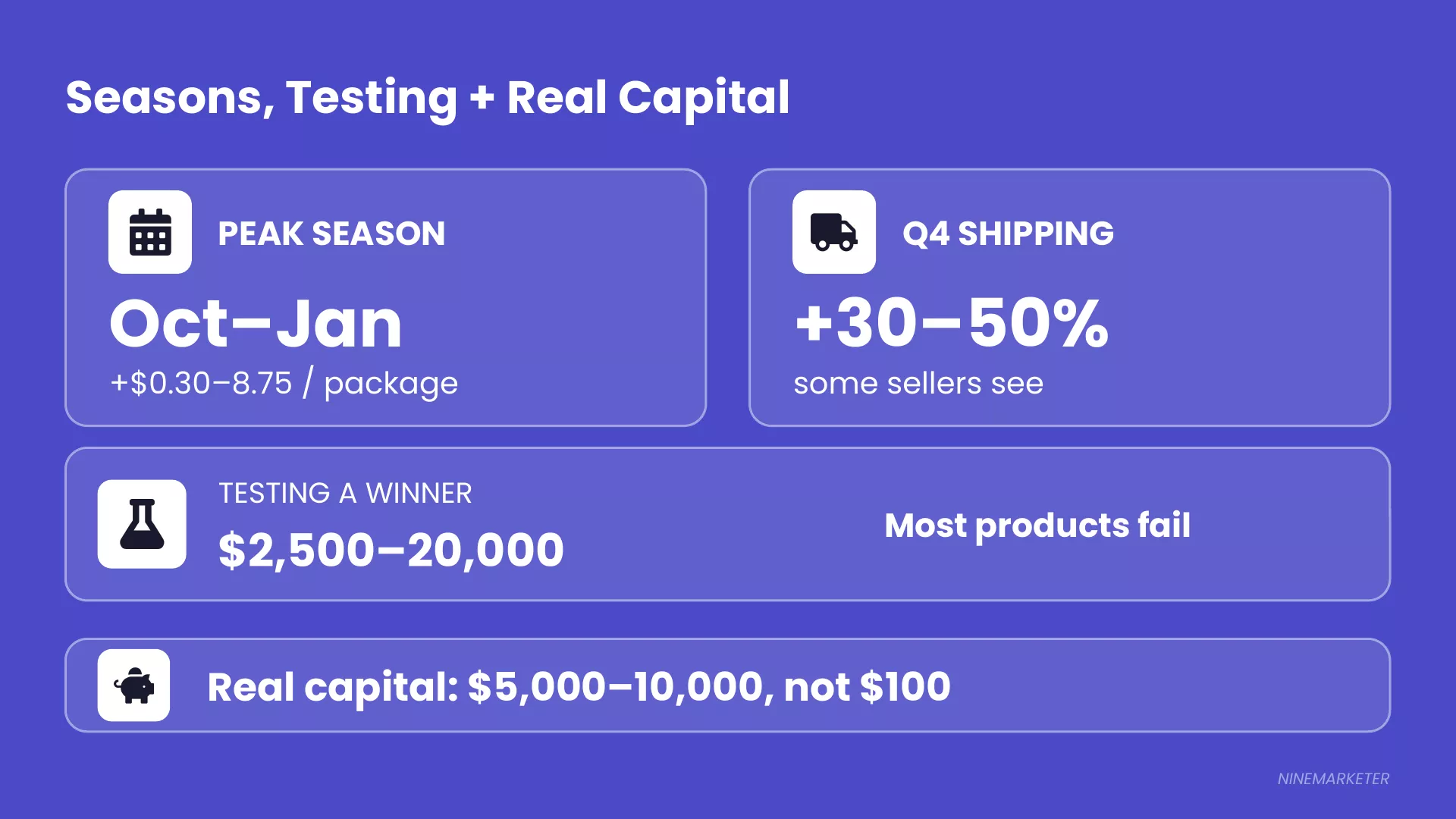
Peak season surcharges from major carriers run from October through January, adding anywhere from $0.30 to $8.75 per package depending on service and volume.
During the weeks between Black Friday and Christmas, rates peak even higher.
Some dropshippers see their shipping costs jump 30-50% during Q4.
The real killer?
Testing and failed products.
Experienced sellers report spending $2,500 to $20,000 just on product testing before finding a winner, and most products fail.
Every failed test means wasted ad spend, design work, and supplier samples.
You need that testing budget, but nobody warns beginners they’ll burn through thousands finding their first profitable product.
This is why most dropshipping businesses actually need $5,000-10,000 in startup capital, not the $100 everyone talks about online.
Choosing Profitable Dropshipping Niches by the Numbers
Look, you can’t build a sustainable dropshipping business on razor-thin margins.
Most successful dropshippers aim for at least 20% net profit margins, though the industry average sits between 15-20%.
Anything below 10% and you’re basically working for free once something goes wrong, which it will.
High-margin niches share specific characteristics that separate them from commodity garbage.
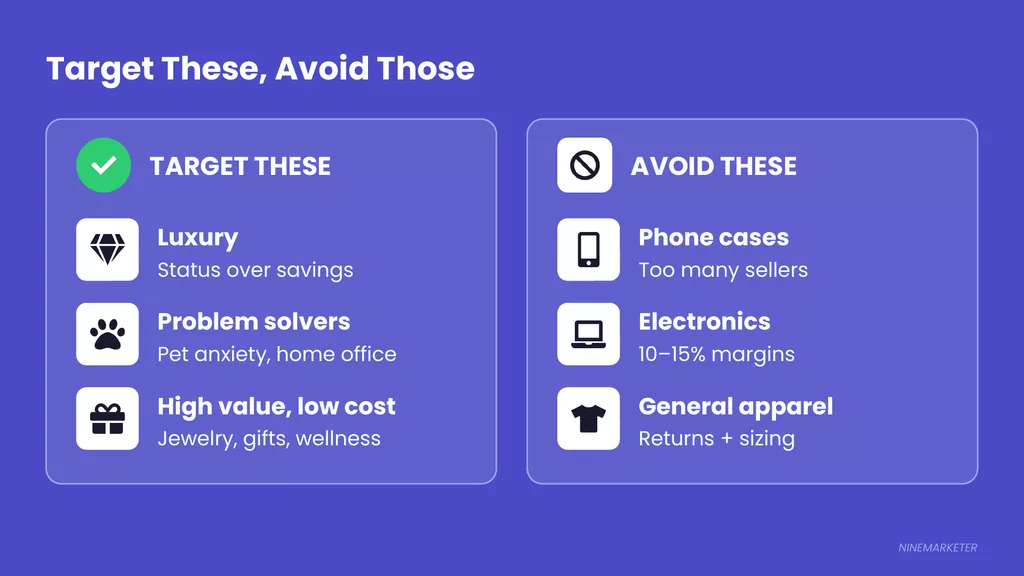
Luxury products command premium prices because buyers care more about status than saving five bucks.
Specialty items solving specific problems, like pet anxiety products or ergonomic home office gear, let you charge more since people are desperate for solutions.
Products with high perceived value but low production costs are the sweet spot, like jewelry, personalized gifts, or organic wellness products where margins can hit 40-60%.
Now here’s what to avoid like the plague: commodities.
Phone cases have insane competition and razor-thin margins because everyone and their cousin sells them.
Electronics barely scratch 10-15% margins since customers comparison shop religiously and big retailers dominate pricing.
General apparel brings high return rates and sizing nightmares.
These low-margin niches force you into price wars where nobody wins except maybe Amazon.
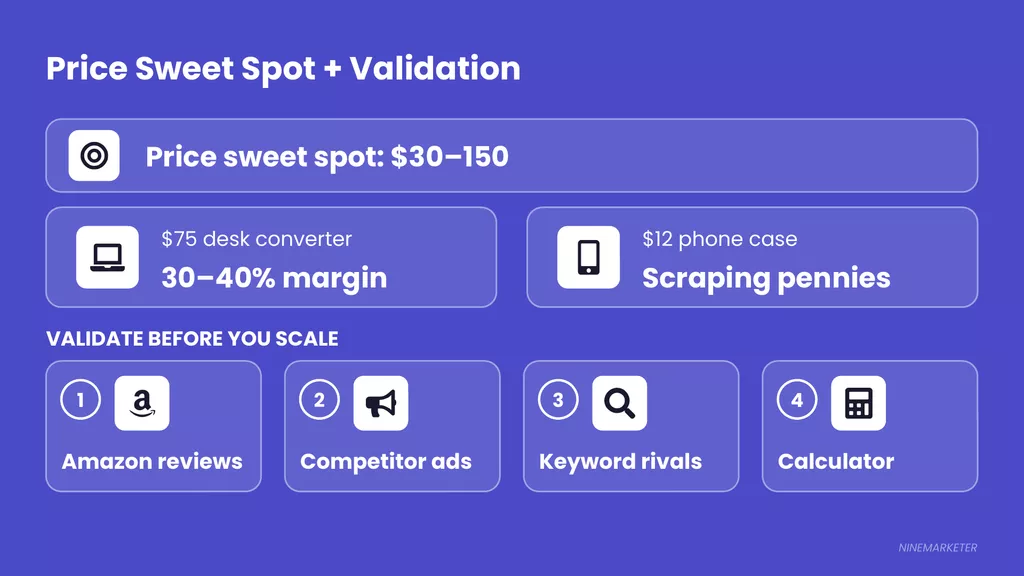
There’s a reason about 70% of successful products fall between $14.99 and $29.99, but the real magic happens in the $30-$150 range.
Products priced here are expensive enough for decent margins but not so pricey that customers obsess over every dollar.
A $75 standing desk converter gives you room for 30-40% margins after costs, while a $12 phone case leaves you scraping pennies.
Analyzing competitor pricing reveals whether a niche is viable.
If similar products are priced at premium levels with multiple sellers succeeding, there’s room.
If you’re seeing constant discount codes and race-to-the-bottom pricing, run away.
Check Amazon reviews, examine competitor Facebook ads, and look at how many sellers are fighting for the same keywords.
Free profit margin calculators from platforms like Drop Ship Lifestyle, TrueProfit, and Spocket let you plug in product costs, shipping fees, ad spend, and transaction fees to see your actual margins.
Some dropshippers discover their “best sellers” are actually losing money after all expenses.
Test everything with real numbers before scaling, feelings don’t pay bills.
Pricing Strategies to Maximize Your Margins
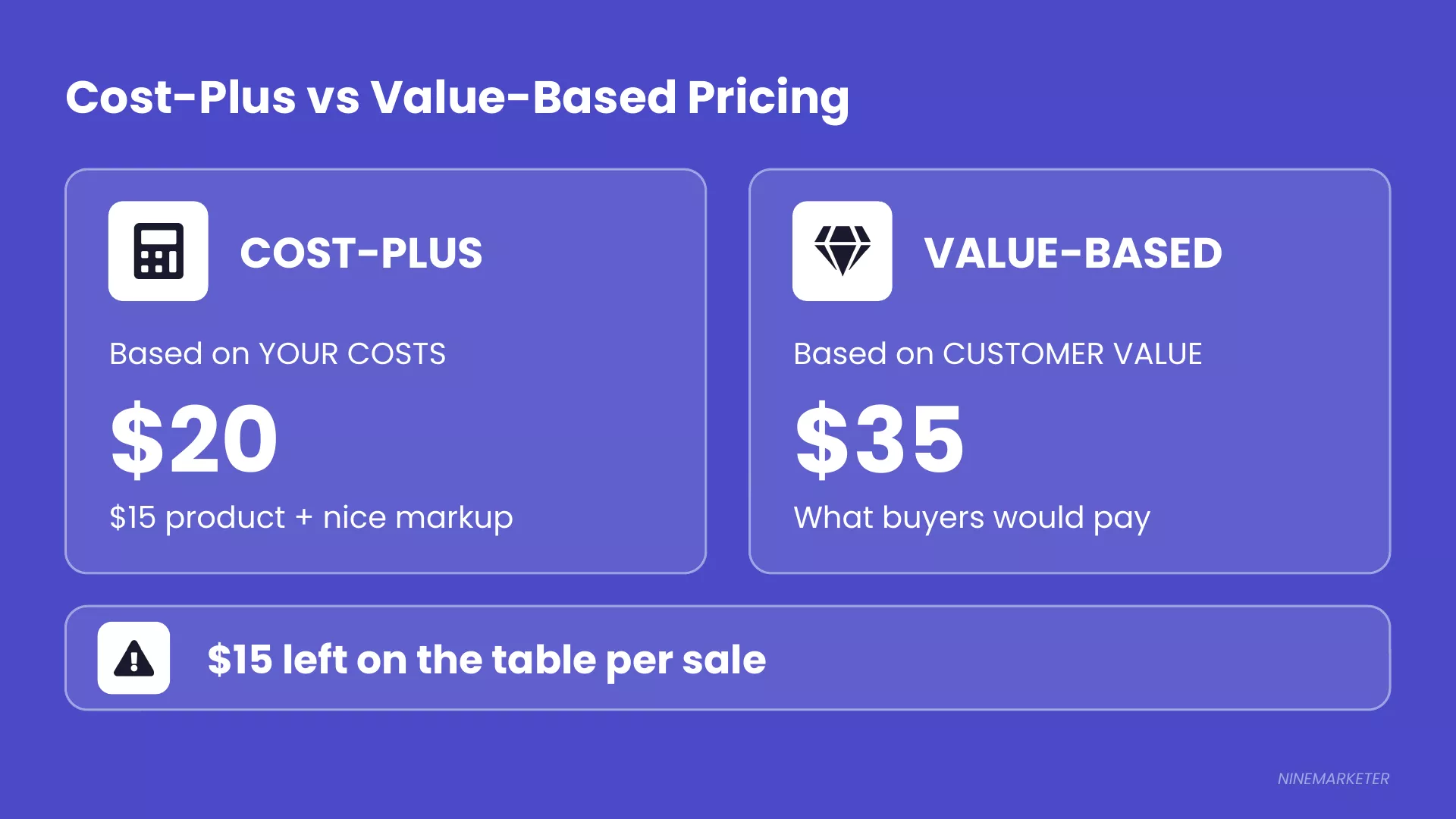
Here’s something that trips up most dropshippers: cost-plus pricing focuses on your internal costs, while value-based pricing focuses on what customers actually think your product is worth.
That difference is massive.
If you’re selling a $15 product for $20 because that’s a nice markup, but customers would happily pay $35 because they love the solution it provides, you’re leaving money on the table every single day.
Psychological pricing tactics work better than most folks realize.
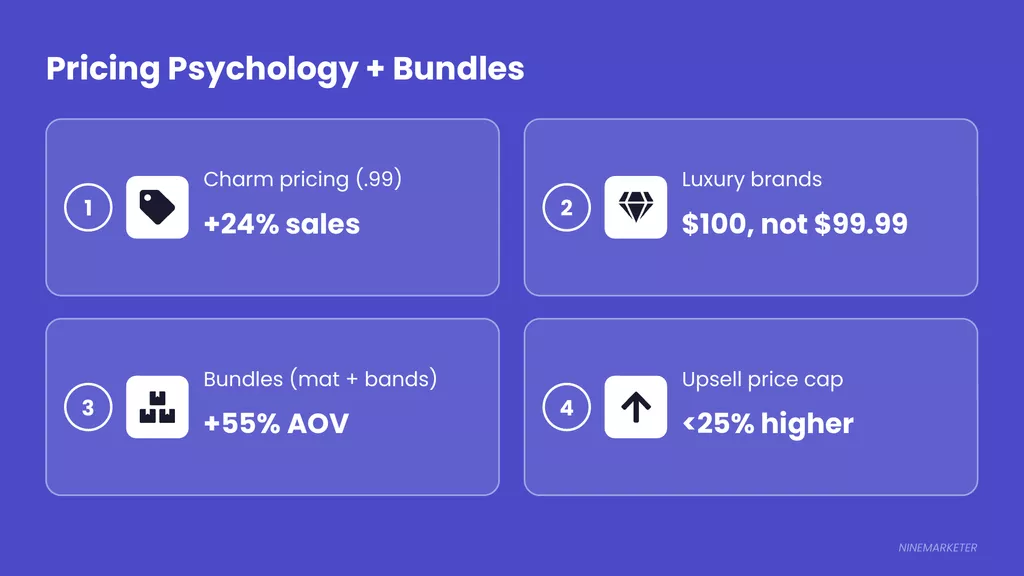
Charm pricing using .99 endings can boost sales by 24% compared to rounded prices, that $29.99 feels way cheaper than $30 even though it’s one penny different.
But here’s the catch: luxury and premium brands should avoid .99 pricing because it makes products seem cheap.
If you’re positioning yourself as high-end, use rounded numbers like $100 instead.
Bundle pricing crushes it for increasing your average order value.
Product bundles can deliver a 55% lift in AOV because they simplify decisions and make customers feel like they’re getting more value.
Smart dropshippers pair complementary products, like a yoga mat with resistance bands, and offer them at a slight discount compared to buying separately.
Upsells work best when priced less than 25% higher than the original item, otherwise customers feel bait-and-switched.
When should you compete on price versus value?
Simple: compete on value whenever possible.
Price wars destroy everyone’s margins and attract customers who’ll leave the second they find something cheaper.
Only compete on price for commodity products where there’s literally no differentiation, like generic phone chargers.
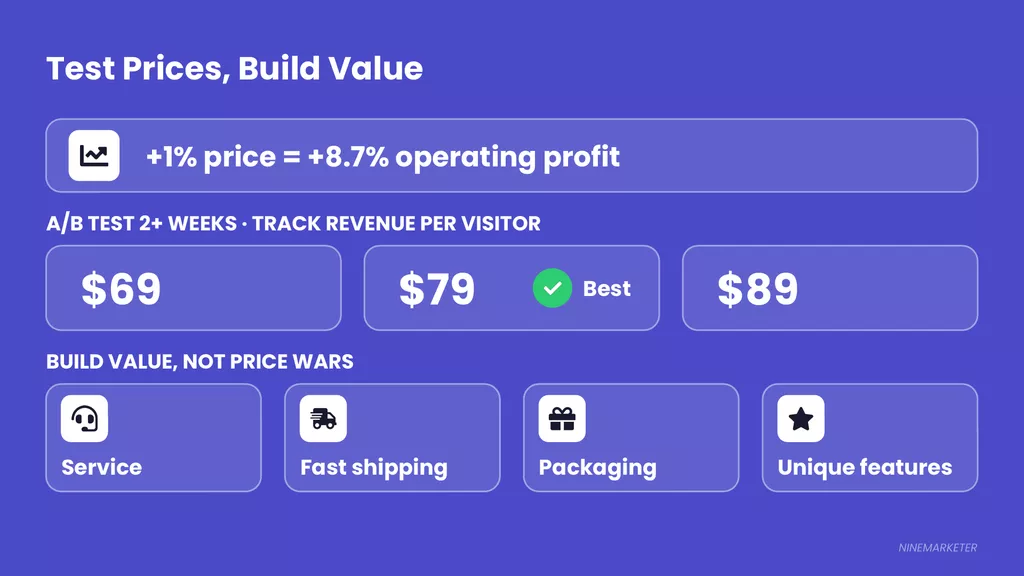
For everything else, build value through better service, faster shipping, superior packaging, or unique product features.
Testing different price points reveals what your market will actually bear.
Even a 1% price increase can generate an 8.7% surge in operating profits, that’s way more impact than cutting costs elsewhere.
Run A/B tests for at least two weeks, tracking conversion rates and total revenue per visitor, not just sales volume.
One dropshipper tested $69, $79, and $89 price points and discovered the middle price earned nearly the same revenue with better margins.
Premium positioning strategies work when you’ve got something unique.
Premium pricing isn’t just charging more, it requires backing that price with superior quality, exclusive branding, limited availability, and exceptional customer experience.
Brands like Apple prove this works because customers aren’t just buying a product, they’re buying status and belonging to something special.
Your Profit-First Action Plan
Stop guessing and start calculating.
Armed with these formulas and frameworks, you’re now equipped to evaluate any dropshipping niche through the lens of real profitability.
Remember: a niche that does $100K in revenue but only keeps 5% is far worse than one doing $50K at 25% margins.
Before you launch your next store, run the numbers.
Build your cost spreadsheet.
Factor in every fee, every expense, every hidden cost.
The dropshippers who succeed aren’t the ones with the flashiest products, they’re the ones who know their numbers cold.
Ready to find your profitable niche?
Start by calculating the margins on your current product ideas using the formulas in this guide.
You might be surprised what you discover!